
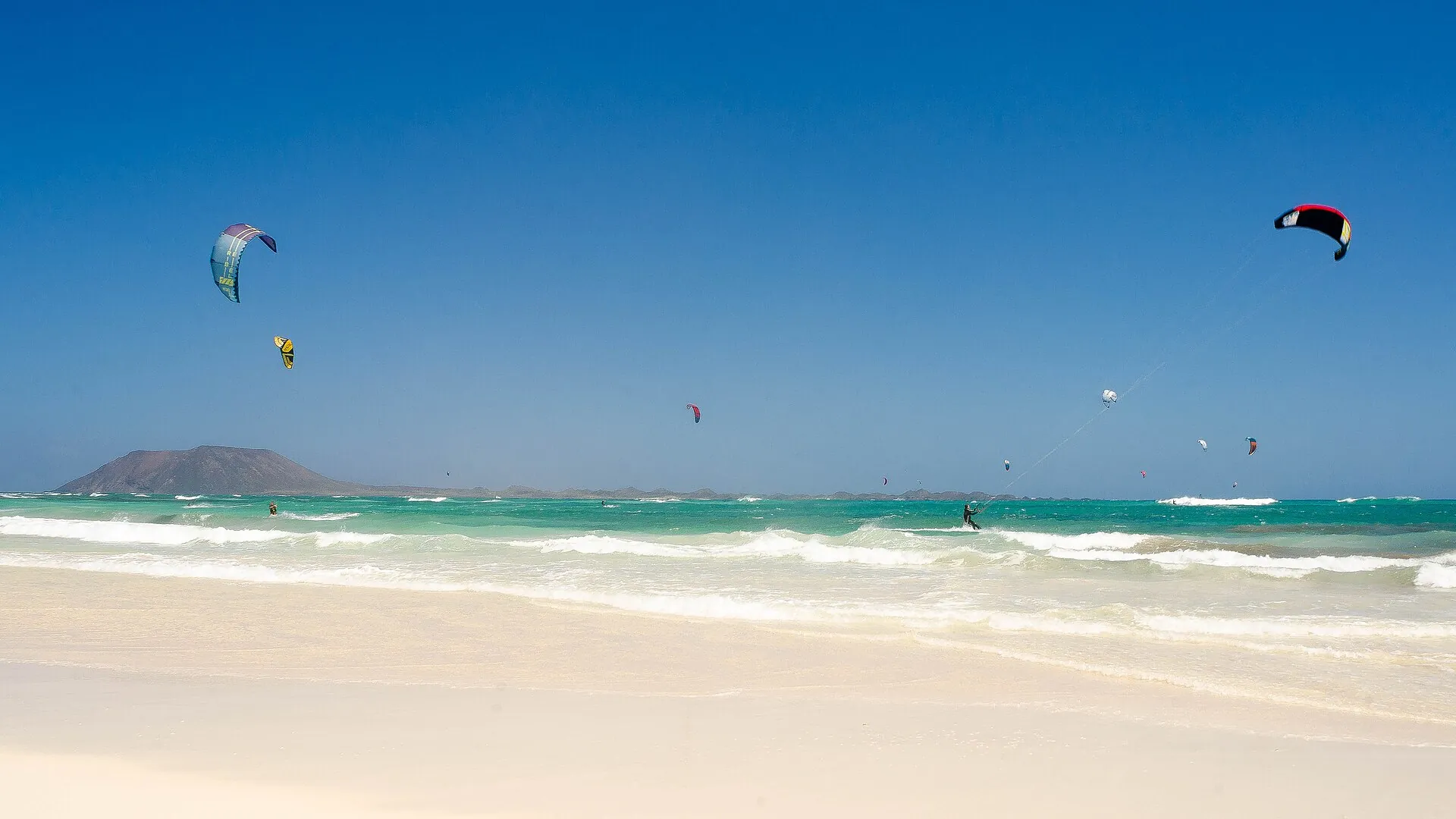
📍 Corralejo, Fuerteventura
Photo: Thomas Tolkien / Wikimedia Commons, CC BY 2.0
The perfect complement to Sotavento: waves, volcanic reef and a wide beach for learning.
Wide, flat and sandy-bottomed, Flag Beach is the go-to kite-learning zone in the north of the island, with a shallow inner bay at low tide.
See destinations arrow_forward
Unlike Sotavento's flat-water lagoon, Corralejo adds reef breaks and waves at spots like Rocky Point or Glass Beach, ideal for surfers and wave-hungry kiters.
See Sotavento arrow_forward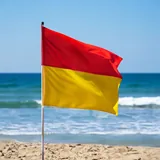
Volcanic rock, shallow reef and currents near the Corralejo Natural Park mean respecting the flag system and the guidance of lifeguards is essential.
Safety arrow_forwardThe trade wind, the water, the wetsuit and the natural park surrounding Corralejo.
The prevailing wind is the north-easterly trade wind, which at Flag Beach blows mostly cross-shore. The windiest months run from January to August, with March to July the best window. In summer averages sit around 18 to 25 knots (21 to 29 mph), with gusts that can exceed 30 knots (35 mph), while the rest of the year averages run 15 to 20 knots (17 to 23 mph). It's a more moderate wind than Sotavento's, in the south of the island.
Water temperature sits between 18°C and 23°C all year round, with September the warmest month. A 3/2mm wetsuit covers most conditions; in the summer months many riders sail in a shortie or lycra.
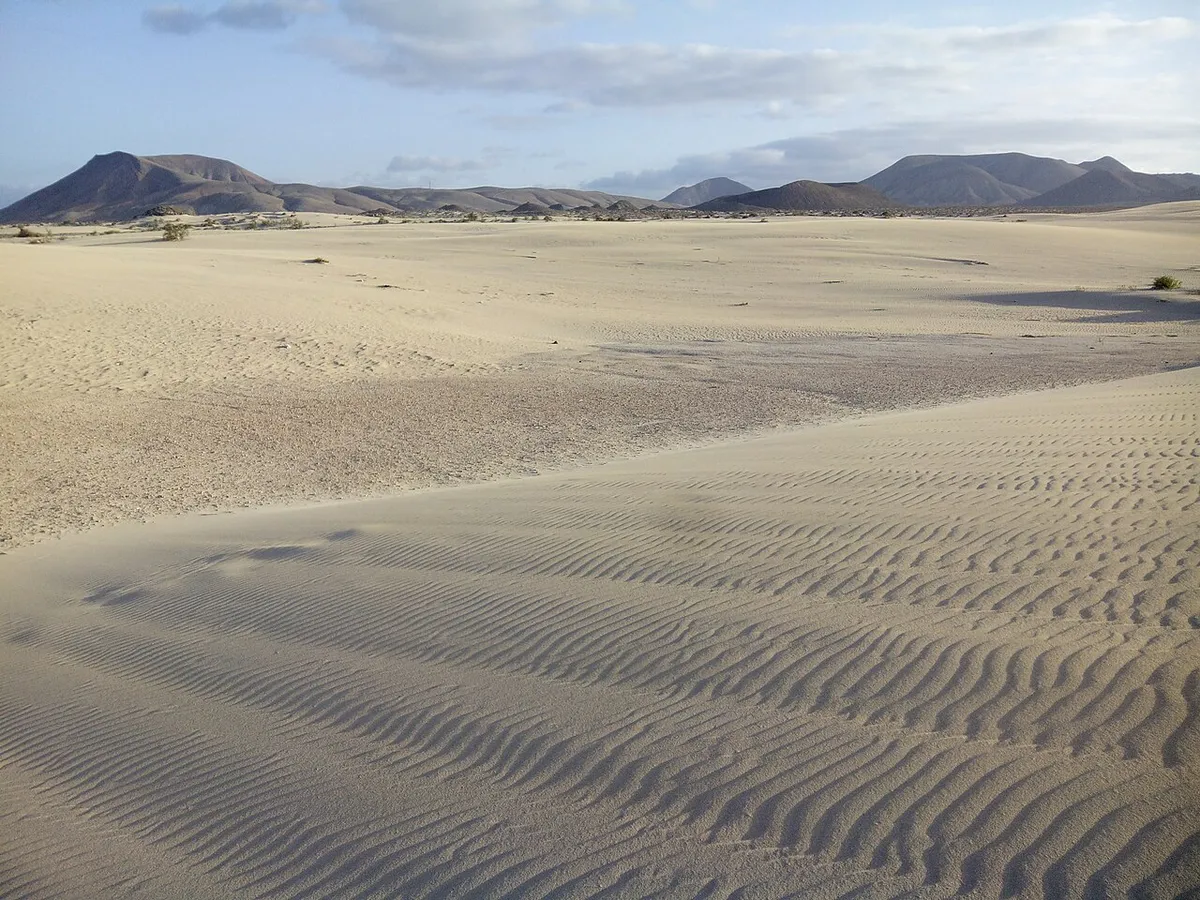
Flag Beach and the northern spots border the Corralejo Natural Park (Parque Natural de las Dunas de Corralejo), designated in 1982 and covering more than 2,600 hectares: the largest dune field in the Canary Islands, alongside a red-and-ochre volcanic malpaís. Inside the park, cars must be left in the designated areas, movement is restricted to marked trails, and picking up stones, sand or plants isn't allowed. Always check specific conditions with your school before getting in the water.
From Flag Beach's protected bay to reef breaks for more advanced riders.
It's the go-to beach for learning in the north of Fuerteventura: wide, sandy-bottomed, with an inner bay that barely reaches waist height at low tide. The cross-shore wind and easy water entry make it one of the safest spots in the Canaries for beginners. At high tide the water moves more and waves appear beyond the sandbar, so it's worth checking the tide tables.
View on Google Maps open_in_new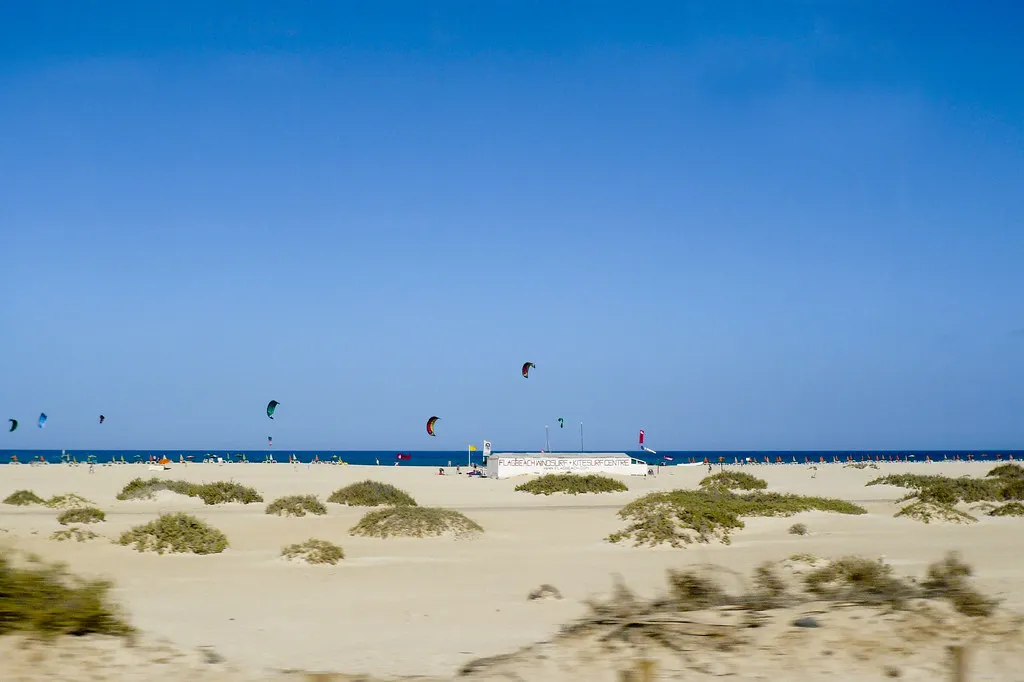
A mile or so north of Flag Beach, Glass Beach steps up a notch in difficulty: the wave breaks over a rock slab, faster and harder-hitting than at Flag Beach. It's a spot for more experienced riders, both in kite and surf.
View on Google Maps open_in_newIn Corralejo bay, this reef is one we'd only recommend for experienced riders. It works mainly at high tide, when wind and north or north-westerly swell build waves to jump. The bottom is rock, so a bad fall counts.
View on Google Maps open_in_newRight behind Corralejo's harbour, this is a left-hander that works best at low tide and medium swell. At high tide the reef sits closer to the surface, so the risk of hitting bottom goes up.
View on Google Maps open_in_newWest of Majanicho, at the end of a dirt track, this reef is a wave option for advanced riders, with conditions that depend on north and north-westerly swell. Only worth the drive if you've got the experience and a car to get there.
View on Google Maps open_in_newIKO-affiliated centres in Corralejo for kitesurf, wing foiling and surf lessons and equipment hire.
A school based in Corralejo and El Cotillo, certified by the IKO (International Kiteboarding Organization). It offers kitesurf lessons at every level, plus wing foiling, surfing, paddleboarding and snorkelling. Its accreditation with the Federación Canaria de Vela isn't listed in the sources reviewed, so it's worth confirming directly with the centre.
An IKO-affiliated centre in Corralejo, specialising in kitesurf and wing foiling with boat and radio-supported lessons, and small groups of a maximum of two students per instructor. As above, its accreditation with the Federación Canaria de Vela or the Real Federación Española de Vela isn't detailed in the sources available: ask when booking.
Corralejo has several more kitesurf, wing foiling and surf schools along Flag Beach and in the town itself. Before booking, check each centre's certification (IKO or otherwise), group sizes and whether boat or rescue support is included.
Official bodies, flags and the risks that come with volcanic reef at Corralejo.
In an emergency, dial 112 (Spain's emergency number) or use VHF channel 16 to reach Salvamento Marítimo. The Spanish Red Cross deploys lifeguards on Corralejo's Grandes Playas (with a jet ski, quads and 4x4 vehicles) and on the beaches of El Cotillo, reinforcing cover through the summer months.
Read the flag before you go anywhere near the water. Green means bathing is permitted, yellow signals caution with moderate risk from currents or swell, red prohibits bathing outright, and purple warns of hazardous marine life such as jellyfish. At Corralejo the red flag usually goes up on a heavy swell with strong currents. Check it before entering the water.
Unlike Sotavento's sandy bottom, much of Corralejo's lineup sits over volcanic rock: at Rocky Point, Glass Beach or El Muelle, a fall at low tide can be costly. Wear reef boots, avoid swimming where there's no lifeguard cover and always follow the guidance of schools and lifeguards. The Real Federación Española de Vela (RFEV) and the Federación Canaria de Vela regulate these sports; it's a good sign if a school holds qualifications recognised by them, or by the IKO.
From fishing village to the north's kite capital, facing Lobos Island.
Corralejo was a small fishing village until the 1970s and is now one of the leading tourist destinations in the north of Fuerteventura, with accommodation, restaurants and a very active kitesurf and surf community. The town sits in the municipality of La Oliva, facing Lobos Island, an islet with a protected marine reserve where you can dive and snorkel among turtles in crystal-clear water.
With less wind, the Corralejo Natural Park is the must-do excursion: the largest dune field in the Canary Islands, with over 2,600 hectares of white sand and volcanic malpaís. Explore it on foot along the marked trails, or take a boat trip out to Lobos Island, a short crossing from the harbour.
Fly into Fuerteventura, take the ferry from Lanzarote, or drive the FV-1 from the south of the island.
Fly into Fuerteventura Airport (FUE) at Puerto del Rosario, which is served from mainland Spain and much of Europe. Corralejo is about 25 miles up the road, so 35-40 minutes in the car.
From the airport, take the FV-2 to Puerto del Rosario, then the FV-1 heading north, the road that links the capital with Corralejo and the Dunes. Hiring a car is the most convenient way to get between Flag Beach, Rocky Point, Punta Blanca or El Cotillo.
Corralejo has a ferry port with a direct connection to Playa Blanca, in Lanzarote. Fred Olsen Express and Naviera Armas run the route, with a crossing of around 25-35 minutes and several daily sailings – a practical option if you're combining both islands in one trip.
January to August brings the most wind, but there's always something on offer at Corralejo.
March to July is the sweet spot inside that window, when the north-easterly trade settles into its most usable form. You won't get Sotavento's raw strength up here, but 18 to 25 knots with gusts over 30 is plenty for kitesurfing, wing foiling and windsurfing at Flag Beach and the spots nearby.
Once the strong-wind window closes the sea settles, averaging 15 to 20 knots, which is when the northern wave spots come into their own. Water stays between 18°C and 23°C year-round, so a 3/2mm wetsuit does the job whatever the season.
The most common questions before a kitesurf or surf trip to Corralejo.
Yes. At low tide, Flag Beach forms a shallow inner bay with a sandy bottom and cross-shore wind, one of the safest learning environments in the Canaries. At high tide the water moves more and waves appear beyond the sandbar, so it's worth checking the tide tables before rigging up.
Sotavento, in the south, is a flat-water lagoon with very strong wind (averaging 25 to 30 knots, gusts up to 40) and hosts the PWA World Cup. Corralejo, in the north, has more moderate wind (15 to 25 knots) but adds waves and stretches of volcanic reef at spots like Rocky Point or Glass Beach, drawing more surfers and wave-focused kiters. Check out Sotavento if flat water is what you're after.
The windiest months run from January to August, with March to July the best window. In summer averages sit around 18 to 25 knots with gusts that can exceed 30, while the rest of the year averages run 15 to 20 knots.
The water sits between 18°C and 23°C all year round, with September the warmest month. A 3/2mm wetsuit covers most of the year; in summer many riders sail in a shortie or lycra.
Fuerteventura Airport (FUE) is about 25 miles away, roughly 35-40 minutes by road via the FV-1. There's also a fast ferry run by Fred Olsen Express and Naviera Armas between Corralejo's port and Playa Blanca (Lanzarote), a crossing of around 25-35 minutes, with several daily sailings. Discover more spots in our destination directory.
