
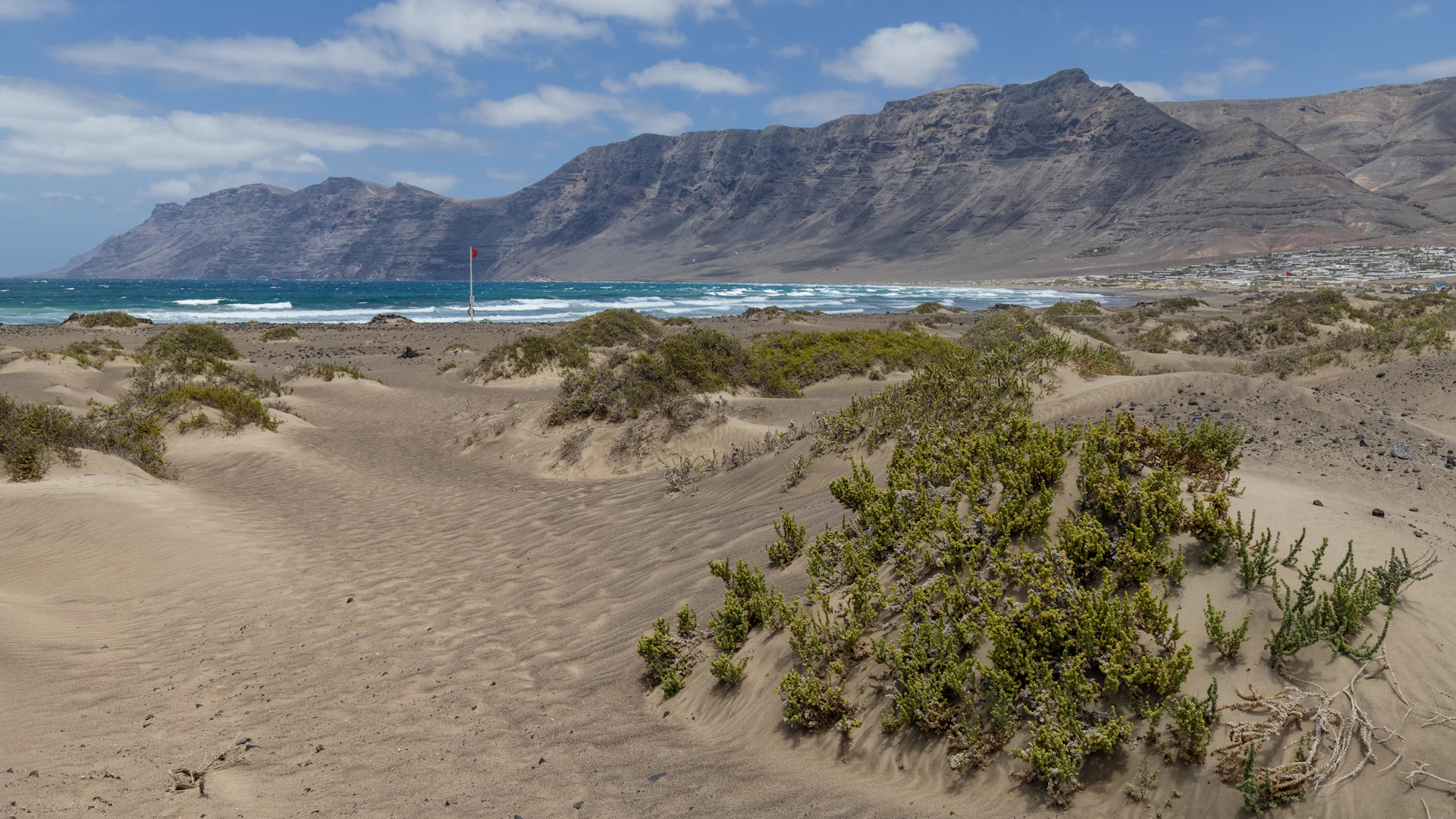
Around 6 kilometres of sand beneath the Risco de Famara, with waves 365 days a year.
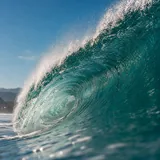
Facing west and north-west, Famara catches groundswell almost all year round, with peaks spread across the whole beach for every level.
Surf guides arrow_forward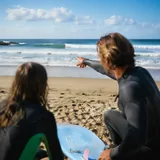
The El Molino peak, over a sandy bottom, and low tide create perfect whitewater for beginners. Many schools with qualified instructors run here daily.
See destinations arrow_forward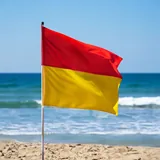
A documented rip current runs through the middle section, and currents can be strong. Swim in watched areas; Teguise Council lifeguards work 10am to 6pm.
More destinations arrow_forwardWaves, tides, water temperature and wetsuits at a glance, before heading down to the cliff.
An open beach with several sections the locals know well, each with its own level.
El Molino is the classic for beginners. Waves break over a soft sandy bottom and create perfect whitewater, with peaks opening both left and right, ideal for practising. Surf schools with their groups are a common sight here.
View on Google Maps open_in_newEl Codito is the peak closest to the village: it breaks over submerged rocks and holds up well in the big north and north-west swells of winter, making it a spot for intermediates and experts who know the tides. El Palo, between the lifeguard post and the bunkers, mixes wave styles and decent secondary swell for progressing surfers, though closeouts dominate and picking your wave carefully matters.
View on Google Maps open_in_newSan Juan, west of the village, is one of the island's best left-handers: a wedge that jacks up fast and offers surfable walls of 20 to 40 metres, though it demands south-south-east (offshore) wind and low tide. The Muelle de Famara comes alive in big north and north-west swells, breaking over a shallow, rocky bottom, with fast waves that can barrel: terrain for experts only.
View on Google Maps open_in_newChoose a school with official accreditation to learn safely.
Famara is a hub for learning to surf in the Canary Islands, with numerous schools catering to all levels. What matters most is that instructors hold official accreditation from the Federación Canaria de Surf (FCS) and the Real Federación Española de Surf (FES). Leading schools include CalimaSurf (over 25 years' experience, FCS and FES instructors), Red Star Surf (small groups and accommodation near the beach), Famara Surf Camp, Lanzarote Surf (FCS and FES instructors), JMC Surf Training and Famara Power Surf, with instructors qualified by the Federación Canaria de Surf. Always verify a school's accreditation before booking.
One of Lanzarote's advantages is how mild the water stays. Averages run from around 19°C in winter to over 21°C in summer, so a 3/2mm wetsuit is more than enough in winter and a 2mm does the job in summer. You can surf here year-round without ever really getting cold.
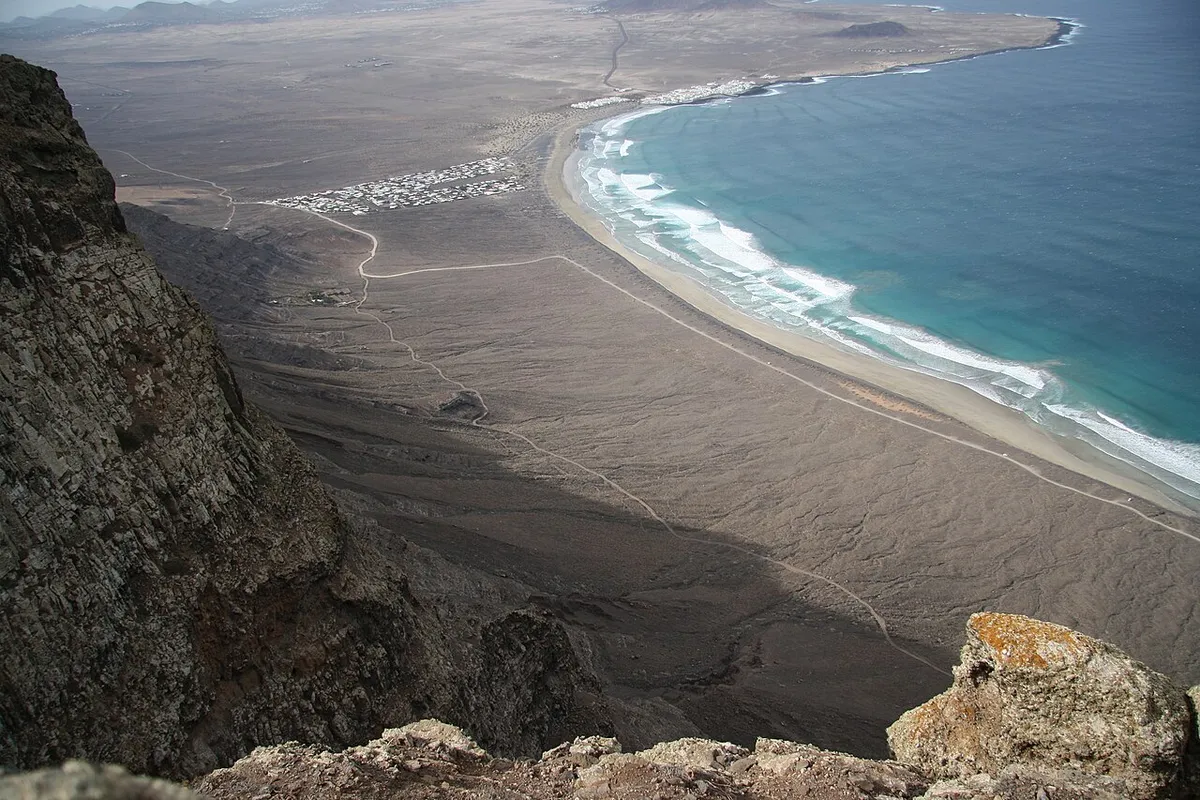
A wild corner of northern Lanzarote, between the cliff and the sea.
Caleta de Famara is a small, low-rise fishing village with surf schools, equipment hire, seafood restaurants and a relaxed vibe. Behind it, the imposing Risco de Famara, and opposite, views out to the islet of La Graciosa. It's the perfect base for a surf trip without the crowds.
Flat days are a good excuse to discover the rest of Lanzarote: Timanfaya National Park, César Manrique's works, a boat trip to La Graciosa, or the more sheltered stretches of beach for a paddleboard stroll. The island is small and everything is close by.
In the north of Lanzarote, a short drive from the airport.
Lanzarote Airport (ACE), also known as Arrecife or Guacimeta, is around 30 kilometres from Caleta de Famara and receives flights from across Spain and Europe. It's the starting point for reaching the beach.
This is the most flexible option. From the airport, take the LZ-1 towards Arrecife, then the LZ-10 north to Caleta de Famara: the drive takes around 20 minutes. There's parking along the access road to the beach, though it can run short in peak season.
A regional bus route connects Arrecife with Caleta de Famara, though timetables are limited and it's worth checking in advance. To get around freely between the peaks, hiring a car remains the most practical option.
There are waves all year round, but each season has its own character.
From November to March the biggest north and north-west swells roll in, and rocky peaks such as El Codito, the Muelle or San Juan give their best to experienced surfers. The water stays mild, around 19°C, so a 3/2mm wetsuit keeps you comfortable. This is Lanzarote's standout surf season.
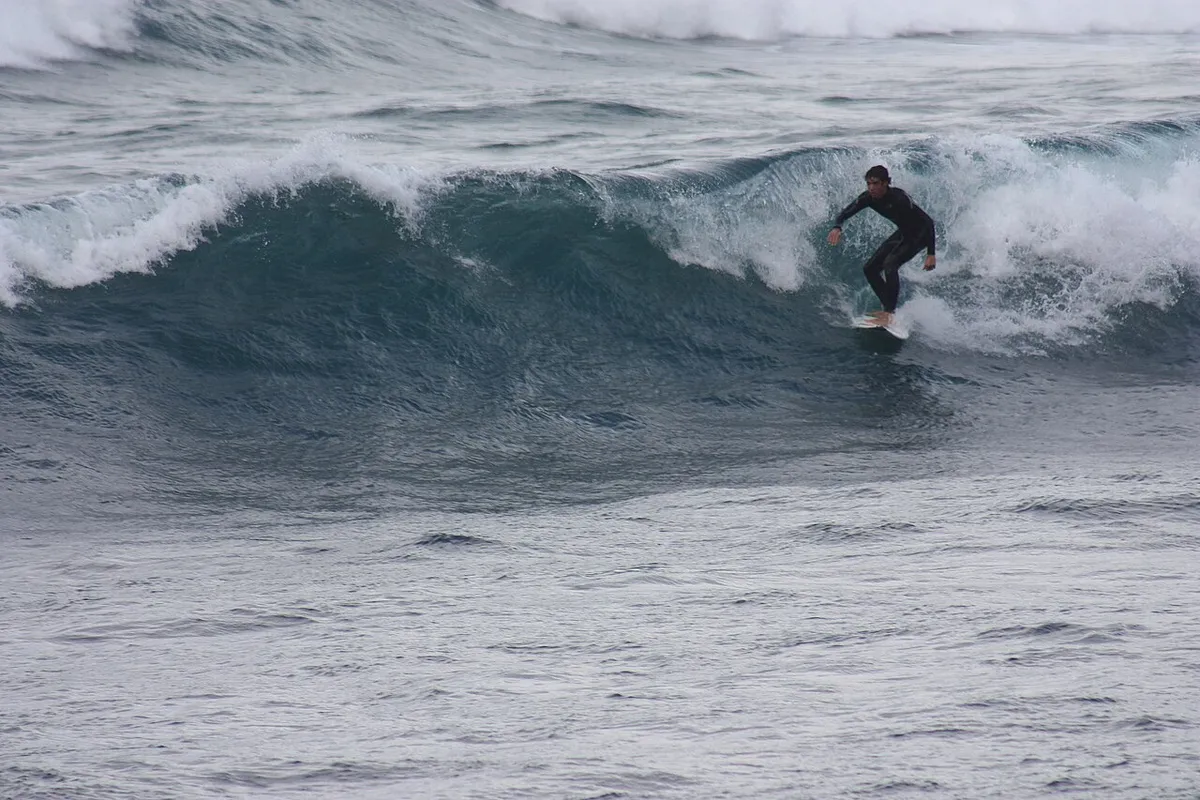
In summer the waves are generally smaller and the water climbs above 21°C, ideal for catching your first waves with a simple 2mm wetsuit. El Molino, with its sandy bottom and whitewater, is the spot for learning. Watch out for the trade winds, which can mess up the conditions, especially at the northern end of the beach.
The shoulder-season months keep up the consistency Famara is famous for, with very good weather and fewer crowds than peak summer. Autumn, in particular, brings the warmest water temperatures of the year. Always check the wind and tide forecast, and swim in areas watched by lifeguards.
What surfers most often ask before coming to Lanzarote.
Yes, it's very well suited to learning, especially at low tide, when the waves close out and form perfect whitewater. There are many surf schools in the area offering lessons and equipment hire, and the El Molino peak, over a sandy bottom, is the classic spot for beginners.
The water is mild all year round: around 19°C on average in winter and just over 21°C in summer. A 3/2mm wetsuit works well in winter, and a 2mm is enough in summer.
Yes. Currents can be strong and unpredictable, especially in bigger swells and outside the main bathing areas. A documented rip current runs through the middle section of the beach. Always swim in areas watched by lifeguards and respect the flag system.
From Lanzarote Airport (ACE), the most flexible option is a hire car: take the LZ-1 towards Arrecife, then the LZ-10 towards Caleta de Famara, around 20 minutes. There is also a regional bus route, though with limited timetables.
Famara has permanent lifeguards from Teguise Council, on duty from 10am to 6pm with extra cover in summer. In an emergency, call 112 or Salvamento Marítimo (VHF channel 16). The Spanish Red Cross also assists on Spanish beaches. Discover more spots in our destinations hub.

