
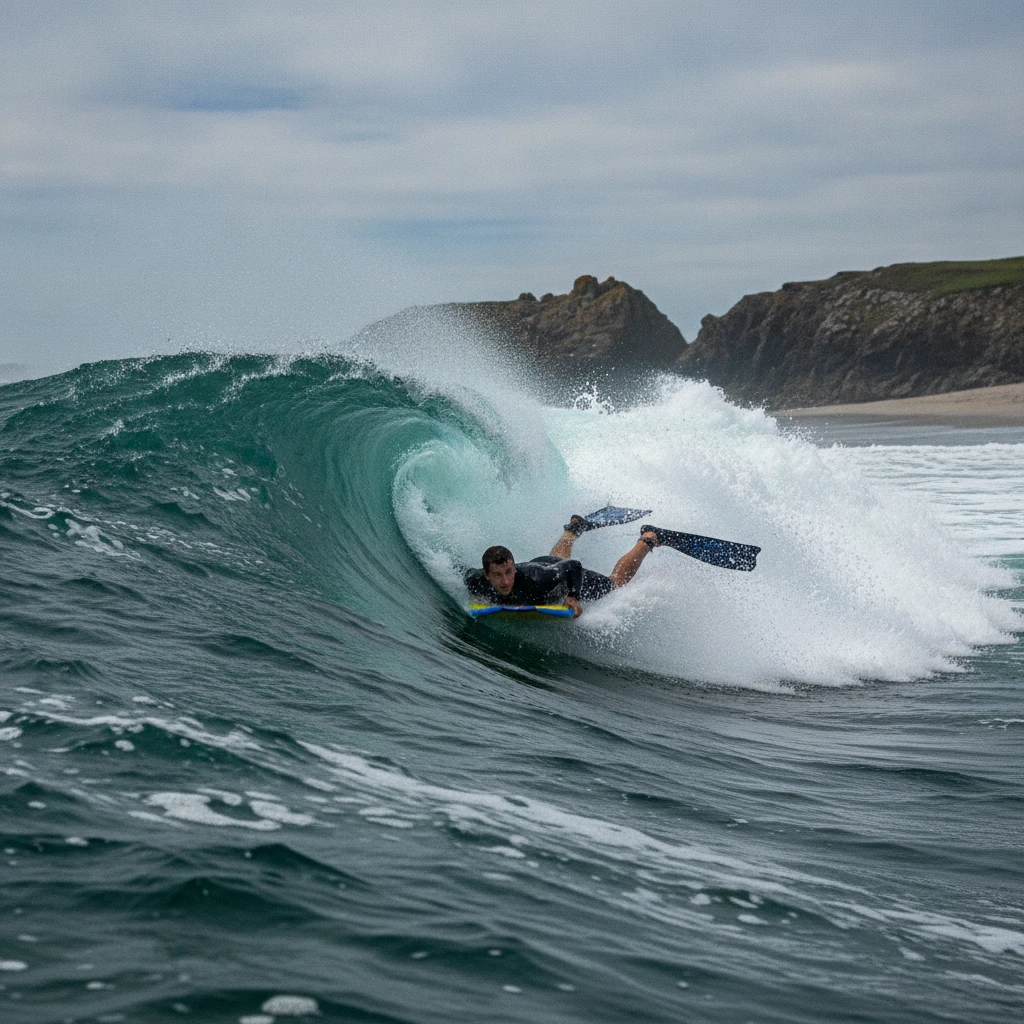
Bodyboarding is a wave-riding sport done lying prone or drop-knee on a short, flexible board, powered by the energy of the wave. More accessible than surfing, it delivers similar thrills and lets you progress quickly.
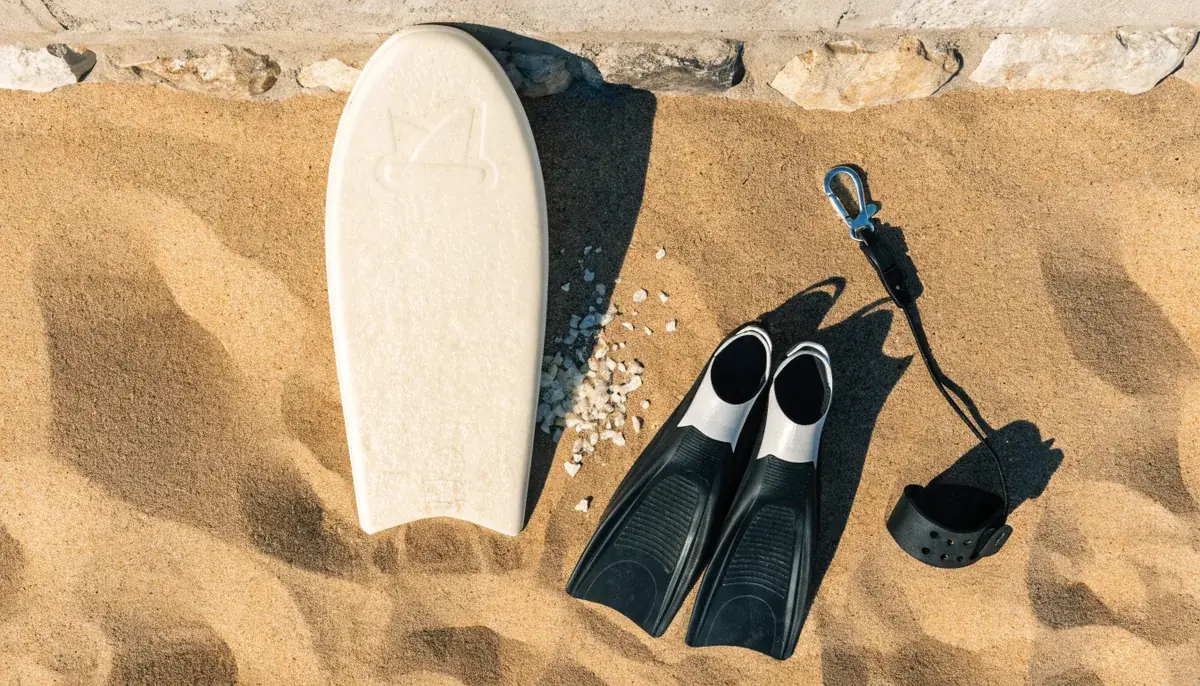
A short board (roughly 36 to 44 inches) built around a PE or PP foam core, worn with an ankle or bicep leash. Lighter and more manoeuvrable than a surfboard, it catches waves instantly – ideal for beginners and experienced bodyboarders alike.

You can ride flat (prone) for pure speed, on your knees for manoeuvrability, or drop-knee for style and tricks. Drop-knee is a spectacular discipline that blends balance and technique, closer to stand-up surfing.
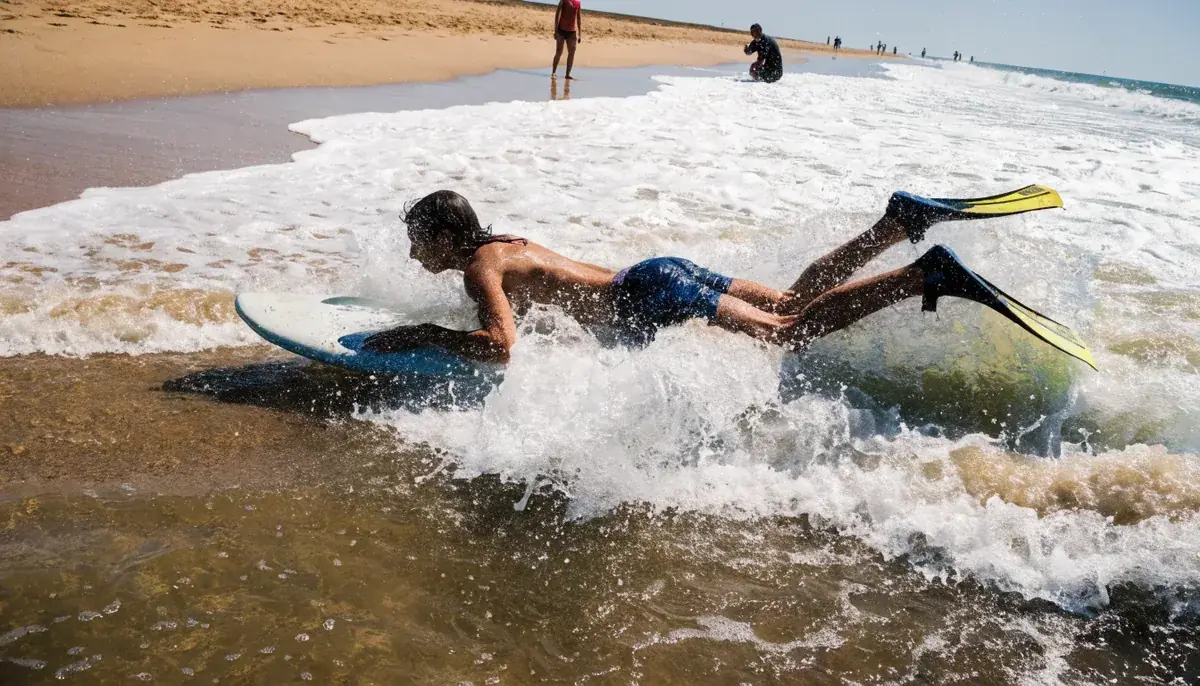
First waves inside half an hour, a kit list you can carry in one hand and an entry age of around four make bodyboarding the most approachable way to ride waves. It also builds real ocean sense from day one.
Bodyboarding is one of the quickest wave sports to pick up. These are the key stages for safe, enjoyable first sessions.
Read the full guide arrow_forward
Board length follows your height: stood on its tail, the board should reach between your navel and the bottom of your chest. A 5'9" (175cm) rider suits a board of around 41 to 42 inches. A PP (polypropylene) core is the versatile all-rounder.
Besides the board you will want a leash (linking the board to your bicep or wrist), swim-fins (essential for propulsion and getting back to the beach), and a wetsuit matched to the water temperature – a 3/2mm in summer, a 4/3mm or 5/4mm for UK winters.
Before you get in, watch the waves from the beach: pick out where they break consistently and spot the rip currents. As a beginner you start in the whitewater (already-broken waves), where the push is powerful and steady, and perfect for learning.
Lying on the board, sternum centred, feet in the fins: wait for the foam, let it carry you and enjoy the glide. Your first sessions are all about position and timing. Reckon on one to three sessions to feel at home in the breaking waves.
Once you're comfortable in the whitewater, progress to green (unbroken) waves. This is where bodyboarding really opens up: bottom turns, cutbacks, rollbacks and, for the more advanced, aerials. This stage usually takes 10 to 30 sessions.
Work on your placement in the wave, your weight on the rails (the edges of the board) and your fin propulsion. Bodyboarding asks for decent fitness – the paddling and the swims back in are demanding. Consistency (two sessions a week) is the key to progress.
Your choice of board shapes how quickly you progress. This is how to match one to your level and the way you ride.
See the gear guide arrow_forward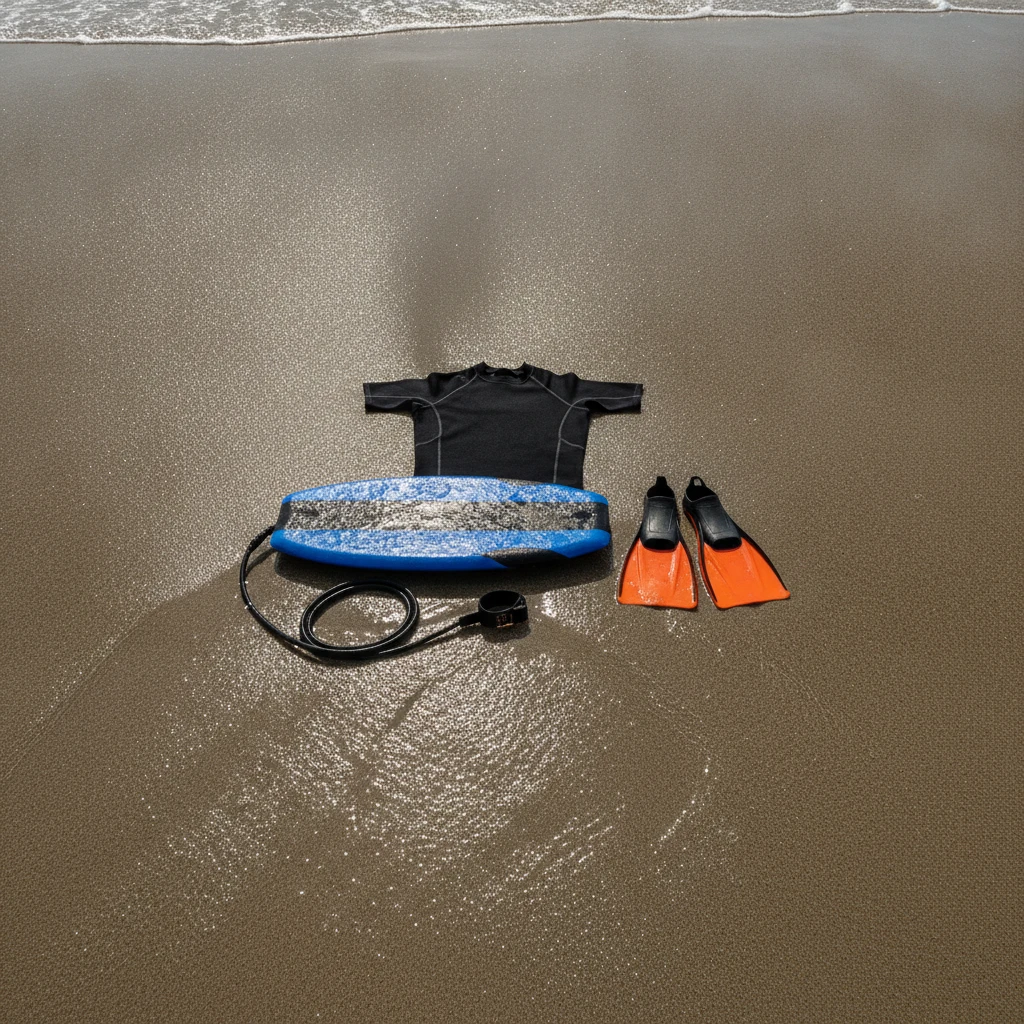
Beginner: a wide board with a rounded nose for float. The rounded nose makes catching waves easier and forgives placement errors.
Intermediate: a slightly narrower nose (crescent or pointed) to knife into steeper, hollower waves. A crescent tail gives more control through turns.
Advanced: a precise, lively shape suited to powerful waves and technical manoeuvres.
PE (polyethylene): the softest and most forgiving. Ideal for beginners and for the cooler UK water, where it keeps a nice flex. It loses a little rigidity in very powerful, warm-water waves.
PP (polypropylene): the all-rounder. A good balance of stiffness and flex, it works across temperatures and suits every level. This is the core to aim for as you progress.
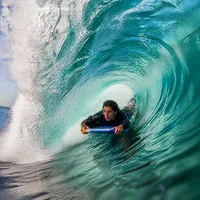
The stringer (a carbon or graphite rod set into the core) sets the board's stiffness. A double stringer adds rigidity and response through turns, while a single stringer stays softer and more forgiving for beginners.
The rails (the board's edges) govern its grip in the wave: thick, soft rails are more stable and forgiving, while thinner, harder rails give more precision and control in advanced manoeuvres.
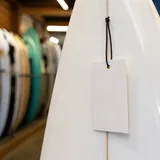
NMD, Pride, VS (Versus), Science, Custom X and Hubboards are among the best-known names in bodyboarding. For a first board, look at the entry and mid-range models from these brands; experienced riders will find plenty of high-performance shapes too.
For the full run-down, read our bodyboard gear guide.
The two sports share the same waves but offer very different experiences. This is how to choose between them.
More accessible, and you'll be riding foam on day one. Closer to the water, with intense, immediate sensations. Ridden prone, on the knees or drop-knee. Ideal for children, families and anyone who wants fast thrills without surfing's longer learning curve.
Get started arrow_forward
A longer learning curve (the pop-up takes practice, often 5 to 15 sessions before you stand regularly). More style and variety in the manoeuvres, and a standing view of the wave. Ideal for patient riders after a technical, all-round sport.
Explore UK spots arrow_forward
Many bodyboarders move on to surfing (or ride both) once they can read a wave well. Bodyboarding is an excellent stepping stone, because everything you learn about where to sit and when to go carries straight over to a surfboard.
Knowing your beach breaks from your reefs and points helps you pick the right bodyboard spot for your level and the day's conditions.
Read the guide arrow_forwardFrom the beach breaks of the South West to the cold-water reefs of Scotland, the UK coast serves up superb bodyboarding for every level. These are the standouts.
Cornwall's flagship beach break and the home of UK wave riding. Fistral picks up almost every swell and works for everyone, from first-timers in the whitewater to bodyboarders hunting punchy, hollow sections on a clean day.
Level: Beginner to advanced · Best season: September to November
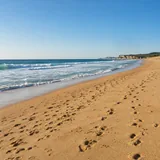
A powerful, hollow beach break that fires on a solid swell – a bodyboarder's favourite for barrels and steep drops. It gets heavy at size, so pick your day. Nearby Woolacombe offers mellower waves when Croyde is maxing out.
Level: Intermediate to advanced · Best season: Autumn to spring
A consistent reef and beach set-up on the South Wales coast that catches plenty of Atlantic swell. A friendly, well-established scene and waves for all abilities make it a fine place to learn and progress.
Level: Beginner to intermediate · Best season: Autumn to spring
A long, forgiving beach break with plenty of room to spread out. Its mellow, rolling waves are ideal for first sessions in the foam and for building confidence before you tackle heavier spots.
Level: Beginner to intermediate · Best season: All year

A world-class cold-water reef break on the far north coast. The water sits around 6–8°C in winter, so it's a 5/4mm-with-hood affair, but the waves reward the effort. A serious spot for experienced bodyboarders.
Level: Advanced · Best season: Autumn to spring

A long, exposed beach on the Gower Peninsula that picks up steady Atlantic swell. Space to find your own peak, sandy bottom and waves for every level make it a great all-round bodyboard beach.
Level: Beginner to advanced · Best season: All year
Bodyboarding is relatively safe, but the sea demands respect. These are the essentials for riding safely on UK beaches.
Read the safety guide arrow_forward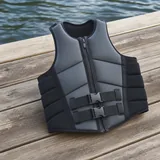
The leash is your number-one safety item: it ties the board to your bicep or wrist. In a wipeout your board is your buoyancy – never let it go. In hollow, shallow waves a helmet is worth wearing to protect your head from the board or the bottom.

The bodyboarder closest to the peak (where the wave breaks first) has priority. Never take off on a wave someone is already riding (no snaking). Stay humble and respectful in the water, and give way to riders already up and going.

Never overestimate your level. Start in waves that match your ability, identify the rip currents before you get in, and try to ride with a buddy. Get out when you're tired – tired riders make poor decisions and take on more risk.

On UK beaches the RNLI flags show where it's safe. Ride your bodyboard between the red-and-yellow flags, alongside swimmers – the black-and-white chequered zone is for surfboards and other non-powered craft, not bodyboards – and never go in on a red flag.
Read the guide arrow_forwardWherever you can, ride on a lifeguarded beach patrolled by RNLI lifeguards. Their local knowledge of the rips and conditions is invaluable, and cover typically runs from spring through to early autumn on the main surf beaches.
See the spots arrow_forward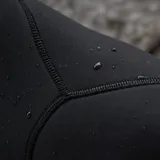
Choosing the right wetsuit is what lets you extend your sessions through the seasons. Because bodyboarders are so often submerged, thermal protection is essential – our gear guide covers what to wear when.
See the gear arrow_forwardOur buying guide to rails, tail shape and sizing a board to your build.
Read the article arrow_forwardFrom about 4–5 years old, with a board matched to the child's height and an adult supervising in the water. Bodyboarding is the most accessible wave sport for young riders, and children's swim-fins are widely available in small sizes.
If you want immediate glides and a fast learning curve, start with bodyboarding. If you're set on standing up and happy to put in 5 to 15 sessions before you ride regularly, start with surfing. Both are brilliant ways to learn to read the ocean.
Bodyboard fins are short and wide, built for explosive propulsion. Choose a pair that fits snugly without pinching – a little room at the toes is normal – and wear them with neoprene fin socks in cold water. A fin tether stops you losing one in a wipeout.
Bodyboarding needs waves, so it's a sea or wave pool sport. Around the UK, artificial wave venues let you practise in controlled conditions – handy for progressing between coast trips.
In high summer a 3/2mm steamer covers most of it. From autumn through spring a 4/3mm is sensible, and for winter water down around 6–8°C you want a 5/4mm with a hood, plus boots and gloves. Because you spend a lot of time submerged, thermal protection matters.
Yes. Bodyboarding teaches wave reading, positioning and timing, and those skills transfer straight across. Plenty of riders do both, or move on to stand-up surfing once they can read a wave well.