
Lying prone and using swim-fins make bodyboarding a sport apart, with its own safety rules: beach flags, rip currents and riding zones to respect. Sort these out before you get in the water.
Understanding the beach flags
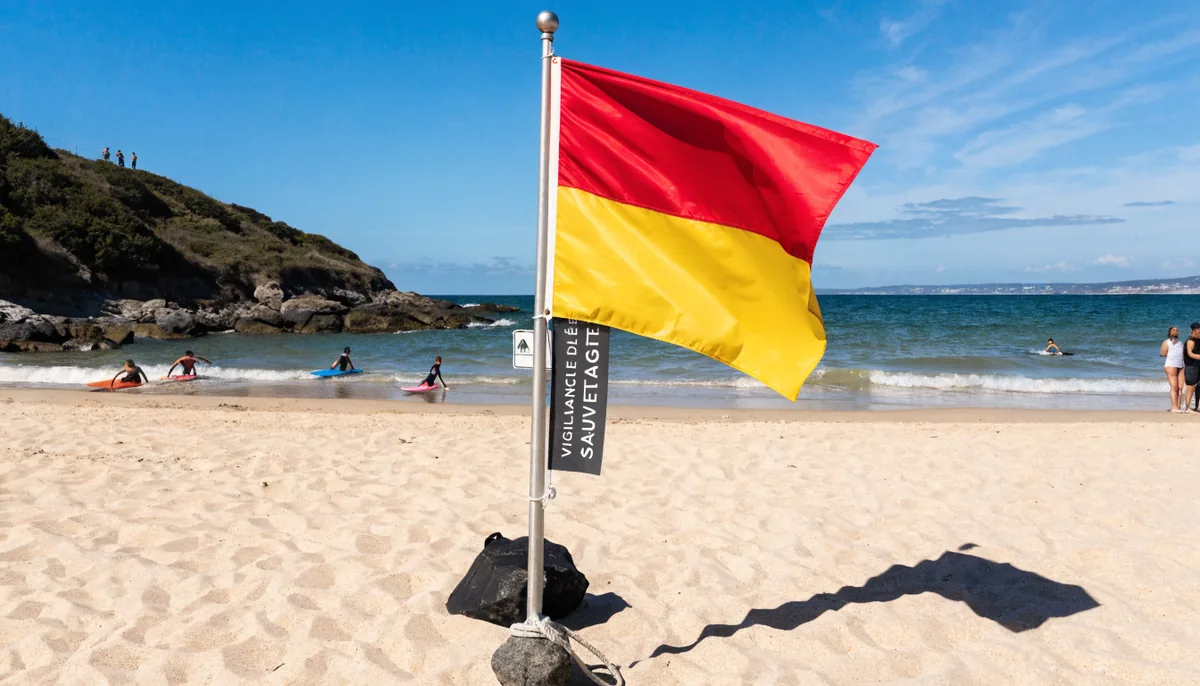
On UK beaches the RNLI flag system tells you where and when it's safe to be in the water. Red and yellow flags mark the lifeguarded zone patrolled by RNLI lifeguards – the safest place to swim and bodyboard. Black-and-white chequered flags mark a separate zone for surfboards, paddleboards, kayaks and other non-powered craft – not for bodyboards, which stay in the lifeguarded zone whether or not you're wearing fins. A red flag means danger – do not go in the water. An orange windsock warns of offshore wind: never use inflatables, and be aware you can be blown out to sea.
Riding zones: where can you bodyboard?
Without swim-fins
Bodyboarding without fins, on a soft foam or beginner board, is generally fine within the lifeguarded swimming area marked by the red-and-yellow flags – always follow the lifeguards' direction.
With swim-fins
Fins don't change your zone – stay within the red-and-yellow lifeguarded area, exactly as you would without them. Give swimmers a wide berth when finning out, and keep your board and your fin blades well clear of bathers.
Rip currents
Rip currents are behind the great majority of surf and swimming rescues on the UK coast. The golden rule if you're caught in one is never to swim against it: stay with your board, let the current carry you out until it eases, then swim parallel to the beach until you're clear and let the waves bring you back in. Your board, held by the leash, is your first buoyancy aid if you tire. The RNLI's advice for anyone in trouble in the water is to Float to Live: lean back, spread your arms and legs, and float until the panic passes.
The particular risk of shorebreak
Lying prone exposes your head and neck if you fall in very shallow water, especially on the sandbanks where powerful shorebreak dumps. Always protect your head with your arms in a wipeout, and steer clear of spots known for heavy shorebreak (some Cornish and Devon beaches at low tide, for example) until you've got the experience to handle them.
Emergency numbers to know
In any coastal or sea emergency in the UK, dial 999 (or 112) and ask for the Coastguard. HM Coastguard coordinates search and rescue around the UK coast 24 hours a day. Wherever you can, ride on a lifeguarded beach and let someone know before you head out beyond a patrolled area.
FAQ
Can I bodyboard in the swimming zone?
Yes, with or without fins. Bodyboarding belongs in the lifeguarded zone marked by the red-and-yellow flags. The black-and-white chequered flags mark a separate zone for surfboards, paddleboards, kayaks and other non-powered craft, not bodyboards – stay out of it even once you've got fins on.
What do I do if I'm caught in a rip current?
Don't fight the current. Stay with your board, let it carry you out until it eases, then swim parallel to the beach until you're clear and head back in with the waves.
Is a helmet compulsory for bodyboarding?
No, but it's strongly recommended on reef breaks or in hollow, shallow shorebreak to protect your head from impacts.
Why is lying prone risky in shorebreak?
It exposes your head and neck if you fall in very shallow water. Always protect your head with your arms in a wipeout and avoid powerful shorebreak until you've got the experience.
What does the red flag mean?
A red flag means danger: do not go in the water. Conditions are hazardous, such as strong currents, big surf or high winds.