
What is kite foil?
The concept
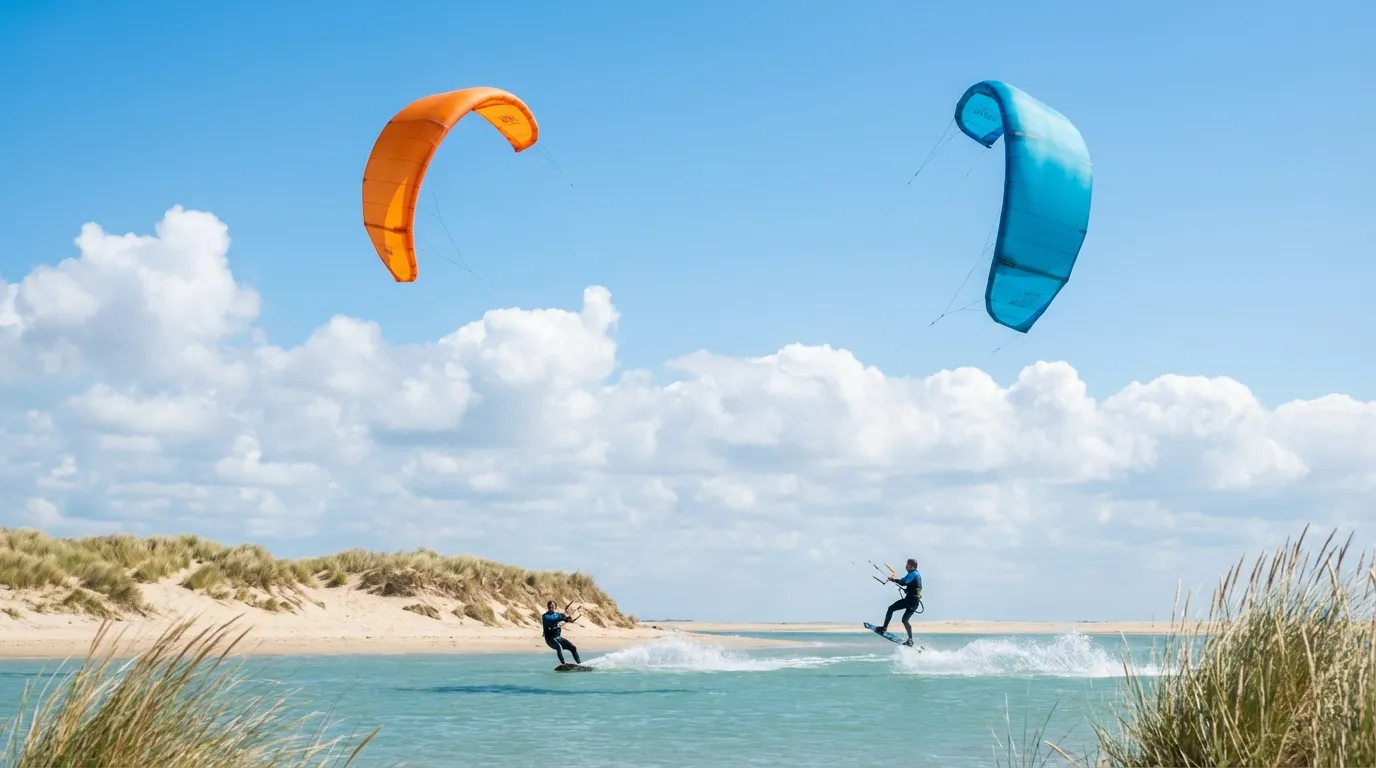
Kite foil pairs a kitesurfing kite (typically 5 to 12m² depending on the wind) with a board fitted with a hydrofoil. The kite provides the pull, the foil lifts the board clear of the water. That combination gives speeds well beyond 20 knots (23mph), with a feeling of flight nothing else quite matches.

Why it's so spectacular
Kite foil is the fastest of the foiling disciplines. Top competition speeds exceed 32 knots (37mph), and the outright kitesurfing speed record sits around 58 knots (66mph). The foil cuts drag by around 90% compared with a conventional board, so it reaches impressive speeds even in modest wind.

Prerequisites
Solid kitesurfing skills are essential before adding a foil into the mix. You need to be comfortable controlling the kite, water-starting and turning. A kite foil beginner should already be at least an intermediate-level kitesurfer.
How do you get started with kite foil?
The move from kitesurfing to kite foil takes some adjustment but comes relatively quickly for an experienced rider.
The gear
Board 100–140 litres, front wing 1,200–1,500cm², mast 80–90cm. You'll want a slightly smaller kite than in classic kitesurfing, because the foil cuts drag dramatically.
First take-offs
Start out in 12–15 knots. The foil lifts as soon as your speed builds. Confirmed kiters often get their first flights in the very first session.
Flying height
Too high and the foil stalls. Too low and the board touches down. Control comes from the kite's angle and your body weight placement.
Tacks and gybes
Gybing on a kite foil means managing the kite, the board and the foil all at once. Start with wide arcs and tighten them up as you improve.
The best UK spots for kite foil
Kite foil works on pretty much any stretch of water with a bit of wind. Here are some of the most popular UK spots.

Hayling Island (Hampshire)
Sheltered water and steady sea breezes make Hayling Island one of the most popular kite foil spots on the south coast, with a strong local community and plenty of room to ride.

Portland Harbour (Dorset)
A large, protected harbour with flat water and reliable wind. It's one of the benchmark kite foil venues in the south west, with a well-established rider community and several schools.

West Wittering (West Sussex)
A wide, sandy beach that catches clean south-westerlies. Flat water at low tide makes it well suited to kite foil, especially for speed sessions.
Related guides
More ways to fly above the water
Surf Foil
No kite involved – surf foil uses wave power alone to lift you clear of the water for a silent, gliding ride.
See surf foil arrow_forwardKite foil for beginners
Our complete step-by-step guide to learning kite foil: gear, progression, safety and budget.
Read the guide arrow_forward
Getting started foiling
Not sure which foil discipline suits you? Our beginner's guide compares wing, surf and kite foil.
Read the guide arrow_forward