

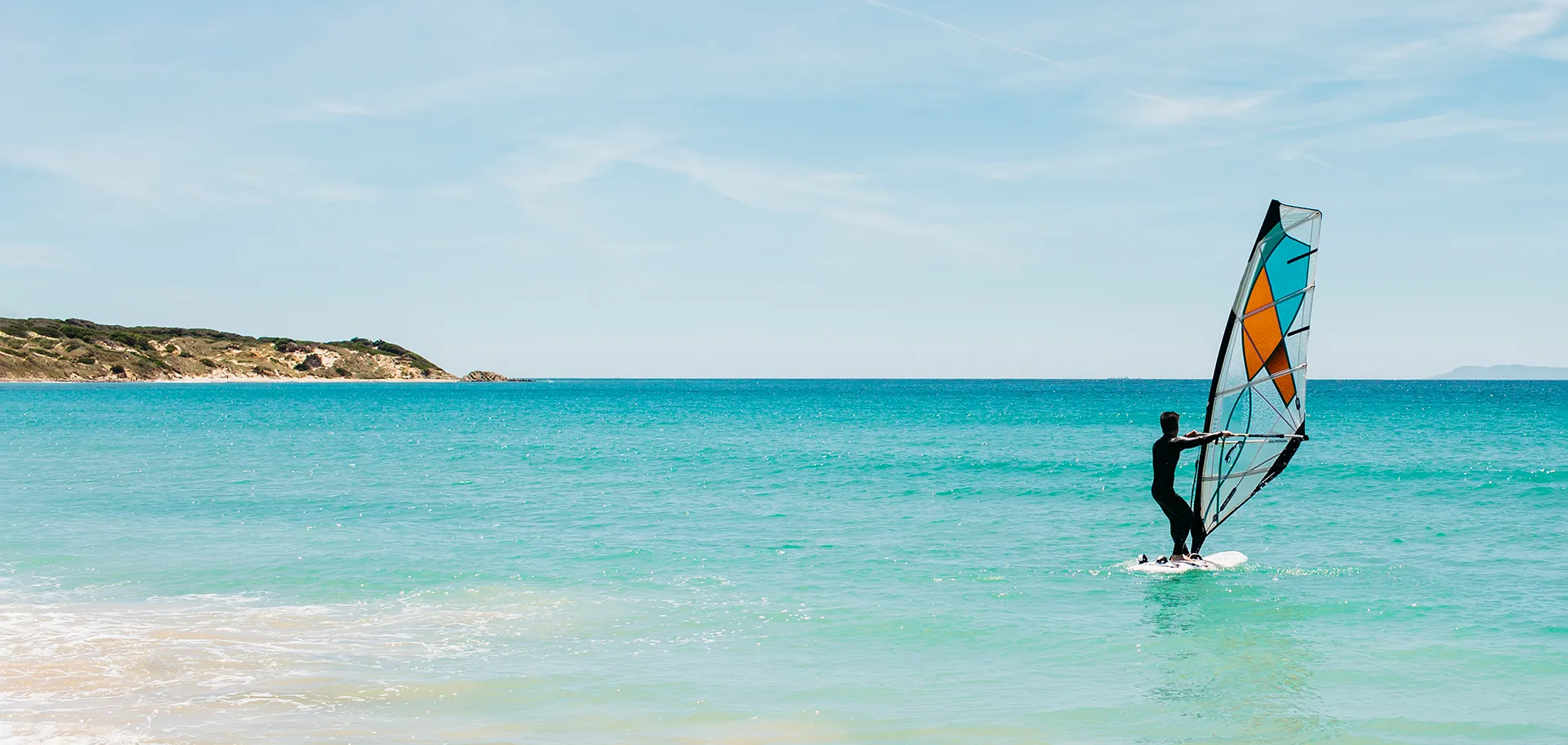
Which foil discipline should you start with?
Foiling comes in several flavours. The right one for you depends on your board-sport background.
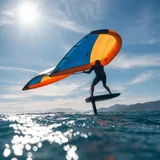
Wing foil – the most accessible
Wing foil is the most popular way onto a foil. The wing is held in your hands – no lines, no harness – and it works from around 12–15 knots (roughly 14–17 mph) on almost any stretch of water. Ideal if you come from SUP or are starting from scratch.
See the gear arrow_forward
Surf foil – for surfers
Surf foil is ridden on waves, with no outside power. It asks for at least an intermediate level in ordinary surfing. If you already surf regularly, it's the natural next step in your progression.
Find a spot arrow_forward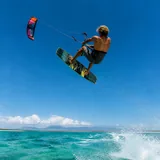
Kite foil – for kiters
Kite foil pairs a kite with a hydrofoil. You need solid kitesurfing skills before you add the foil. It's the fastest and most spectacular discipline, and one for experienced riders. Tow foil, behind a boat, is another way in.
Read the safety guide arrow_forwardBeginner-friendly foil kit
Choosing your kit is the single most critical step. A foil that's too advanced will hold your progress back.
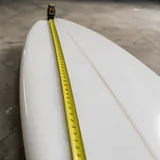
The board
Volume: 30 to 40 litres above your body weight. A 75kg rider is looking at a board of 105 to 115 litres. Length: 6'0" to 7'6" to start. Boards any shorter than that demand near-perfect timing.
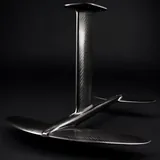
The mast and fuselage
Mast: 75 to 85cm to begin with. Shorter is more forgiving and easier to control. Fuselage: 70 to 80cm is a good middle length. Short fuselages feel twitchy; long ones make turning hard work.
The front wing
Area: 1,200 to 1,800cm² to start. Big front wings give more lift at low speed. Profile: a low-aspect wing (short and wide) with a thick section is the most stable and the easiest to learn on.

The full gear guide
Front wing, mast, fuselage and board all interact. Our editorial gear guide explains how to size each part to your weight and discipline, so your setup helps you fly rather than fight it.
Read the gear guide arrow_forwardCoaching and safety on the foil
Foiling demands real respect for safety. The edges of the mast and wings are sharp.
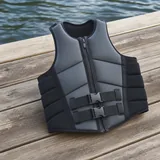
Safety kit
A helmet is a must while you learn. Use an ankle leash (never a waist leash), neoprene boots to protect your feet from the foil's edges and an impact vest to soften your falls. More detail in our foil safety guide.

Take lessons
A two to three-hour session with a qualified instructor speeds up your progress no end and heads off bad habits. Most wing foil and kite centres run intro courses. Look for RYA or British Kitesports accredited schools.
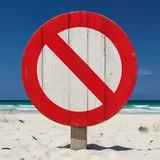
Keep well clear of others
Never foil near swimmers, bodyboarders or other surfers. A rider on a foil needs a clear bubble several metres wide. Stay well outside the RNLI red-and-yellow bathing area, and keep to the black-and-white chequered surf-craft zone where one is marked out.
The stages of foiling progression
Progression follows a clear path. Each stage you tick off unlocks the next.

Prerequisites
What you need depends on the discipline – an intermediate level in surfing (surf foil), in kitesurfing (kite foil), or no experience at all but decent fitness (wing foil). Being a confident swimmer is essential across the board.

First lift-offs
In shallow water, learn to feel the foil start to rise. Most beginners feel that first lift-off after three to five sessions. It's the most exciting moment of the whole learning curve.

First controlled flight
You lift off, you fly, you manage your ride height. The most rewarding stage of all, and it typically arrives after five to ten sessions depending on your background.

Tacks and gybes
Learning to turn without dropping the board back onto the water is the key to riding without interruption. Full command of it takes 15 to 30 sessions, depending on where you started.