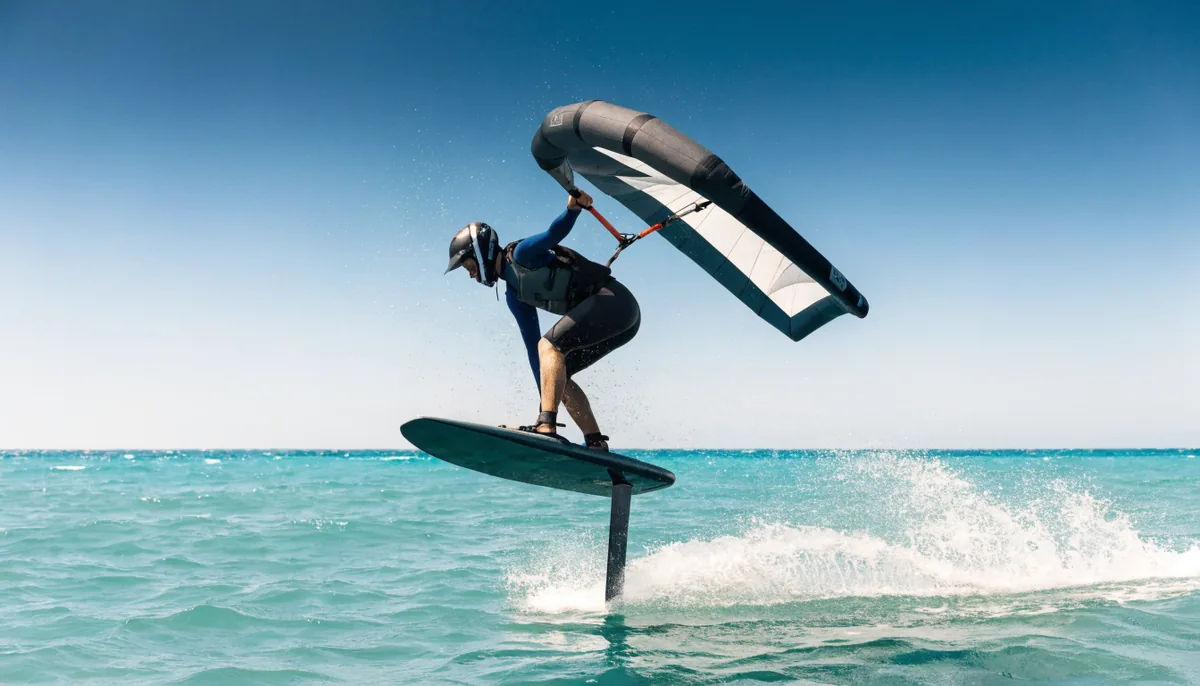

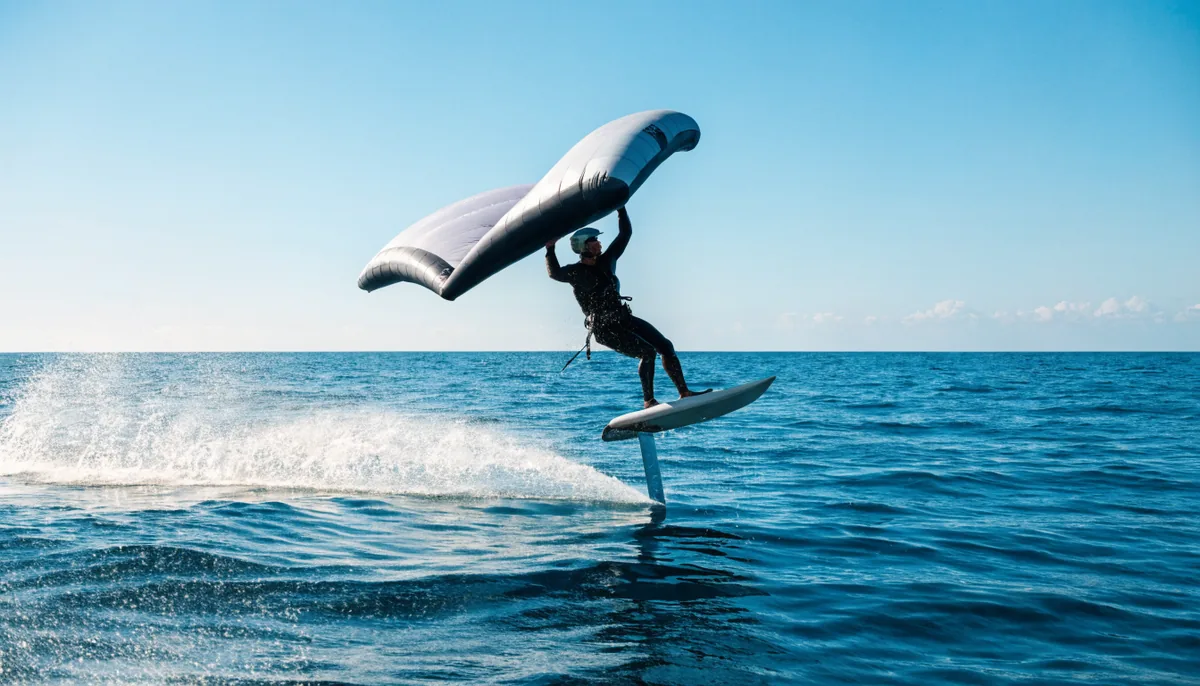
A board rising clear of the water with no engine, carried on nothing more than a single mast: the first time you watch a foil 'take off', it looks like a magic trick. It's really just physics – the same physics that keeps an aeroplane in the air, applied to a fluid eight hundred times denser. Here's how a hydrofoil turns speed into lift, and why that lift completely changes the feeling of being on the water.
The principle: an aeroplane wing, underwater
A foil (or hydrofoil) is a submerged wing fixed beneath a board by a mast. As that wing moves through the water, its curved shape deflects and speeds up the flow passing over the top relative to the flow passing underneath. That difference in speed creates a difference in pressure – lower above the wing, higher below it. The result is a force that pushes the wing, and everything attached to it, upwards. It's exactly the same principle that keeps an aeroplane flying – the only difference is that the fluid here isn't air, it's water.
This lift depends on three main factors: speed (it increases with the square of speed – double your speed and you quadruple the lift), wing area and angle of attack. As long as the lift being generated is less than the combined weight of the rider and their gear, the board stays sitting on the water. The moment speed is enough to push lift past that threshold, the foil starts carrying the load, and the board takes off.
Water is roughly 800 times denser than air. That's why a hydrofoil takes off at just 12-15 km/h – roughly jogging pace – where a similarly sized aeroplane wing would need several hundred km/h to generate the same lift in air.
Angle of attack: the setting the rider is constantly adjusting
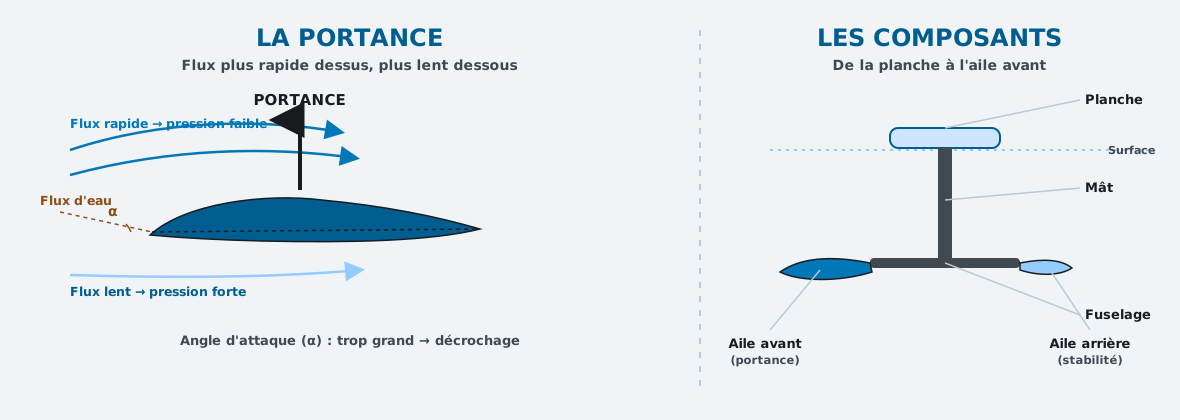
Angle of attack is the angle between the wing and the direction of the water flow hitting it. The bigger that angle, the more lift the wing produces – up to a point. Beyond a critical angle, the water flow can no longer follow the shape of the wing: it separates suddenly from the surface, and lift drops all at once. This is stall, and it's behind that classic beginner sensation of the board 'falling off the foil' with no warning.
In practice, it's the rider who continuously adjusts this angle of attack, through body weight and the tilt of their stance: leaning back slightly increases the angle and the lift (the foil rises), leaning forward reduces it (the foil comes back down). It's an active, continuous balancing act, not a fixed setting – which is exactly why the first few foiling sessions often feel like a rollercoaster, right up until that control becomes instinctive.
The components of a foil
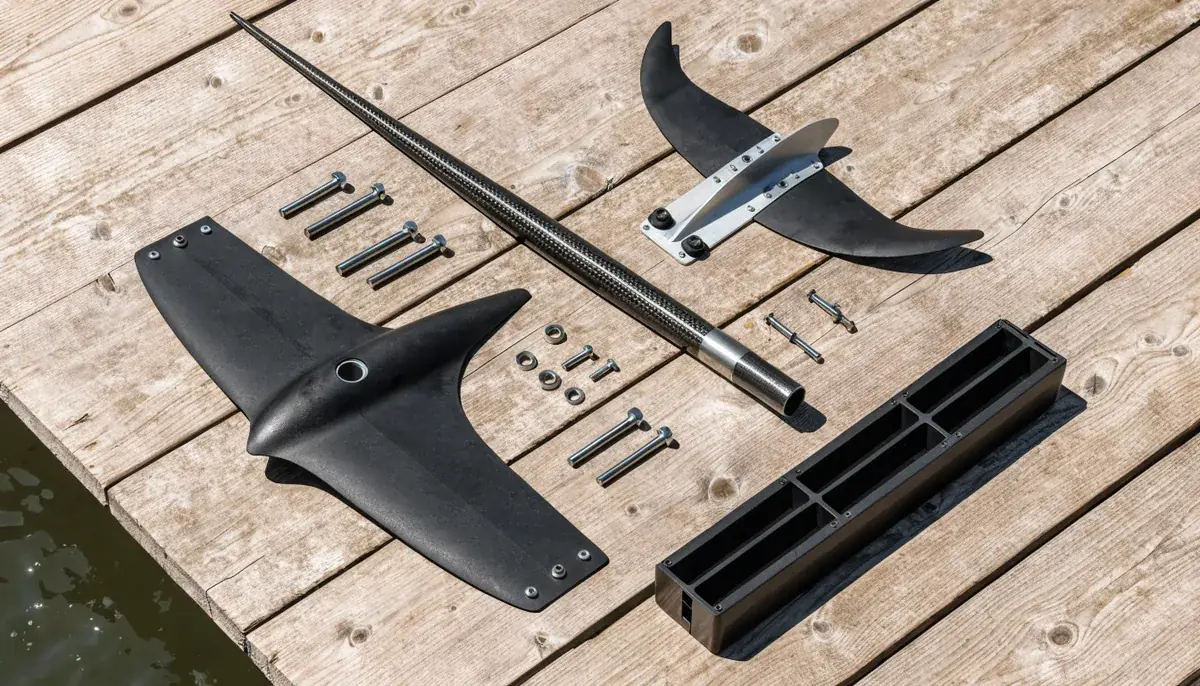
A complete foil is made up of four parts, all visible in the diagram above:
🎯 The front wing
The larger of the two wings, and the one that generates most of the lift. A wide, less cambered front wing takes off at low speed and is forgiving of mistakes – the classic choice for beginners. A smaller, thinner high-aspect wing needs more speed to take off, but glides with far less drag once it's flying – the choice for experienced riders chasing performance.
⚖️ The rear wing (stabiliser)
Smaller, and mounted at the rear of the fuselage, it does the same job as an aeroplane's tailplane: it controls pitch (the forward-backward tilt) and stops the foil from nose-diving or breaching completely out of the water.
The mast, the vertical aluminium or carbon shaft, connects the board to this submerged assembly: its length sets the height at which the board flies above the water – beginners use shorter masts, which are easier to control. The fuselage, the horizontal tube that links the front wing to the rear wing, shapes stability and manoeuvrability: a longer one adds stability, a shorter one makes the foil sharper and more manoeuvrable.
Why foiling changes everything
Once the board is fully clear of the water, it stops experiencing hull drag – the resistance any hull creates by displacing water and pushing up waves around it. At low to moderate speed, that drag is the dominant force slowing a conventional board down. By removing almost all of it, a foil drastically cuts the energy needed to keep moving.
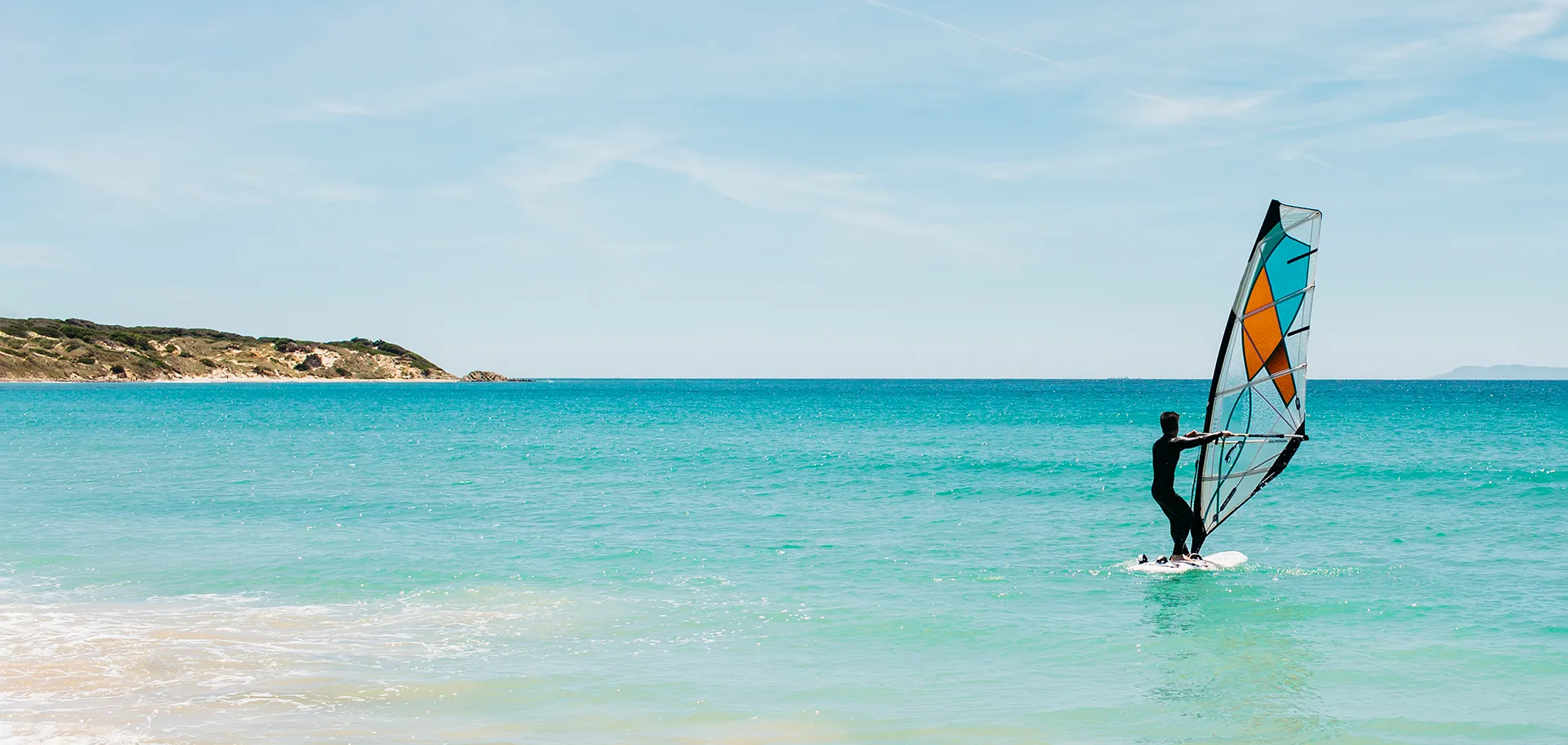
That's why a wing foil can sail in far lighter wind than a conventional windsurfing board, why a kite foil reaches speeds the same kite could never produce on a conventional kiteboard, and why a surf foil turns tiny, mushy ripples – too weak to push a normal surfboard into a wave at all – into long, silent glides. It isn't just a flashier variant of watersports: it's a completely different physical regime.
❓ Frequently asked questions about how a foil works
How does a foil make a board fly above the water?
The foil's front wing, submerged beneath the board, produces a lift force as it moves through the water, exactly like an aeroplane wing in the air. That lift increases with speed: past a certain threshold, it becomes greater than the combined weight of the rider and their gear, which lifts the board clear of the water.
Why does a foil take off at such low speed?
Because water is roughly 800 times denser than air. A wing moving through water therefore produces far more lift than a wing of the same size moving through air at the same speed. That's why a wing foil can take off at little more than 12-15 km/h, where an aeroplane needs several hundred km/h.
What is angle of attack in foiling?
Angle of attack is the angle between the wing and the direction of the water flow hitting it. The bigger it is, the more lift is generated, up to a breaking point called stall: the flow separates suddenly from the wing and lift drops all at once. The rider constantly adjusts this angle, through their weight and body position, to keep the foil stable.
What do the mast, fuselage and wings of a foil actually do?
The mast connects the board to the submerged assembly and sets the flight height. The fuselage is the tube that links the front wing to the rear wing and shapes stability and manoeuvrability. The front wing, the larger of the two, generates most of the lift. The rear wing, smaller, acts like an aeroplane's stabiliser: it controls pitch and stops the foil from nose-diving or breaching.
Why does a foil let you ride in less wind or smaller waves?
Once the board is fully clear of the water, it no longer experiences hull drag (the resistance a hull creates in the water), which is the main force slowing down a conventional board. With so much less resistance to overcome, you need far less energy – meaning less wind for wing or kite foiling, or smaller waves for surf foil – to keep the glide going.