

📍 Taghazout, Morocco
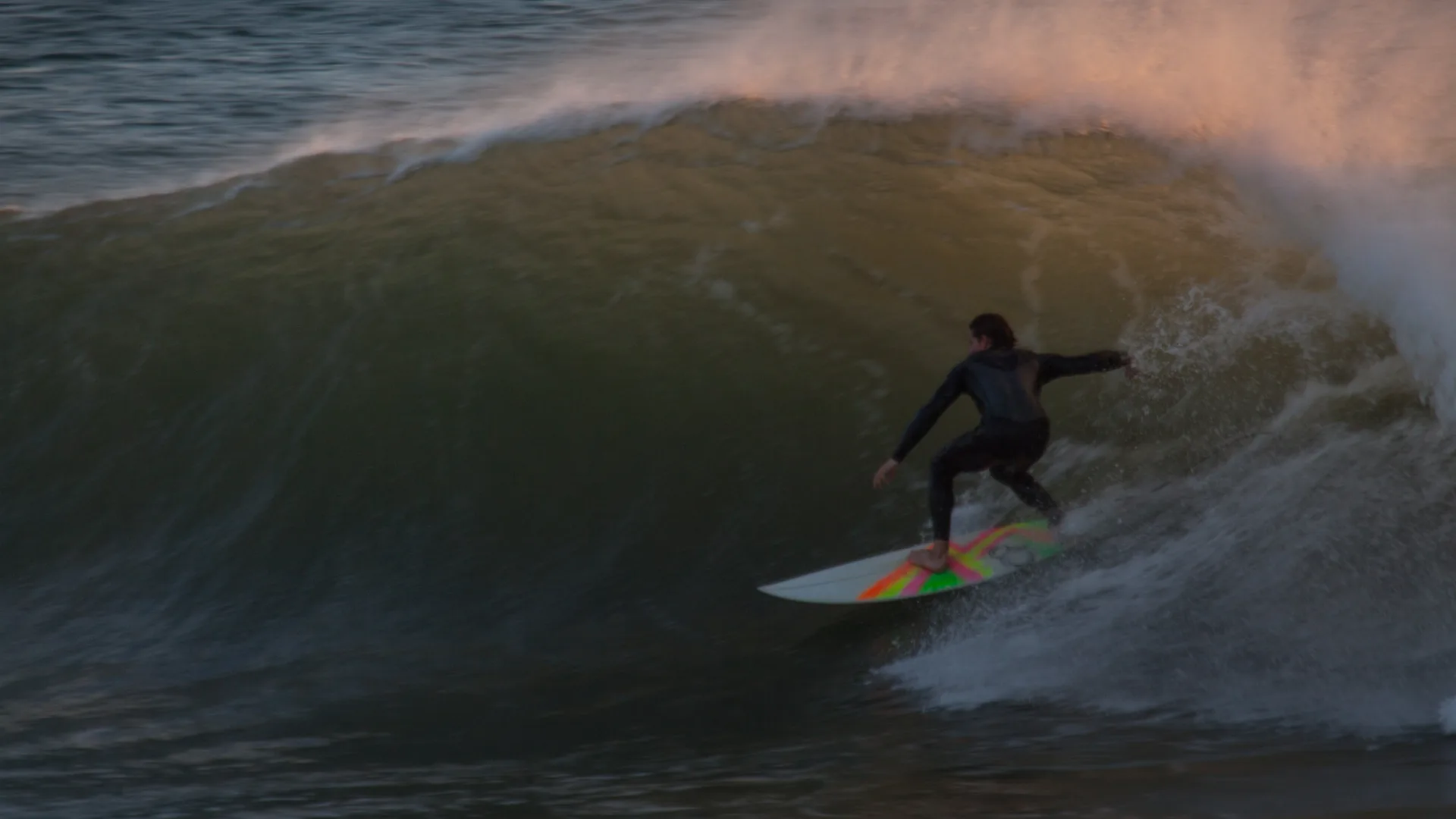
Photo: Anchor Point, January 2013 – Eelke Dekker / Flickr, CC BY 2.0
Our Morocco guide is about wind: Essaouira and Dakhla. Taghazout is the other Morocco, the one surfers fly to in winter, when Atlantic swell wraps into a string of rocky points north of Agadir.
Anchor Point, Killer Point and, further north, Boilers are right-handers that break over rock. They're the reason the place is famous, and they're not where you learn.
The points in detail arrow_forward
Surf schools favour the beaches south of the village, Banana Point and Devil's Rock near Aourir, and Panoramas on small days. Imsouane's long, slow right is the other classic place to learn.
Learning to surf here arrow_forward
Getting in and out over rock is part of surfing the points, and many Moroccan beaches have little or no lifeguard cover. Read the safety section before your first paddle out.
Safety and rules arrow_forwardWhat to know before you book, and what we couldn't confirm.
Long rights over rock, best on a north-west swell with an offshore wind from the north-east or east.
Anchor Point, also called La Pointe, is the wave Taghazout is known for: a right-hand point just north of the village that needs a long-period north-west swell to line up. The regional tourist board calls it a world-class right for experienced surfers, says it works at all but high tide unless the swell is huge, and warns of rocks and a crowded line-up, especially on smaller swells. You paddle out from the coves beside the point and come back in the same way, timing your exit between sets. One surf guide gives it 4-10ft and rides of up to 500 metres. Guides describe the bottom differently, some as rock, some as sand over rock, so look at it at low tide before you paddle out.
View Anchor Point on Google Maps open_in_newFurther north, past La Source, Killer Point is another right-hand point, and guides agree it's for experienced surfers only. It picks up more swell than the breaks around it, its waves are fast, and one guide notes it often feels bigger once you're in the water than it looks from the cliff. On a small swell at low tide a left can appear too. La Source, between Killer Point and Anchor Point, has rights and lefts over a rock slab; the tourist board reserves it for experienced surfers and flags the slab at low tide as the hazard, while one surf-holiday guide rates it more forgiving at mid to high tide. Check it on the day.
About 12 miles (20 km) further up the N1 coast road, just south of the Cap Ghir lighthouse, Boilers takes its name from the rusting ship's boiler on the rocks at the take-off. It's a powerful, vertical, fast right that gets more swell than Taghazout, with the wind channelled offshore by the land around it. Getting in and out is the hard part: sharp rocks and sea urchins, plus currents that one guide calls strong and dangerous. The tourist board suggests going in and out behind the big rock north of the spot, and says the peak is often crowded. Experienced surfers only.
Gentler waves in front of Taghazout and just south of it.
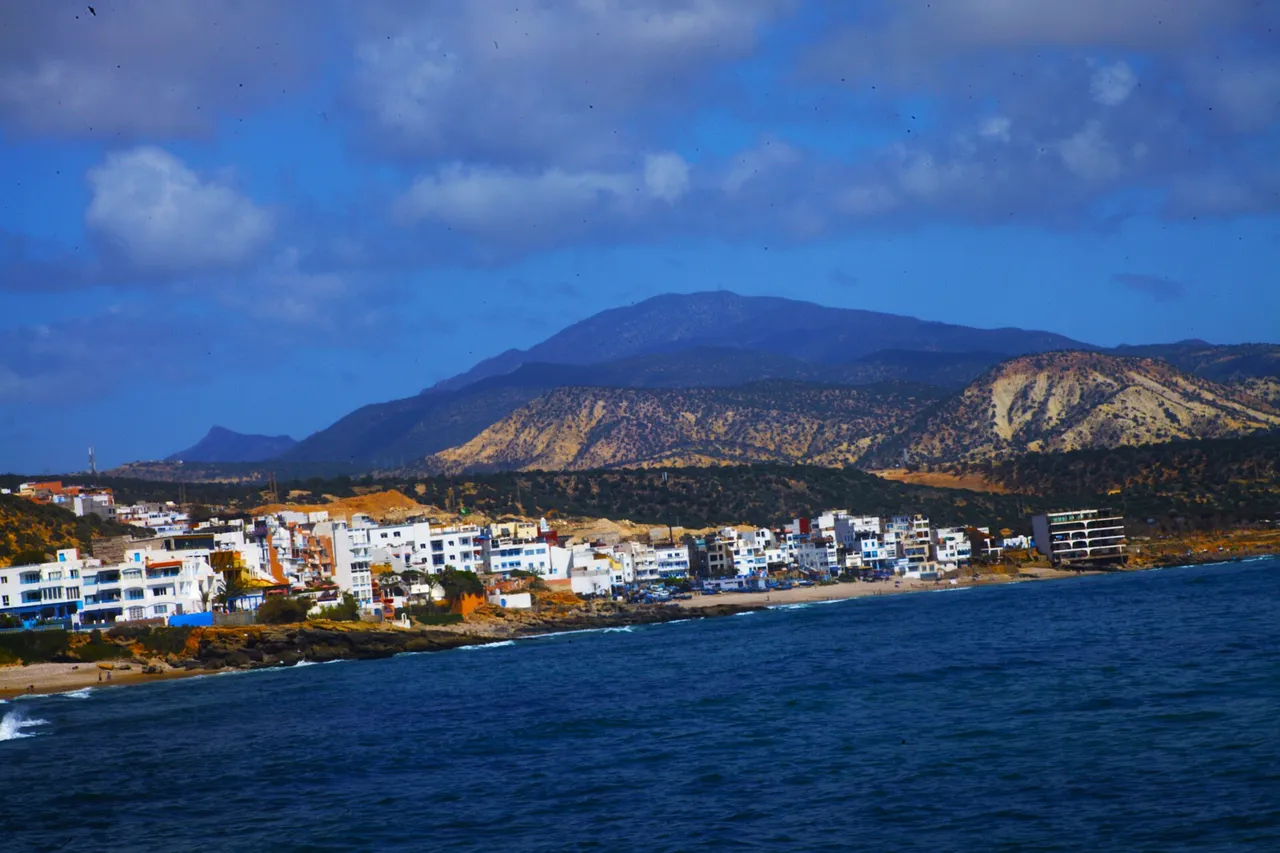
Hash Point breaks right in front of the village. It's a more playful, forgiving right than Anchor Point, over sand with rocks, and one surf camp's guide lists it as workable on all tides in small swells of 3-4ft.
Just south of the village, Panoramas is a right that peels towards the beach, and the tourist board points calmer surfers there when Anchor Point is too much. Sources don't agree on what it is: some describe a sandy-bottomed wave suited to beginners and improvers on small days, another a rocky reef point for intermediate and advanced surfers, with a strong rip that can sweep you off the peak and away from the line-up. Both can be true depending on the swell. If you're new, go on a small day, ideally with a school.
Where the surf schools take beginners, a few miles south of Taghazout.
Banana Point sits at Aourir, between the mouth of the Oued Tamraght and a rocky point that shelters it from the north wind, about 9 miles (15 km) north of Agadir. When conditions line up, a long, easy right runs off the point; the rest of the time it works as a beach break for beginners. The regional tourist board calls it the village surf schools' favourite spot.
Devil's Rock (Rocher du Diable), just past the river at Aourir, is a beach break with peaks going left and right and few rocks, which is unusual on a coast of rights. It suits beginners and better surfers alike, but it isn't a big-swell spot. Weekends get busy, and there's a café on the beach.
View Devil's Rock on Google Maps open_in_newTaghazout and Tamraght are full of surf camps, which package accommodation with lessons or guiding. Two long-running examples: Surf Maroc, founded in 2003 and based in Taghazout, runs a surf school, guiding for experienced surfers, a surf shop and accommodation, and Surf Berbere sits on the seafront at Hash Point with lessons, guiding and surf-and-yoga packages. Both websites were taking bookings when we checked in October 2026; that's not an endorsement, and there are many others. Some instructors advertise accreditation from the Royal Moroccan Surfing Federation (FRMS), and it's a fair question to ask whoever you book with.
A day trip, or a trip of its own, about halfway to Essaouira.
Imsouane is a small fishing village with a harbour, about 56 miles (90 km) north of Agadir, which the tourist board puts at 1 hour 45 minutes by road. Its bay holds one of the longest rides in Morocco: a slow, peeling right that the tourist board says can run for more than 800 metres (other guides say around 600). It's a longboarder's wave and a good place for lessons. On the other side of the bay, the Cathedral has several defined peaks that are heavier and quicker, manageable for improving surfers when the swell is small. Guides disagree on which tide suits the bay best, and the line-up is reported busy all year.
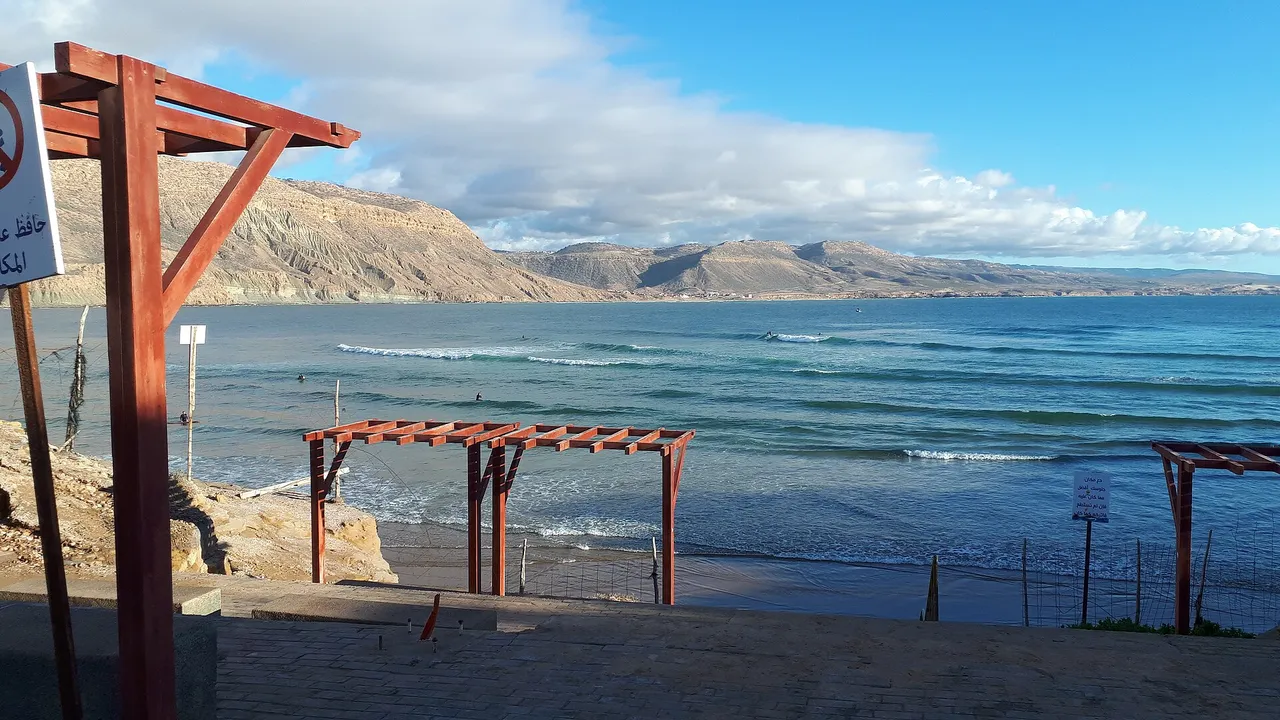
In January 2024 the authorities demolished buildings in Imsouane that stood on the maritime public domain – around 80 houses and 30 businesses, by one estimate – giving residents about 24 hours' notice. Some businesses have since reopened, but if you're booking a stay rather than a day trip, check that your accommodation is still there and trading.
Winter for swell, autumn and spring for a mix, summer for the beach.
The Souss-Massa tourist board puts the surf season at September to March, when north-west Atlantic swells reach the points; the best days come with an offshore wind from the east. One local camp narrows the best swells to November to March. Spring is less regular, with more wind, and summer can stay flat for long periods. One surf-holiday guide suggests beginners come between September and April, intermediates between October and March, and advanced surfers between December and March.
The sea runs from about 16°C to 22°C over the year. Monthly averages bottom out around 17.5°C in February and peak around 21°C in September and October. That's mild for winter, but it's still a wetsuit sea: a 3/2mm full suit is the usual winter choice, a 4/3mm is worth it if you feel the cold or stay in for hours, and in summer a thin suit is enough. A rented suit that has been stretched by a season of beginners will feel colder than the thickness suggests. See our surf gear guide for more on choosing one.
Agadir is the airport; the rest is by road.
Agadir Al Massira Airport (AGA) sits about 20 km south-east of Agadir, so Taghazout is roughly 28 miles (45 km) by road; transfer companies quote about 40-55 minutes depending on traffic. easyJet, Jet2, Ryanair, TUI and British Airways have all listed direct routes to Agadir from UK airports, including London, Manchester, Bristol, Birmingham and Edinburgh, some of them seasonal. Routes change, so check what's flying for your dates. Once you're there, the spots are spread along the N1 coast road: Banana Point and Devil's Rock to the south, Anchor Point and Killer Point a short walk or drive north of the village, Boilers further on, and Imsouane more than an hour away. Unless your camp drives you, you'll want a car or a taxi.
No surf-specific rulebook, few lifeguards, and Morocco's own numbers.
At the points, it's the rocks. Anchor Point and Boilers both mean entering and leaving over rock, Boilers with sea urchins and sharp edges too, so wear reef boots if you have them and watch where others get in before you try. Killer Point and Boilers break hard, Panoramas has a rip that can pull you off the peak, and Boilers has strong currents. The good waves are crowded, especially Anchor Point on smaller days and the peak at Boilers, so learn the line-up before you go for set waves. The UK Foreign Office warns that many Moroccan beaches have limited or no lifeguard cover and that strong currents occur; the French foreign ministry says the great majority of beaches are unsupervised and drownings are frequent. Don't surf the points alone, and if you're new, stay on the beginner beaches with a school.
We found no national rule in Morocco specific to surfing: no zones, no distance limit, no kit requirement. Maritime matters fall to the Direction de la Marine Marchande, backed by local harbour and municipal rules, and we found no local ordinance on surfing for Taghazout, Tamraght or Imsouane. That may be changing: in October 2025 the Souss-Massa regional tourism development company was drafting official guidelines for managing surfing and designated surf beaches, with the Royal Moroccan Surfing Federation, covering supervision standards and the roles of schools and clubs. We couldn't confirm whether they have been adopted. In the meantime, the tourist board says every surf spot in the region has an information panel showing the best tide, swell and wind direction and whether the bottom is sand or rock, so read it when you arrive.
Dial 19 for the police in towns and 177 for the Gendarmerie royale, which covers areas outside them, and 15 for fire and ambulance. The UK Foreign Office gives the police and fire/ambulance numbers as 190 and 150; the French foreign ministry gives 19 and 15. Both forms are in circulation, so save them all. These are Morocco's numbers: there's no RNLI or HM Coastguard here. Travel insurance that covers surfing and medical evacuation is worth having.
What surfers ask before booking.
September to March, according to the regional tourist board, with the most consistent north-west swells from November to March. Summer can be flat for long spells.
Yes, but not at the famous points. Schools teach at Banana Point and Devil's Rock near Aourir, at Panoramas on small days, and in Imsouane Bay. Anchor Point, Killer Point and Boilers are for experienced surfers.
Yes. The water runs from about 16°C to 22°C, with February the coldest month. A 3/2mm full suit is the usual winter choice, or a 4/3mm if you feel the cold; a thin suit does in summer.
Roughly 28 miles (45 km) by road, which transfer companies quote at about 40-55 minutes. Agadir Al Massira (AGA) has direct flights from several UK airports, some of them seasonal.
Many Moroccan beaches have little or no lifeguard cover, and we found no national or local rule specific to surfing. Read the information panel at each spot, don't surf the points alone, and save 19, 177 and 15 (or 190 and 150) in your phone. Our surf safety guide covers the basics.