

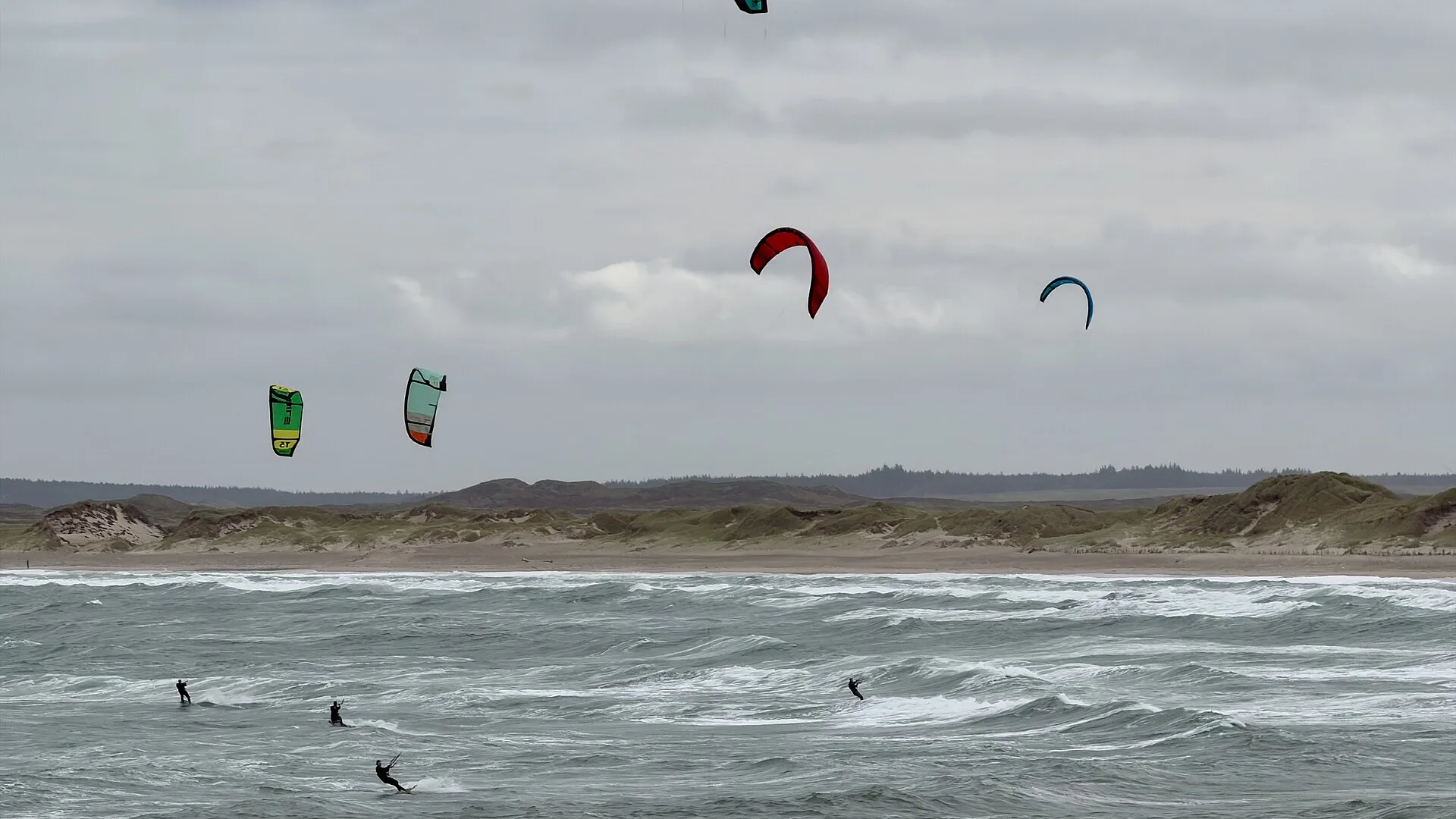
📍 Denmark, North Sea coast of Jutland
Photo: Klitmøller, August 2026 – Olgierd Rudak / Wikimedia Commons, CC BY-SA 4.0
Two areas on the same North Sea coast, about as different as surf spots get.
Reefs, piers and beach breaks along the edge of Thy National Park.
'Cold Hawaii' is the name for the stretch of coast in Thy, north-west Jutland, that runs from Hanstholm down to Agger. The regional tourist board counts 31 surf spots along it, with Klitmøller as the surfers' hub, and the whole coast borders Thy National Park, Denmark's first, which runs about 55 km from Hanstholm to Agger Tange. Klitmøller works for waves, windsurfing, kitesurfing and stand-up paddleboarding, thanks to two reefs south of the Ørhage headland.
The main spot is the reef in front of the village. Surf, the German windsurfing magazine, describes a limestone reef running far out to sea, covered in sharp mussels, which picks up big swells and gives side-shore conditions and ramps in southerly winds. The entry is steep, so you're often out of your depth after three steps, the beach is covered in reef stones, and the current at the headland grows with the wind; it usually carries you north of the village, so expect a walk back. The Surf Atlas calls the small reef in front of town mellow and forgiving, suitable for all levels, and Inside Reef challenging: a left that needs a long-period swell and a south-easterly offshore, which it says usually means December or January.
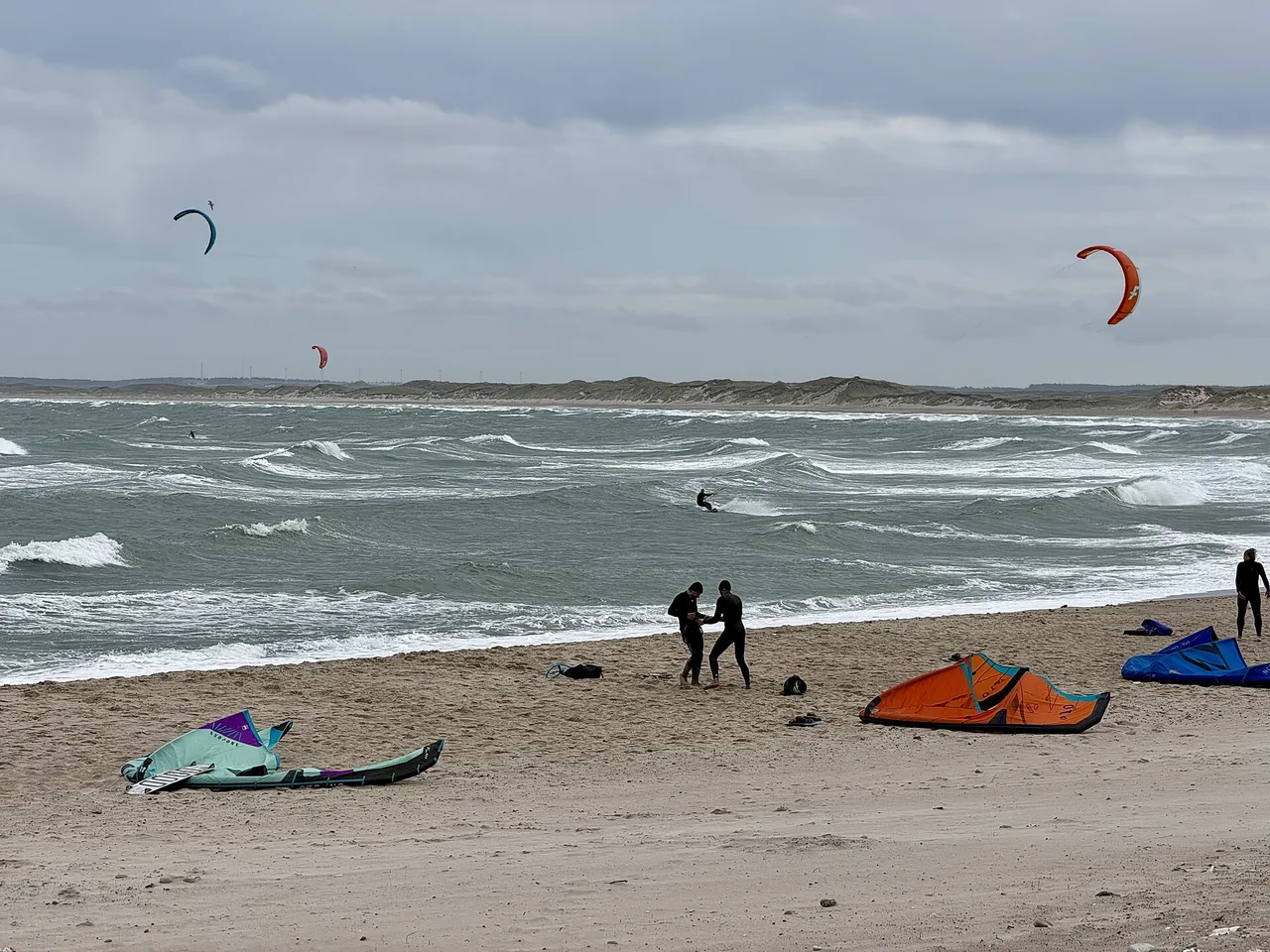
Bunkers, reached from a car park off the road from Nystrup campsite, has a shore break in the middle and a point on a small headland to the north where the waves line up better; Surf rates it best in south-south-westerly and north-north-easterly winds. Point Perfect, where a small stone and concrete mole organises the waves, is relatively sheltered in southerly winds and popular with wave riders all year, but The Surf Atlas calls it fickle, needing a swell of five feet or more. Further from the crowds, Surf points experienced wave sailors to Klitrosen in south-west to west-south-west winds and warns that its shore break 'takes no prisoners', especially on the way in.
Hanstholm, about 15 minutes' drive north, is where many riders head when the wind swings west to west-north-west; VisitDenmark points surfers to Fiskemelet there for long waves. South of Klitmøller, the Big Pier at Nørre Vorupør is VisitDenmark's tip for big swell and strong wind, because the pier shelters you from it. The Surf Atlas adds a fun left at Vorupør's small pier and notes that the big pier was unpredictable after dredging at the end of 2024, so look before you paddle out.
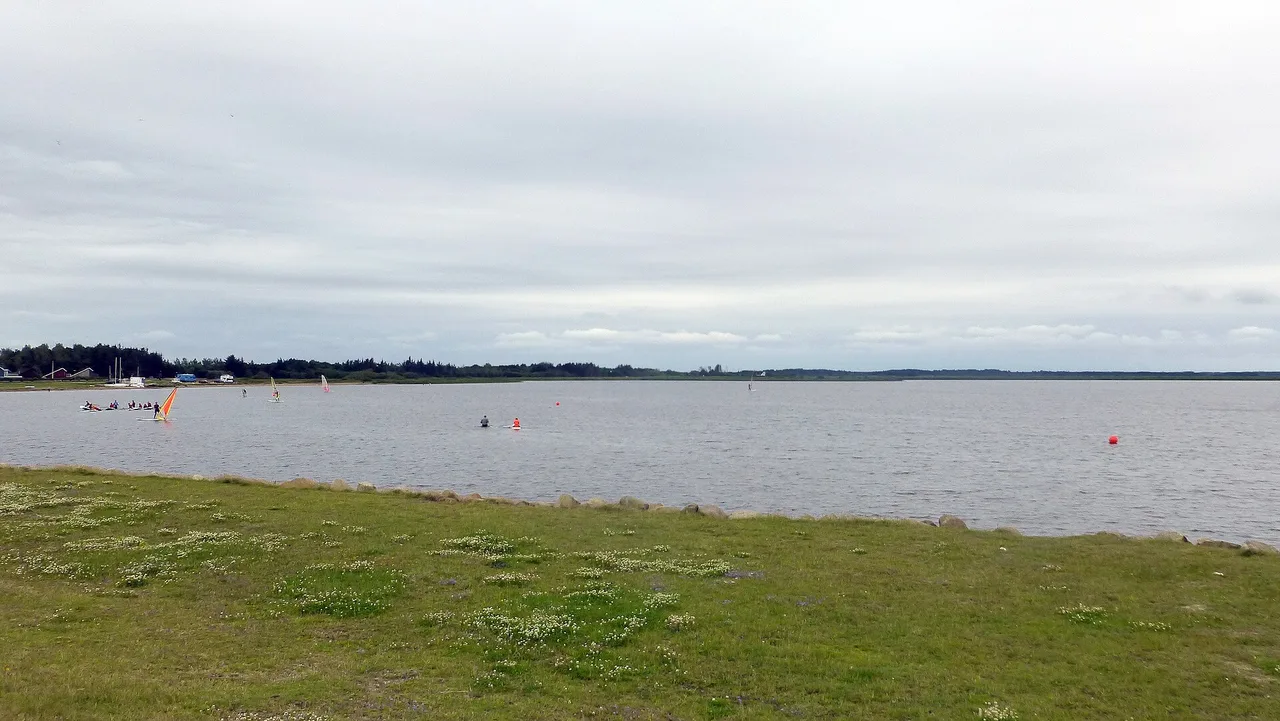
About ten minutes inland by car, the lake at Vandet has a flat, sandy entry with plenty of standing room, rideable in south-westerly, westerly and north-westerly winds, and is popular with young windsurfers in summer. It's a windsurf spot only: Thisted Kommune's bathing-water profile for the east end of the lake (March 2024) says windsurfing is allowed from 1 April to 1 October and kitesurfing is banned all year. Surf gives slightly different closure dates, so go by the council's.
A shallow fjord for learning on one side, harbour-pier waves on the other.
Hvide Sande sits on the strip of land between the North Sea and Ringkøbing Fjord, so you can choose your side by the wind. Kiteworldwide, which runs kite camps here, describes the fjord as about 300 km² and around 1.5 m deep on average, with a mostly sandy bottom and some seagrass. Windfinder's spot guide says the fjord rarely gets deeper than chest height, which is why beginners and improvers train there, and that most kitesurfers and windsurfers switch to the sea just south of the harbour when the wind goes north-west. Its Hvide Sande station has averaged 14 knots (16 mph) from the west-south-west over its records since 1999, an annual figure that hides big swings between calm and stormy days.
WestWind, the surf shop and centre in Hvide Sande, publishes its own guide to the fjord. Hvide Sande Nord, outside its surf centre, is flat water with large shallow areas where you can go up to 800 m out, rated from beginner to expert for kitesurfing and windsurfing. Hvide Sande Syd is its windsurf spot, where you can stand out to about 500 m; it works in every wind direction except north and north-west. Kloster is the flat-water freestyle kite spot, with shallows up to 2 km into the fjord but a narrow entry and exit, and the seagrass makes it unsuitable for windsurfing. On all of them, WestWind warns about fishing nets and net poles, swimmers, dogs, children and onshore winds.
On the North Sea side, the south pier (Sydmolen) splits the beach in two. VisitDenmark's listing says only surfers and stand-up paddleboarders may use the water between the piers, while kitesurfers and windsurfers ride south of the pier, best in west-north-westerly to north-north-westerly winds above 7 m/s (about 14 knots). The piers make a lee, so surfing between them still works in fairly strong wind. WestWind describes the waves south of the pier as slow and soft but able to get big, warns about currents, which always run outwards at both piers, and links a map of the prohibited zones. VisitDenmark lists a lifeguard here in summer.
Pick by sport and level first, then by the forecast.
| You are… | Head for | Why |
|---|---|---|
| A surfer chasing swell | Klitmøller and Cold Hawaii | Reefs and points that work in autumn and winter swells; Hanstholm and Vorupør as back-ups |
| A wave sailor or wave kiter | Klitmøller, Klitrosen, Hanstholm | Side-shore wind and ramps on the reef in southerly winds; Hanstholm in west to west-north-westerlies |
| Learning to kitesurf or windsurf | Ringkøbing Fjord at Hvide Sande | Shallow, flat water you can stand in hundreds of metres out |
| A freestyle kiter | Kloster, Ringkøbing Fjord | Flat water with shallows up to 2 km out |
| A beginner surfer | Klitmøller's small reef with a school, or between the Hvide Sande piers on quiet summer days | A mellow, forgiving reef in front of Klitmøller; WestWind rates the spot between the piers for experienced surfers but calls it good for beginners on quiet summer days |
The two areas are both on Jutland's west coast, so a road trip can cover both. Whichever you choose, the North Sea here is a cold, exposed coast with stony entries and strong currents near reefs and piers: a school or a local's advice is worth having before your first session.
Autumn and winter for waves, spring and autumn for wind, a thick wetsuit most of the year.
The Surf Atlas puts Cold Hawaii's main surf season from about the start of October to the end of March, with December and January the most reliable for both wind swell and groundswell, and warns of flat spells from May to August. For windsurfers and kitesurfers, Surf says the coast comes alive when spring and autumn lows cross northern Europe; south and west winds are best at Klitmøller, north and north-easterlies can work in the bay, and an easterly blows offshore. Summer still has its days: Surf reported westerlies of around 25 knots and good jumping at Klitmøller in August 2024.
For water temperature, Surf-Forecast's satellite-based averages for Klitmøller (1981–2005) show a low of about 2-6°C around early March and a peak of 14-20°C around early August; on 9 October the average is 12.8°C. These are open-water figures, not an official series, and the water near the shore can differ by several degrees. We didn't find comparable figures for Hvide Sande.
Surf recommends a 6/4mm hooded wetsuit in winter and a 4/3mm or 5/4mm in summer and autumn, keeping shorts and short sleeves for the odd summer storm, plus boots, because most entries are stony. Surf-Forecast's guide is similar: a 6/5/4mm, or a well-fitting 5/4mm with gloves, 5mm boots and a hood in early spring, and a 4/3mm or 3/2mm with boots in August. Our wetsuit guide explains the thicknesses.
The names that came up in our research, and the autumn event season.
In Klitmøller, Cold Hawaii Surf Camp is a surf school running courses and camps, with a shop focused on wave riders, and Surf Pro Cold Hawaii sells and rents boards, SUPs and other kit right at the spot. In Hvide Sande, WestWind runs a surf centre on the fjord at Hvide Sande Nord with rental and a surf school, and VisitDenmark lists its surf café near the south pier for surf and SUP hire and lessons. Kiteworldwide runs kite camps at Hvide Sande with VDWS-licensed coaches. All of these had working websites when we checked in October 2026, but contact them directly before planning a trip around them.
Klitmøller has hosted PWA windsurfing world cup events since 2010, according to the regional tourist board. In 2026 it hosted the Cold Hawaii PWA Youth World Cup from 14 to 22 September, with wave and foil slalom; when the wind dropped to 8-12 knots on the coast, Surf reported, the foil racing moved to the Limfjord at Thisted. It sits within the Cold Hawaii Games, which run from mid-September to early October along the coast from Agger to Hanstholm and are free to watch. Further south, Windsurf Magazine's 2026 calendar listed the IFCA Fin Europeans at Hvide Sande from 7 to 12 September.
Fly and hire a car; the direct ferry is long gone.
For Cold Hawaii, Aalborg is the nearest airport, about an hour and a half by car from Klitmøller according to The Surf Atlas; Aarhus and Billund also work, with a longer drive. For Hvide Sande, Billund is the nearby airport. A car is close to essential for moving between spots. UK routes into both airports have changed recently: Ryanair dropped its Billund routes, including Stansted and Manchester, in 2025, according to The Local, and Norwegian restarted a twice-weekly Aalborg–London Gatwick service from April 2026. Check what's flying on your dates, and your airline's rules for board bags.
There's no passenger ferry between the UK and Denmark. DFDS closed the last one, Harwich–Esbjerg, in September 2014, and its Esbjerg–Immingham route carries freight only: DFDS says it no longer accepts leisure passengers there. Driving with your kit means crossing to the Continent first and continuing north by road.
Danish emergency services, and rules that come from nature protection rather than a watersports law.
Dial 112, Denmark's number for ambulance, fire and police. Search and rescue at sea is co-ordinated by the Joint Rescue Coordination Centre Denmark (JRCC Denmark), run by the Royal Danish Navy and Air Force from Karup. According to its 2026 SAR co-operation plan, it can be reached through Lyngby Radio on VHF channel 16 or DSC channel 70, and its emergency line is +45 7285 0380. Beach lifeguards are arranged beach by beach, many through TrygFonden Kystlivredning, a partnership between TrygFonden and the Danish Swimming Federation; VisitDenmark lists a summer lifeguard at the Hvide Sande south pier, but we found no lifeguard listing for Klitmøller.
We found no Danish law written specifically for surfing, windsurfing or kitesurfing. Restrictions come from nature-protection orders for wildlife reserves and from local spot rules, such as the Hvide Sande pier zones and Vandet Sø, where Thisted Kommune bans kitesurfing all year and allows windsurfing only from 1 April to 1 October. An article on netnatur.dk in February 2025, citing the Danish Environmental Protection Agency's own 2024 newsletter, said many reserve orders date from the 1990s, before kitesurfing was common, and that the agency planned to review 92 of them, with bans expected where kitesurfing, paddleboarding and sea kayaking disturb birds and seals. Rules may change, so check the signs at the beach.
The whole fjord is covered by a protection and wildlife-reserve order, Bekendtgørelse om fredning og vildtreservat i Ringkøbing Fjord (BEK nr 1678 of 20 November 2006), still in force. It bans all access at Klægbanke, the south-west of Havrvig Grund, Tipperne and the south of Nyminde Strøm; closes the island of Høje Sande and the water within 50 m of it from 1 March to 31 July; and bans brætsejlads (board sailing) and catamaran dinghies in seven more zones: Stavning nord, Stavning syd, Skjern Å, Havrvig Grund nordøst, Pladen, Nyminde Strøm Vestrenden and Holmsland, the strip along the fjord side of the Holmsland spit. Most of these zones lie in the southern half of the fjord, around Stavning, the Skjern Å mouth, Havrvig Grund, Tipperne and Nymindegab. The Danish Nature Agency can allow marked board-sailing lanes beside campsites in the Holmsland zone, from Whit Sunday to 31 August. Breaches are punished with a fine.
The order doesn't mention kitesurfing by name, and we found no official reading of whether 'board sailing' covers kites, so treat the zones as closed to any board. The boundaries are on the map attached to the order; in practice, ride where the Hvide Sande centres ride and ask them if you're unsure.
Cold Hawaii's coast lies along Thy National Park. The order that created the park (BEK nr 840 of 18 August 2008) sets out its aims, including protecting dunes and wetlands and strengthening outdoor recreation; we found nothing in it about surfing, windsurfing or kitesurfing. Follow any local signs. These are Danish rules: there's no French-style 300 m limit here, and RNLI flag zones don't apply. Our surf safety guide covers rips and cold water in general.
What surfers and riders ask most before a trip to Denmark.
On the coast of Thy in north-west Jutland, between Hanstholm and Agger, with Klitmøller at its centre. The regional tourist board counts 31 surf spots along it.
Roughly October to March, with December and January the most reliable for swell, according to The Surf Atlas. Summer often goes flat, though windy days still bring waves.
Off Klitmøller, satellite averages range from about 2-6°C in early March to 14-20°C in early August. Surf recommends a 6/4mm hooded wetsuit in winter and a 4/3mm or 5/4mm in summer and autumn, with boots for the stony entries.
Ringkøbing Fjord at Hvide Sande, where the water is shallow and flat and you can stand hundreds of metres out. WestWind and Kiteworldwide both teach there.
Not for passengers. DFDS closed Harwich–Esbjerg in 2014, and its Esbjerg–Immingham route takes freight only. Fly to Aalborg or Billund, or drive via the Continent.
Dial 112. At sea, JRCC Denmark co-ordinates rescue and can be reached through Lyngby Radio on VHF channel 16.