

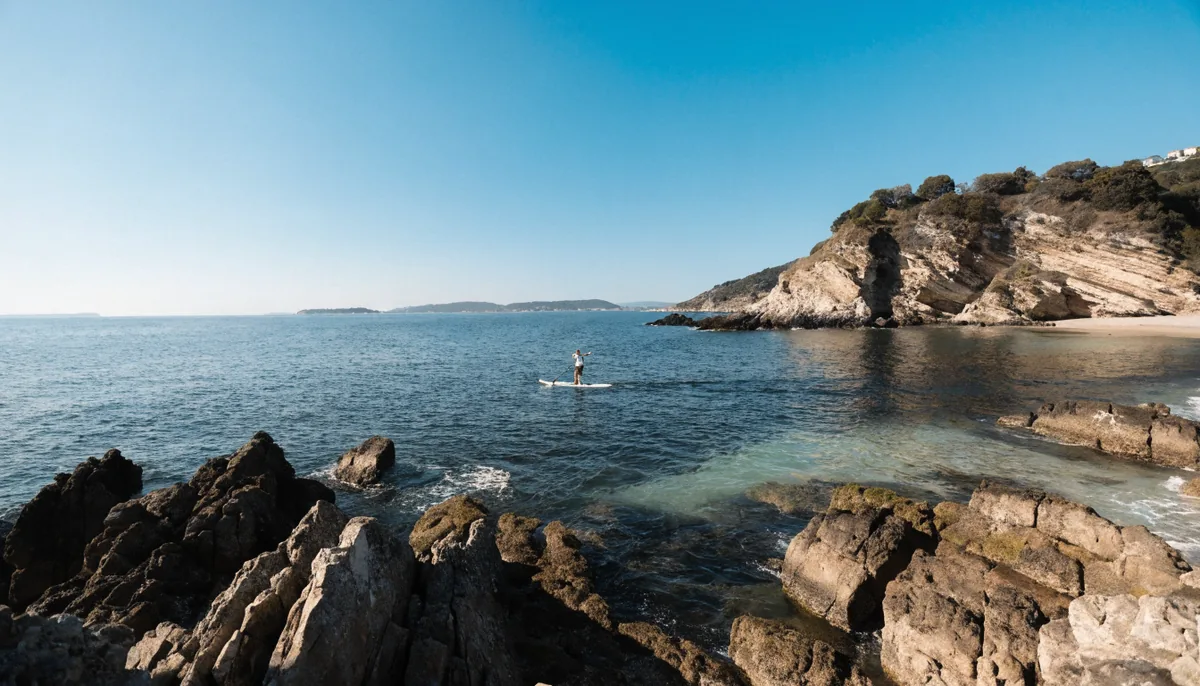
A lake and the sea offer two very different SUP experiences. On one, flat, sheltered water forgives a shaky start; on the other, wind, current and tide demand a proper safety mindset from day one. Choosing the right stretch of water for your first sessions means you progress faster, and with confidence.
Why the water changes the whole experience
On a lake, the water stays flat and the environment is enclosed: no swell, no current pulling you away, and the shore is always close. At sea, the same paddle stroke plays out against wind, chop, currents and the constant push and pull of the tide. It's not that one is harder than the other on paper; it's that conditions at sea change constantly, and can turn a relaxed outing into a tricky one within minutes.
Starting out on a lake
The advantages for learning
A lake is the ideal training ground for your first sessions. Flat water lets you work on balance, foot placement and your paddle stroke without being knocked off by waves. The nearby shore is reassuring, the water is often warmer than the sea, and the absence of current means a fall or a pause doesn't carry you anywhere. You progress quickly because you can focus purely on technique.
Where flat water stops teaching you
Sticking exclusively to lakes eventually caps your progress. You don't develop the skill of reading open water, managing wind, or steering through chop — all skills you need the moment you head further afield. The move to the sea goes far more smoothly once you've built solid fundamentals, though it will still take some adjustment.
Starting out at sea
The feel and the technical upside
The sea gives you things a lake simply can't: gliding on a small swell, feeling the board come alive underfoot, learning to work with water that's constantly moving. It's more engaging and, for many paddlers, far more exhilarating. Technically, you develop skills flat water never demands, like anticipating a gust or holding your line through chop.
The specific risks: wind, current, tide
Wind is the biggest danger at sea, particularly an offshore wind: it pushes you silently out to sea, often without the water looking rough at all, and paddling back quickly becomes exhausting, or impossible. On top of that, currents and tides shift your distances and your landing points, and colder water speeds up fatigue. UK safety guidance, from bodies like the RNLI and the RYA, reflects this: the further you venture from shore, the more essential a buoyancy aid and a means of being seen or heard become. Our safety guide covers the kit worth carrying, and it's always worth checking the Met Office forecast, tide times and, where relevant, HM Coastguard advice before you head out.
Which kit for which water
SUP for the lake
On a lake, a stable, wide all-round board is a great fit. It forgives balance errors and is easy to handle. An inflatable SUP is ideal here too: light to carry down to the shore, forgiving, and you needn't worry about damaging it on a rocky bottom.
SUP for the sea
For the sea, a slightly longer, more directional board holds a line better through chop and wind. Rigidity matters more here too: a properly inflated board keeps performing well against the swell. A leash is essential, so you're never separated from your board, which remains your main flotation if you fall in.
Our recommendation based on your level
If you're starting out, begin on a lake or another sheltered stretch of water to build solid fundamentals without stress. Then move on to the sea in small, manageable conditions, keeping an eye on the forecast, steering well clear of any offshore wind, and carrying the right safety kit. That progression lets you enjoy everything the sea has to offer without putting yourself at risk. If you're brand new to the sport, our guide to getting started is a useful companion to this one.
FAQ
Where's the best place to start paddleboarding?
On a lake or another sheltered stretch of water. Flat water, no current and a nearby shore let you work on balance and your paddle stroke with real peace of mind. It's the best environment for fast, confident progress.
Can a lake SUP be used at sea?
Yes, a versatile all-round board can handle the sea in calm conditions. It just won't hold a line through wind and chop as well as a longer, more directional board built for the sea.
Is the sea too difficult for a beginner?
Not if you approach it sensibly. In small conditions, with no offshore wind and the right safety kit, a beginner who's already built some basics can absolutely paddle at sea. The real risk comes from misjudged conditions, not from the level of the paddler.
What type of board suits both uses?
An inflatable all-round board, stable and reasonably long, remains the best compromise. It gives you stability on a lake while still holding a decent line at sea in calm conditions. Keep it well inflated so it doesn't lose stiffness.
Is wind really the main danger at sea?
Yes. An offshore wind is danger number one: it pushes you out to sea without the water necessarily looking rough, and paddling back can quickly become very hard going. Always check the wind direction and forecast before you head out, and turn back at the first sign of doubt.