

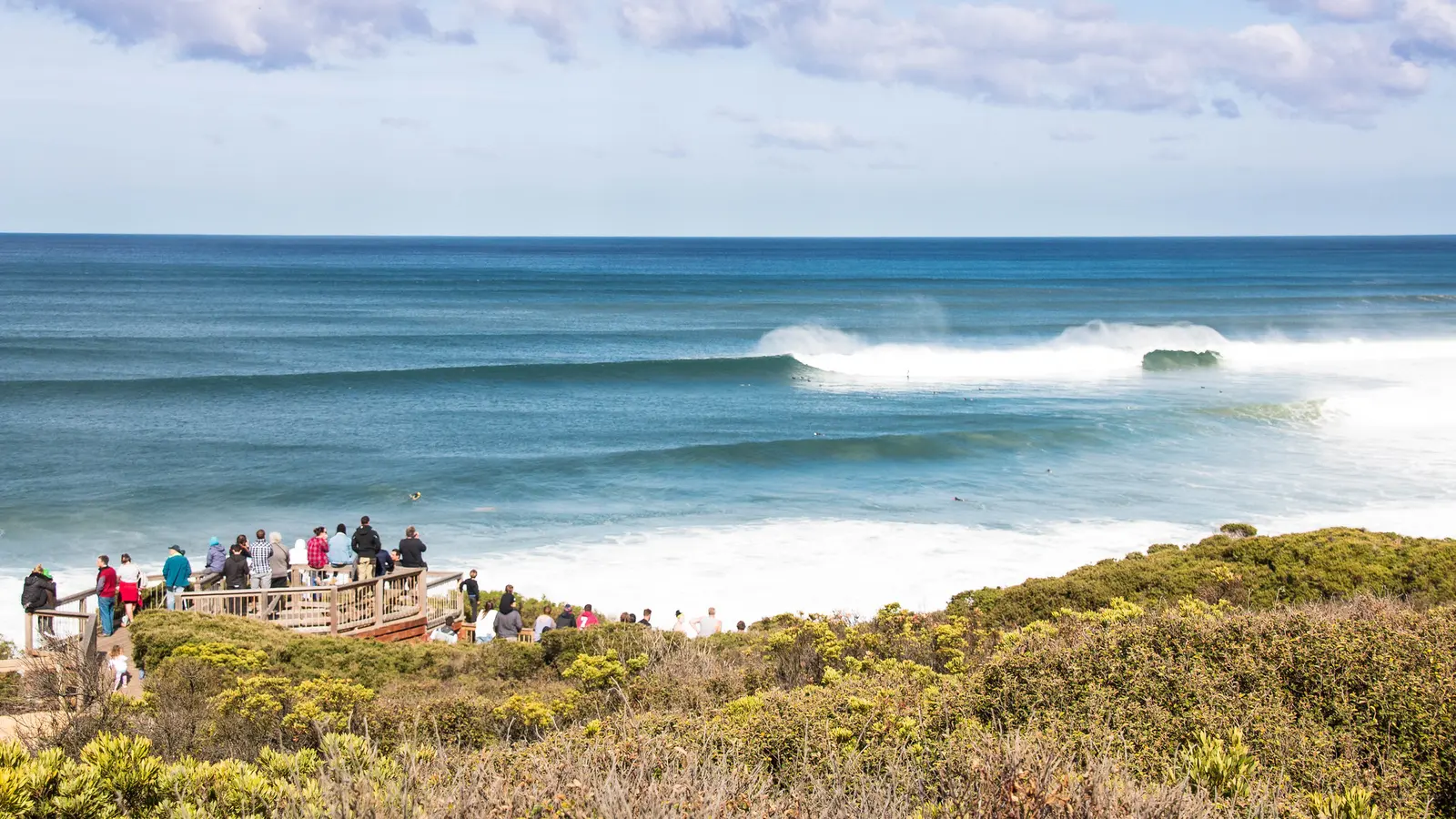
Photo: Bells Beach, May 2016 – Aussie Assault / Flickr, CC BY 2.0
Several surf coasts thousands of kilometres apart, each with its own water, swell and rules.
Warm sand-bottom points in the east, cold reefs in the south, power and wind in the west.
Australia is too big to surf in one trip. Perth and the Queensland coast are on opposite sides of the continent, so most visitors pick one coast, or two linked by a domestic flight. The east coast from Noosa down to Sydney has the warmest water and the gentlest learner beaches we found, so it's where a first trip with lessons makes most sense. Victoria's Surf Coast is much colder. Many of Margaret River's breaks are powerful reefs for experienced surfers. If you kitesurf or windsurf, the coast north of Perth is the one we found best documented.
| Coast | Known for | Water, January / July (average) | Fly into |
|---|---|---|---|
| Gold Coast and Noosa (Queensland) | Sand-bottom right-hand points: Snapper Rocks, Kirra, Burleigh Heads; Noosa's five points | about 26°C / 21°C | Gold Coast Airport (Coolangatta), Sunshine Coast Airport, Brisbane |
| Byron Bay (New South Wales) | The Pass, Wategos and Clarkes Beach, a busy surf town | about 26°C / 21°C | Ballina Byron Gateway Airport, Gold Coast Airport |
| Sydney (New South Wales) | City beach breaks: Bondi, Manly and Freshwater | about 24°C / 19°C | Sydney |
| Surf Coast (Victoria) | Bells Beach, near Torquay | about 19°C / 13°C | Melbourne |
| Margaret River (Western Australia) | Powerful reef breaks, Surfers Point | about 21°C / 19°C | Perth |
| Lancelin and Geraldton (Western Australia) | Kitesurfing and windsurfing in the summer sea breeze | about 23°C / 20°C (Lancelin) | Perth |
Water temperatures are ten-year monthly averages from seatemperature.info, a satellite-based site rather than an official series, rounded to the nearest degree. The summer months are January and February; July and August are the coldest. Our wetsuit guide explains which thickness goes with which water temperature.
Two World Surfing Reserves and a run of right-hand points.
Queensland holds two of the world's World Surfing Reserves, according to the state government. The Gold Coast reserve, dedicated in 2016, runs from Burleigh Heads to Coolangatta; the Noosa reserve, dedicated in 2020, runs from North Sunshine Beach around Noosa Headland to Laguna Bay.
At the southern end of the Gold Coast, by the New South Wales border, a string of points runs from Snapper Rocks past Rainbow Bay and Greenmount to Coolangatta and Kirra. Snapper Rocks hosts the Gold Coast stop of the World Surf League Championship Tour; in 2026 it ran from 1 to 11 May. The sand here is managed: since 2001 a joint Queensland and New South Wales system has pumped sand from the Tweed River entrance to the southern Gold Coast beaches, mainly through an outlet at Snapper Rocks East. Expect crowds on the points when there's swell.
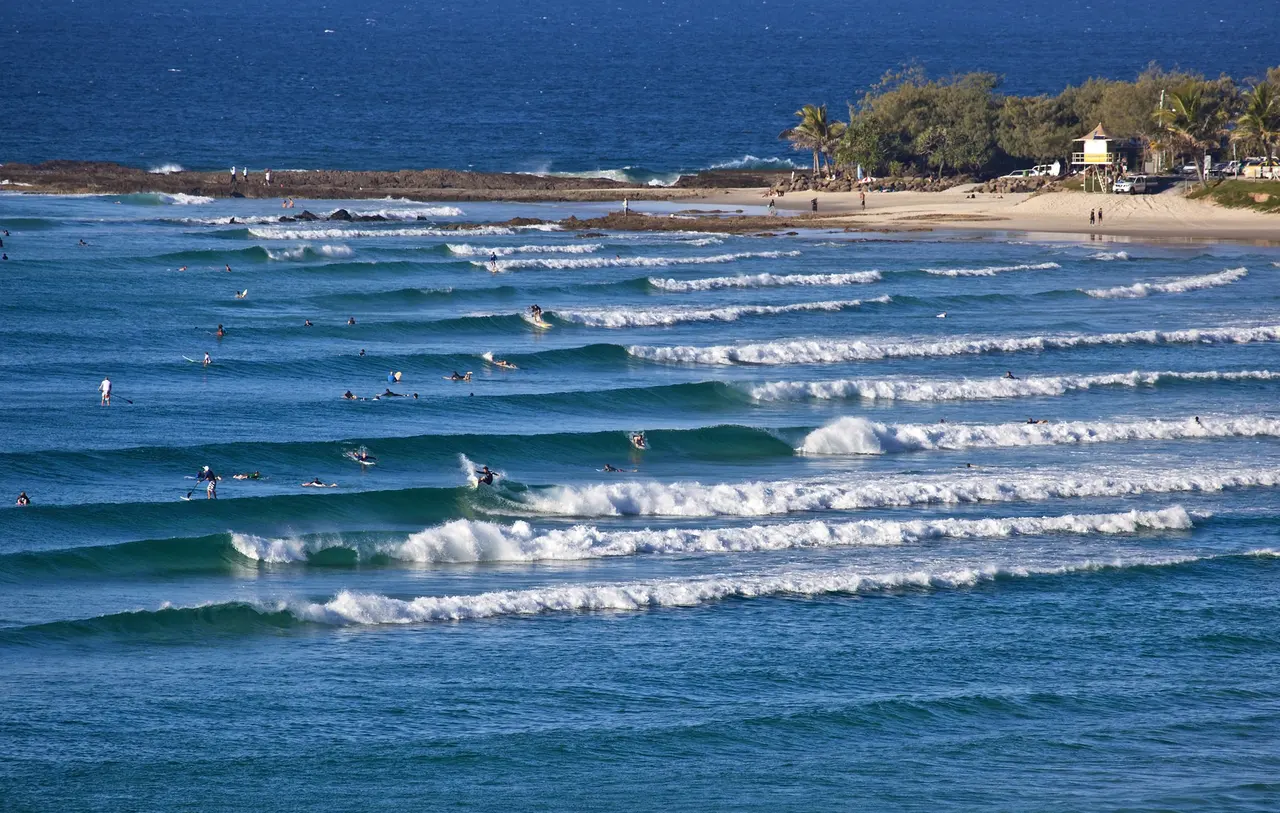
Noosa's surf is a chain of five right-hand points around Noosa National Park: First Point, Johnsons (Little Cove), National Park, Tea Tree Bay and Granite Bay. Visit Noosa describes Noosa Main Beach as one of the few beaches on Australia's east coast that faces north, which makes it a calm bay where surf schools teach beginners. First Point, at the end of Main Beach, is the mellow wave for longboards and learners, while Granite Bay, the furthest along, gets the most swell. The catch is consistency: because the points face north, Surfer Today's guide says they rely on tropical cyclone swells from the Coral Sea between December and May, especially in February and March.
See Snapper Rocks on Google Maps open_in_newA surf town on a cape, and a city with surf on its doorstep.
Byron Bay's best-known wave is The Pass, a long right-hand point tucked between Clarkes Beach and Fisherman's Lookout that local guides describe as one of the busiest surf spots on the coast, popular with longboarders and shared with swimmers and the dive boats heading for Julian Rocks. For learners, the guides point to Clarkes Beach, with gentle waves and local surf schools, and Wategos, a small beach beneath Cape Byron with long, rolling waves that suits longboards and paddleboards but gets choppy in bad weather. Rips and currents shift quickly here, so check with the lifeguards before you paddle out. Ballina Byron Gateway Airport is about half an hour's drive south of the town.
Sydney is one of the few big cities where you can surf before work. The Manly Freshwater World Surfing Reserve, dedicated in 2012 and the third in the world, covers 4 km of coast from Shelly Beach past Manly's South and North Steyne and Queenscliff to Freshwater, a stretch described as the birthplace of surfing in Australia. Bondi is the city's best-known beach. On busy city beaches, lifeguards keep boards out of the flagged swimming area, and where boards may go changes with the day's conditions, so follow the signs and the lifeguards' directions. These are beach breaks whose quality depends on the swell and the sandbanks on the day.
Cold water, a reef break and the world's longest-running surf contest.
Bells Beach (Djarrak, on Wadawurrung Country) is five minutes from Torquay and about an hour's drive from Melbourne, according to the Great Ocean Road Coast and Parks Authority, which has managed the Bells Beach Surfing Recreation Reserve since July 2024. The reserve's name was adopted in 1971, making it the world's first surfing reserve. The first formal contest was held there over Easter 1962, says the Surf Coast Shire, and it continues as the Rip Curl Pro Bells Beach; in 2026 it opened the World Surf League Championship Tour, from 1 to 11 April.
This is the coldest water on this page: about 19°C in January and February and 13°C in July and August off Torquay, by the satellite averages. Bells is a contest wave, not a place to learn. We didn't find an official source we'd trust for a best month on the Surf Coast, and we haven't researched the beginner beaches between Torquay and the Great Ocean Road, so ask a local surf school where to start.
See Bells Beach on Google Maps open_in_newAbout 75 breaks on 130 km of coast, most of them over reef.
The Margaret River region's tourism board counts around 75 surf breaks along a 130-kilometre stretch, from Cape Naturaliste down to Augusta, and its local guide is candid: many of them break over reef and work best in west or south-west swell with an easterly wind. Surfers Point, near Prevelly, is the best known, with two waves, Mainbreak and Southsides. The guide calls it one of the most consistent waves on the coast, says Mainbreak often reaches 20 feet and advises a good, hard look before paddling out. It hosts the Western Australia Margaret River Pro, which ran from 16 to 26 April in 2026.
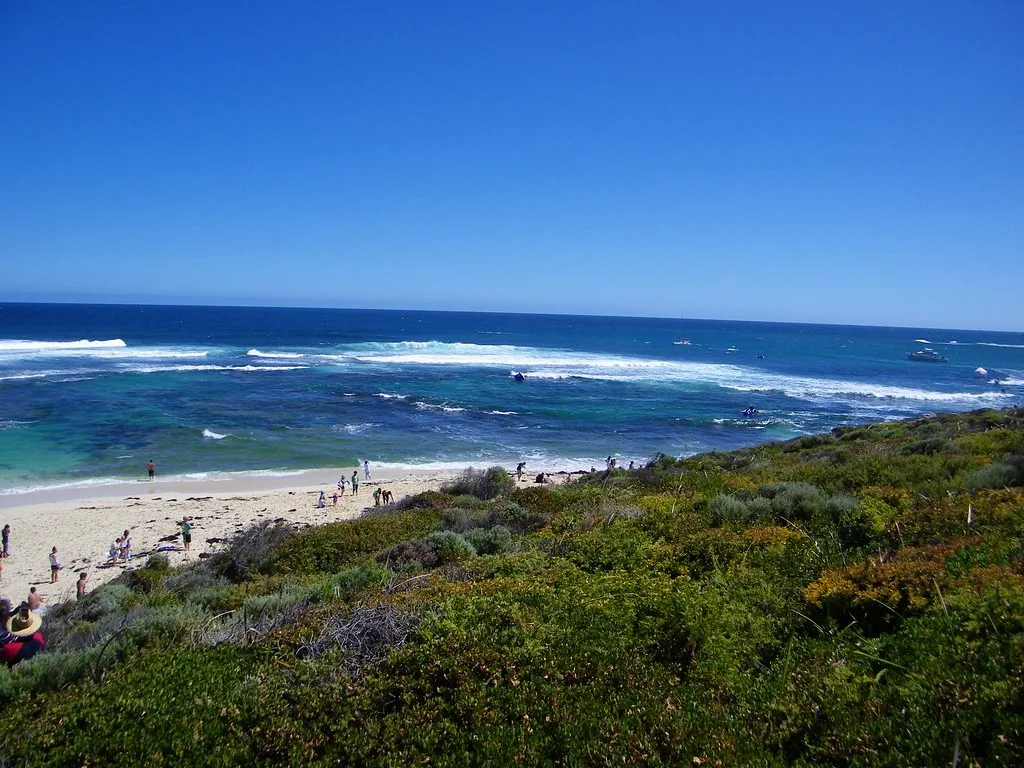
For beginners, the advice from the same guide is to take a lesson and let the school choose the break. Yallingup Main Break, a left and right a short paddle off the beach, is fairly sheltered, and in Cowaramup Bay, Huzzas and South Point suit beginners to intermediates. Rabbits and Super Tubes at Yallingup, North Point and The Box are the guide's serious, heavy waves. Dunsborough, at the northern end of the region, is about three hours' drive from Perth.
On timing, the sources disagree. The World Surf League's Margaret River guide, written with Tourism WA, gives September to April as the best time, to catch the spring swells, summer beach weather and the pro contest. Other guides disagree, so we don't pick a month. Either way, the water stays at around 18-21°C all year by the satellite averages, so it's much warmer than Victoria's.
The West Australian summer sea breeze, from November to March.
The coast north of Perth is the best-documented wind destination we found in Australia. The engine is the afternoon sea breeze. Around Perth, the Bureau of Meteorology explains, hot summer days start with dry easterlies, and the sea breeze, known locally as the Fremantle Doctor, arrives in the afternoon from the south-west.
Lancelin, about two hours north of Perth, is where Perth riders go at weekends. IKSURFMAG's spot guide says that from the end of November to the beginning of March the sea breeze blows almost every day: offshore in the morning, then flipping around midday to blow cross-onshore from the left, and windier than in Perth, so pack smaller kites. The lagoon, sheltered by the point and Edward Island, has flat water but shallow reef at low tide; the guide asks kitesurfers to rig and launch towards the point, away from the windsurf school and the swimming area. Reef breaks outside the lagoon are for wave riders, and Back Beach, beyond the point, has more room and some shorebreak.
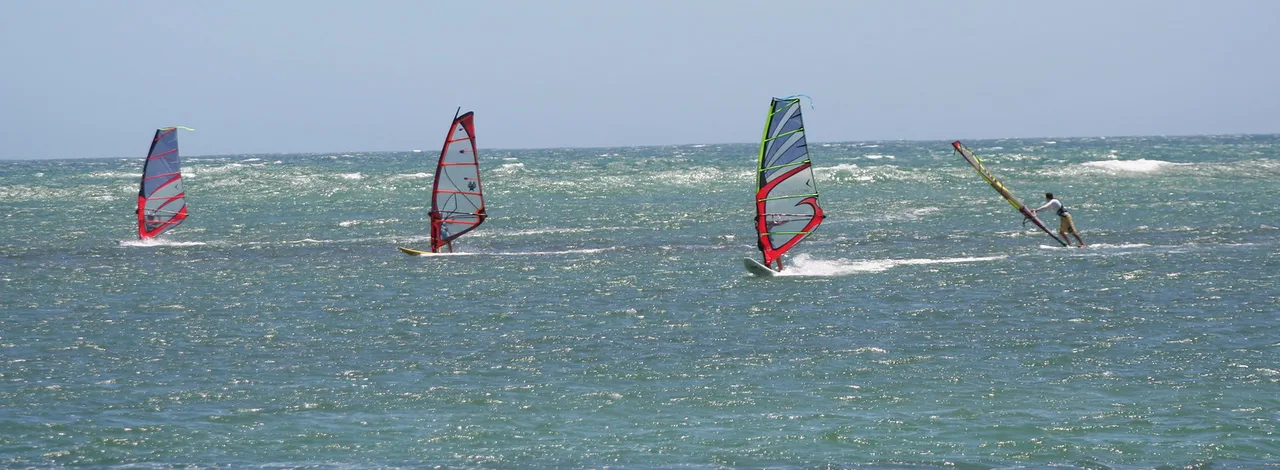
Geraldton, a port city about six hours north of Perth, has long been a windsurfing favourite for its consistent summer wind, according to the same magazine, and kitesurfers have followed. Western Australia also has rules that apply once you're more than 400 metres offshore (see the table below), which matters on a long downwinder.
We haven't covered kitesurfing on the east coast or in Victoria, and we haven't named schools here; check that any school you book is current. New to the sport? Read our kitesurfing guide and windsurfing guide first.
Australian summer is December to February, and each coast has its own best months.
East coast. The Bureau of Meteorology's official tropical cyclone season runs from 1 November to 30 April, and it notes that cyclones can bring large waves and coastal impacts even when they don't make landfall. The north-facing points at Noosa depend on those Coral Sea swells, between December and May. Nobody can book a cyclone swell in advance, so build some slack into your dates. In the tropical north, well above the coasts on this page, Townsville City Council's stinger season runs from November to May, when box jellyfish and Irukandji are present and the council nets some beaches.
South and west. The Championship Tour's Australian leg, at Bells, Margaret River and Snapper Rocks, ran from April to mid-May in 2026. Margaret River's guides disagree on the best months, as above, and we found no official best month for Victoria. For the wind coast north of Perth, the season is the sea breeze, from late November to early March.
Learning. For a first lesson, the warm water of Queensland and northern New South Wales is the easiest place to start; Noosa Main Beach, Clarkes Beach in Byron and Yallingup's sheltered break are where the local guides send learners. Our learn-to-surf guide covers what to expect.
How to find an affiliated school, rather than a list of names.
Surfing Australia, the sport's national body, runs a surf school network with the state surfing associations and a 'Find a Surf School' search on its website. We haven't checked individual schools or surf camps for this page, so we don't name them. When you book, ask whether the school is part of that network, what qualifications its coaches hold and which beach it teaches on that day; the good ones move with the conditions.
Book the visa before the flight; you can't get one on arrival.
The UK Foreign Office says British citizens must have a visa to visit Australia and can usually get one of two electronic visitor visas: the eVisitor (subclass 651), with no application charge or service fee, or the Electronic Travel Authority (ETA, subclass 601), applied for through the Australian ETA app. The Department of Home Affairs charges a AUD 20 service fee for the app and no other charge. An ETA is valid for 12 months, or until your passport expires if sooner, for stays of up to three months at a time, and you must apply from outside Australia. Rules change, so check the Home Affairs site before you travel.
Australia's quarantine rules are strict. On the Incoming Passenger Card you declare risk goods, including wooden articles, and whether you've been in contact with farms, wilderness areas or freshwater streams and lakes in the past 30 days. Luggage is X-rayed, and breaking the rules can mean a heavy fine. Arrive with your board, wetsuit and bag clean.
Qantas flies non-stop between Perth and London Heathrow, scheduled at about 17 and a half to 18 hours. For the east coast, the nearest airports to the surf are Gold Coast Airport at Coolangatta, at the southern end of the Gold Coast, Ballina Byron Gateway for Byron Bay and Sunshine Coast Airport, about half an hour from Noosa. Bells Beach is about an hour's drive from Melbourne, Margaret River about three hours from Perth and Lancelin about two. Check your airline's rules for board bags before you book.
Australian flags, Australian rescue services, and state rules that differ.
Dial 000 for police, ambulance or fire. From a mobile phone you can also dial 112, which, the federal government says, connects to the same services as 000 (it doesn't put you in a faster queue) and works only on mobiles; neither number takes text messages. Search and rescue is shared between three authorities: the Australian Maritime Safety Authority (AMSA), whose Rescue Coordination Centre in Canberra handles distress alerts, the state and territory police, and the Australian Defence Force, with whichever is best placed taking charge of an incident. VHF channel 16 is the international distress channel at sea.
Patrolled beaches are watched by volunteer surf lifesavers from clubs affiliated to Surf Life Saving Australia, and by paid lifeguards, at set times. Surf Life Saving South Australia's procedures define the red and yellow flags as a swimming and bodyboarding zone with a patrol on duty. Boards stay out of it. A red flag means the beach is closed, and a yellow flag means caution, with a hazard in the water, according to healthdirect, the government-funded health service. Black-and-white quartered flags are used in pairs to mark a zone or boundary for surfboards and other craft, according to Surf Life Saving's operating procedures. Whether boards are allowed or kept out of that zone is shown by the sign on the flagpole: a directional surfcraft sign or a prohibition sign. Healthdirect describes the flags as showing where board riding and surfing are not allowed, so don't assume they mean what a chequered flag means on a British beach: read the signs on the flagpole and ask the patrol. No flags means no patrol. SLSA's Beachsafe website and app list which beaches are patrolled and when.
The UK Foreign Office calls rip currents the main hazard for swimmers and surfers in Australia, at any beach. The New South Wales and Western Australian governments both run SharkSmart apps with near real-time shark activity alerts; check them before you paddle out. Our surf safety guide covers rips and the general principles.
There's no single Australian rule. Each state's maritime agency sets its own, and they differ:
| State (agency) | Kiteboards and sailboards | Stand-up paddleboards |
|---|---|---|
| New South Wales (Transport for NSW) | Lifejacket, Level 50S or above, more than 400 m from shore: at all times on open waters and crossing coastal bars; on enclosed waters when alone or at night | A lifejacket is recommended; if not, a leg rope (leash) is recommended |
| Queensland (Maritime Safety Queensland) | Since 1 December 2024, a lifejacket must be worn when crossing a designated coastal bar in certain craft, but the rule does not apply to surfboards, bodyboards, windsurfers, kitesurfers or SUPs. We found no other Queensland rule specific to these craft. | |
| Western Australia (Department of Transport) | Since 30 September 2024, more than 400 m from shore in unprotected ocean waters: wear a Level 50S lifejacket, carry a GPS-enabled EPIRB or wear a GPS-enabled PLB, and carry flares or an approved electronic distress signal. Closer in, a lifejacket is recommended | WA's paddle craft requirements do not apply to stand-up paddleboards or surfboards |
| Victoria (Safe Transport Victoria) | Not confirmed: we couldn't read the current rule at source, so check with Safe Transport Victoria before you go. | |
Local councils add beach rules of their own, and patrols can move boards away from swimmers at any time. These are Australian rules: there's no French-style 300 m limit, and British flag meanings don't apply.
What surfers ask most before a trip.
It depends on your level. The Gold Coast points and Noosa in Queensland, Byron Bay and Sydney in New South Wales, Bells Beach in Victoria and Margaret River in Western Australia are the best-known coasts. The east coast suits a first trip with lessons; Bells and Margaret River's reef breaks suit experienced surfers.
Each coast differs. Noosa's points rely on cyclone swells between December and May. The pro tour's Australian leg runs in April and May, at Bells, Margaret River and Snapper Rocks. For kitesurfing north of Perth, the sea breeze blows from late November to early March.
Yes. British citizens need a visa even for a holiday, usually the free eVisitor or an ETA through the Australian ETA app, which costs a AUD 20 service fee. Apply before you travel.
No. In Australia, the red and yellow flags mark the patrolled area for swimming and bodyboarding, and boards stay outside it. Black-and-white quartered flags mark a boundary for boards; read the signs and ask the patrol.
It depends on the state. New South Wales and Western Australia both have lifejacket rules for kiteboards and sailboards beyond 400 m from shore; Queensland's coastal-bar rule excludes kitesurfers. We couldn't confirm Victoria's rule at source.
000 for police, ambulance and fire. From a mobile you can also dial 112, which connects to the same services.