

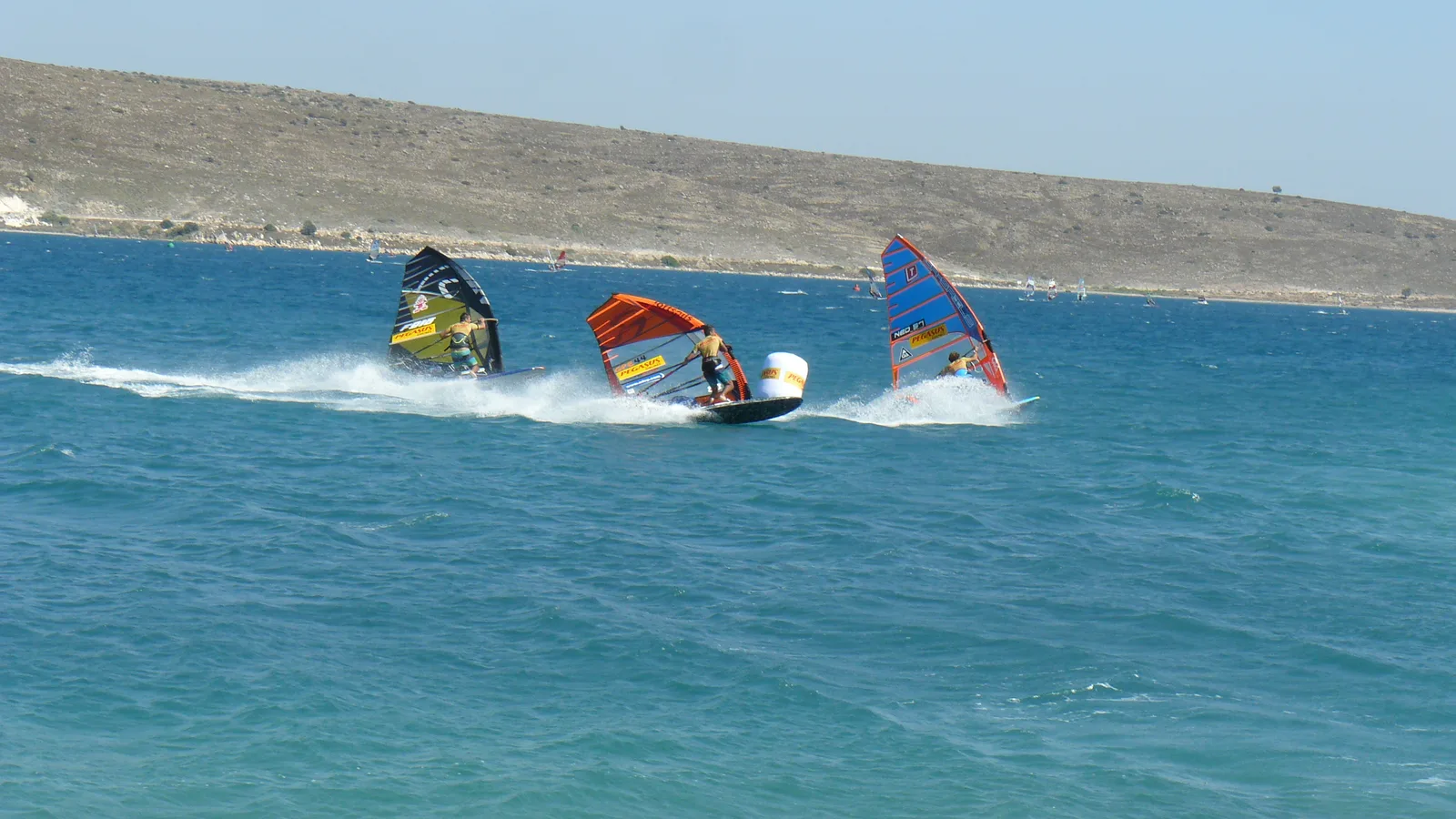
Photo: Alaçatı, August 2014 – GoeLin / Wikimedia Commons, CC BY-SA 4.0
Two main wind spots on the Aegean coast, two quieter ones, and one national emergency number.
A windsurf bay, a thermal kite beach, a windy island and a resort peninsula.
The short version: go to Alaçatı for windsurfing and wing foiling, with a choice of big centres; go to Akyaka to learn or ride kites in flat, shallow water with a predictable afternoon wind. Gökçeada suits riders happy to travel further for fewer people, and Bodrum is better known as a holiday resort than as a wind destination.
| Spot | Main sport | Wind | Water | Nearest airport |
|---|---|---|---|---|
| Alaçatı Bay (Izmir) | Windsurf, wing foil | Northerly, cross-shore from the left; 15-25 knots on average | Flat and sheltered, shallow standing area, seaweed patches | Izmir |
| Pırlanta Beach (Çeşme) | Kitesurf | Strong and steady, per the municipality | Waves up to about 1.5 m | Izmir |
| Akyaka (Gökova Bay, Muğla) | Kitesurf | Onshore afternoon thermal | Flat, shallow for about 150 m out | Dalaman |
| Gökçeada (Çanakkale) | Windsurf, kitesurf | Strong, long season, per the tourism board | Shallow at Aydıncık | Ferry from Kabatepe |
| Bodrum peninsula | Windsurf | Gusty inside Bitez bay; stronger at Akyarlar | Deep water at Akyarlar | Bodrum (Milas) |
A shallow, U-shaped bay, a summer northerly and a former PWA slalom venue.
Alaçatı sits on the Çeşme peninsula, at the western tip of the Izmir coast. The Çeşme municipality describes a V-shaped bay with clear, quite shallow water and a prevailing northerly, blowing at an average of force 4 to 6 from June to mid-September. Surf, the German windsurfing magazine, measured the bay at roughly two square kilometres in its 2024 spot guide. Windsurfers and wing foilers launch on the west side, where the wind comes from the north over the land and blows cross-shore from the left. Hills on either side create a jet effect that adds up to six knots, while buildings along the shore break it up near the beach.
The same guide puts the average at 15 to 25 knots (17 to 29 mph), sometimes above 30, building through the day to a peak in the late afternoon. It gives the summer wind a probability of up to 70 per cent, most constant in July and August, when the spot is also at its busiest; locals rate June to September as the best months. From October to April, the municipality says about half the wind comes from the south, and Surf notes that these southerlies push swell into the bay in spring and autumn. The tourism board calls the water sheltered and sandy-bottomed. A centre manager quoted by Surf describes a standing area about 500 metres wide, but the magazine also warns about shallow patches and carpets of seaweed, which foilers in particular need to avoid, and about boat traffic in the marina fairway.
Alaçatı hosted the PWA World Tour's slalom discipline for several seasons; the tour's own site covers the 2015 event, held from 17 to 22 August. The town itself has changed: Surf describes a former windsurfing paradise turned party hotspot, with a crowded old town at weekends and noisy bars, so light sleepers should stay away from the centre.
Centres. Surf's 2024 guide named ASPC (Alaçatı Surf Paradise Club) as the largest centre in Turkey and Myga Surf City as a centre mainly for Turkish guests with English-speaking instructors. In 2025, according to the same magazine, Sun Surf Alaçatı opened on the site of the former ION Club, with windsurf and wing foil rental and kite lessons run with a partner school. We haven't confirmed their current-season dates, so check directly before you book. Prices aren't quoted here.
Kitesurfing near Alaçatı. Kites and windsurfers are kept apart. Inside Alaçatı Bay, Surf says kitesurfers use the south-eastern end. The main kite beach is Pırlanta Beach (Diamond Beach) at Çiftlikköy, at the far western end of Çeşme, which the municipality describes as having 250-metre-wide sandy shoals and a kite scene from April to November. Surf reports waves of up to about 1.5 metres there and says that officially only kitesurfers may go out from it. Between Izmir and Alaçatı, the tourism board also lists a kite beach at Urla, about 6 km from the centre of Gülbahçe, in a wetland with shallow water suited to beginners.
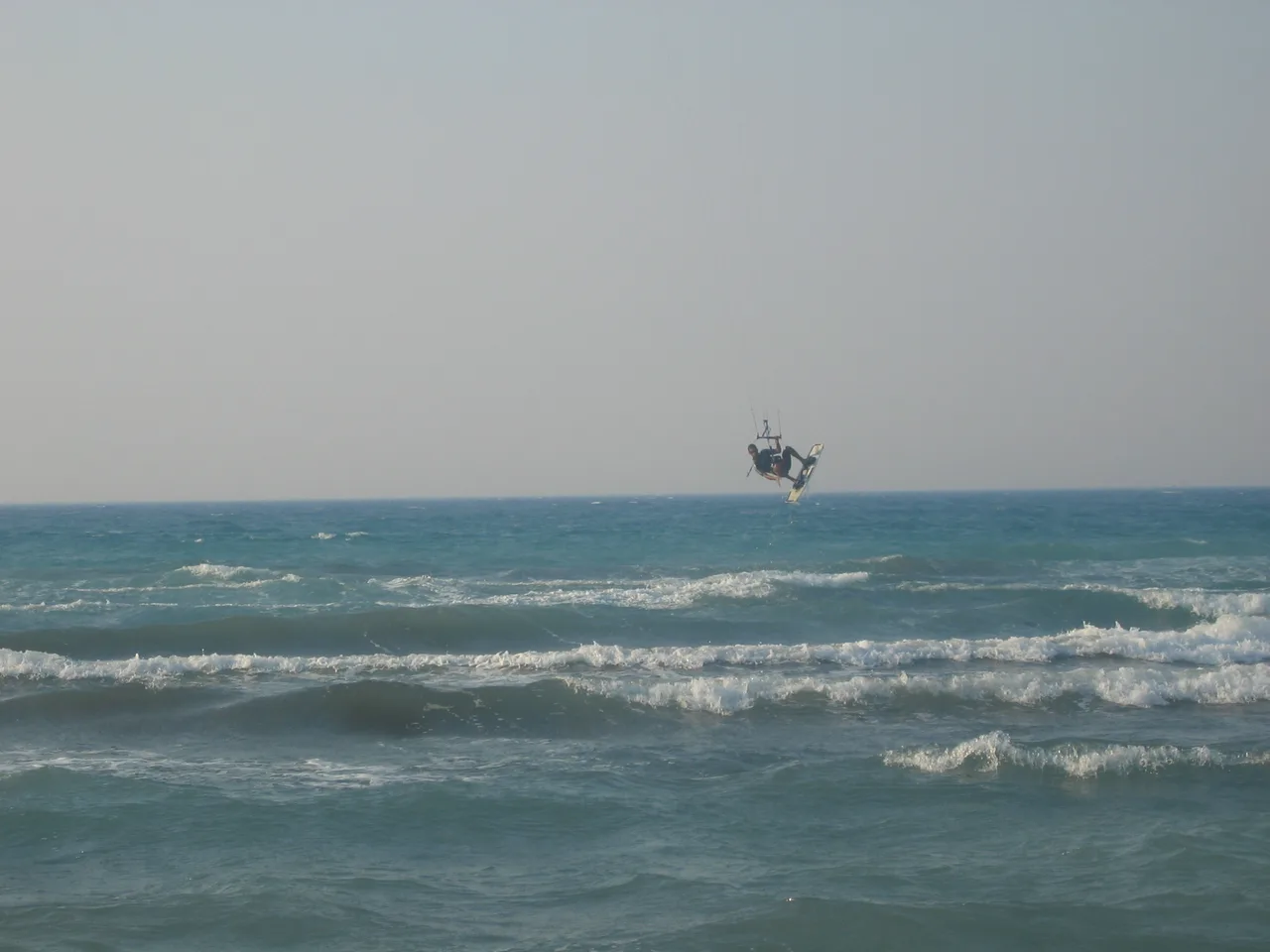
An onshore afternoon wind, shallow flat water and a protected coast.
Akyaka is a small town at the head of Gökova Bay, north of Marmaris in Muğla province. Its kite beach, at Akçapınar, is a short walk from the village. IKSURFMAG's spot guide describes an onshore thermal: a light sea breeze from about 9am that reaches around 18 to 20 knots (21 to 23 mph) by midday, with little gustiness because of the bay's orientation. It gives the wind a probability of about 75 per cent from May and about 99 per cent from June to the end of September, still reliable but declining in early October. The water is flat, with no waves or shorebreak, and stays shallow for about 150 metres out. Türkiye's tourism board describes a 3 km course with sandy, shallow water and steady thermal winds.
That combination is why Akyaka is the kite spot most often recommended for learning in Turkey, and IKSURFMAG rates it for all levels, from first lessons to freestyle. A 2016 press report said the Muğla governorship had registered the beach as a kitesurfing area and that 11 private schools taught there at the time. We haven't verified which schools are trading this season, so none are named here; book with one that can show its permits and insurance (see the rules below).
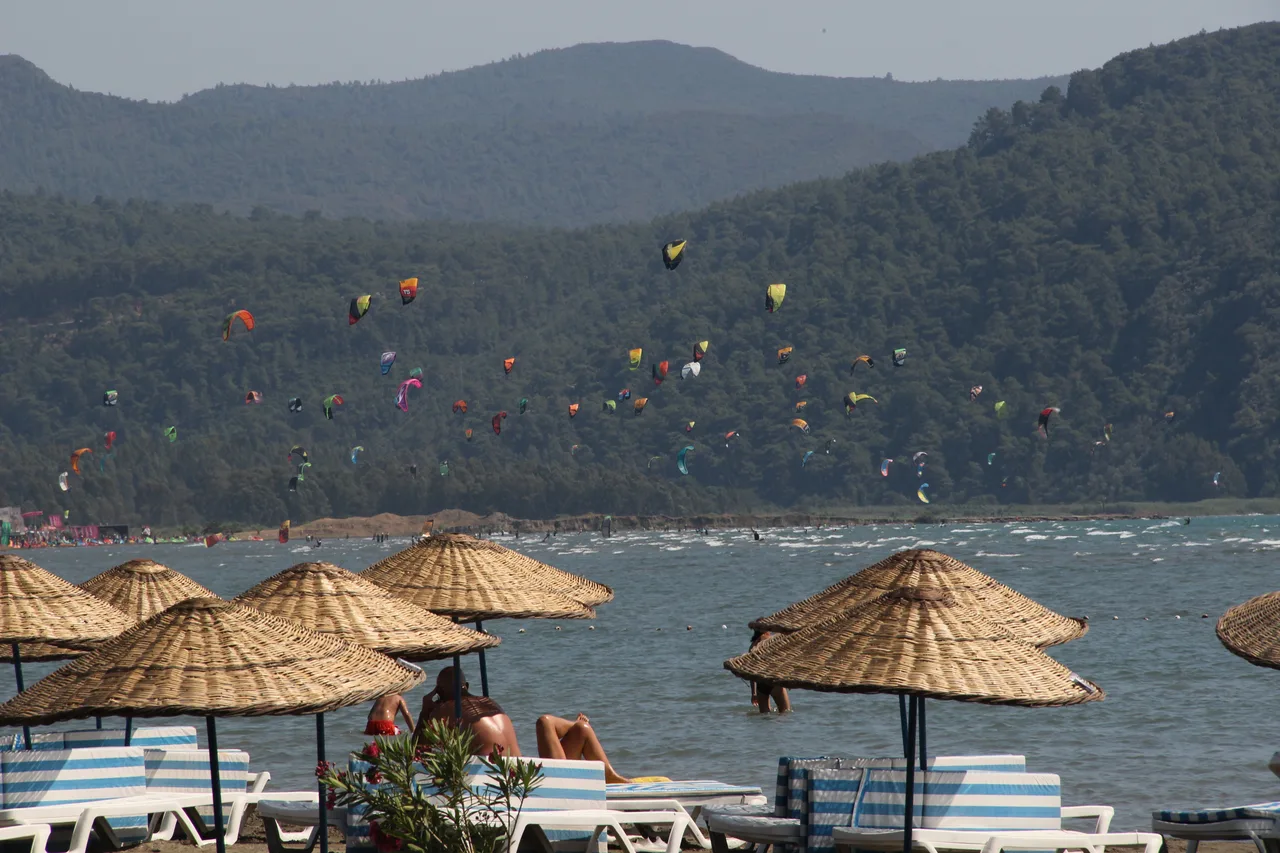
A protected coast. Gökova Bay was declared a Special Environmental Protection Area by a Council of Ministers decision in 1988, and most of the protected area is also a first-degree natural site, according to the Ministry of Environment, Urbanisation and Climate Change. Akyaka and Akçapınar are both inside it. IKSURFMAG notes that there's no accommodation at the kite beach for that reason; you stay in Akyaka. The ministry's description doesn't mention kitesurfing, and we found no published rule saying how the protection status applies to it. One spot guide says no boats other than the schools' rescue boat are allowed and that you might need a permit or a local membership, so check at the beach before rigging your own kit.
See Akyaka's kite beach on Google Maps open_in_newA windy island in the north, and a resort coast in the south-west.
Gökçeada, off the Gallipoli peninsula in Çanakkale province, is Turkey's largest island. The tourism board says its strong winds give it a long season, with windsurfing conditions on about 300 days a year, and names Aydıncık Beach as the most popular spot. A beach guide describes Aydıncık's steady wind and shallow water and adds that nearby Eşelek is known for kitesurfing; a 2019 Daily Sabah guide called the island Turkey's second most popular windsurfing destination after Alaçatı. This is the least documented spot on the page: we found no spot guide giving a wind direction or a monthly breakdown, so ask a local school about conditions before you travel. The island is reached by car ferry from Kabatepe, a crossing of about 75 minutes, and sailings are cancelled in bad weather.
The Bodrum peninsula has, according to the tourism board, some of the strongest and steadiest winds in the country, with the best windsurfing areas around Turgutreis, Akyarlar and Kadıkalesi; it describes Akyarlar Bay as deep water with strong winds, for skilled riders. Bitez, a beach-holiday resort bay, is a different matter: one spot guide says the wind is gusty and fills in only outside the bay, and that you need big kit to get out through the swimmers and sailing dinghies. The 2019 Daily Sabah guide found no dedicated kite beach on the peninsula.
Summer winds on both coasts, and a sea that stays above 20°C until autumn.
The two main spots peak at the same time. At Alaçatı, the wind is most constant in July and August and locals favour June to September; at Akyaka, the thermal is at its most reliable from June to the end of September. Both are busiest in July and August. Late May, June and September give you the season's wind with fewer people, and in October Alaçatı's southerlies bring the occasional wave into the bay.
| Month | Alaçatı, water | Akyaka, water | Gökçeada, water |
|---|---|---|---|
| May | about 19°C | about 20°C | about 18°C |
| June | about 22°C | about 24°C | about 23°C |
| July | about 24°C | about 26°C | about 25°C |
| August | about 24°C | about 27°C | about 26°C |
| September | about 23°C | about 26°C | about 24°C |
| October | about 21°C | about 23°C | about 20°C |
The water temperatures are ten-year monthly averages from a satellite-based sea-temperature site (seatemperature.info), not an official series. Surf recommends a shortie or a 3/2mm wetsuit at Alaçatı in summer, with boardshorts and a rash vest sometimes enough.
A national tourism regulation, with the detail set province by province.
Commercial water sports in Turkey fall under the Tourism-Purpose Sports Activity Regulation (Turizm Amaçlı Sportif Faaliyet Yönetmeliği, Resmî Gazete 23 February 2011, No. 27855, amended in 2018 and 2024), issued under the Tourism Incentive Law No. 2634 and run by the Ministry of Culture and Tourism. Read in the ministry's own published text, it says:
The detail is provincial, and each governorship publishes its own rules, so a rule from one province doesn't carry over to another. This research didn't find the current İzmir rules for Alaçatı or Pırlanta Beach, or the Muğla rules for Akyaka, and we found no national rule written for independent kitesurfers or windsurfers: no distance from shore, no wind limit and no mandatory kit list. That's a gap in what's published, not permission. Ride inside the zone the local schools use, stay out of the swimming areas and keep clear of the marina fairway at Alaçatı.
Sea rescue is the job of the Turkish Coast Guard (Sahil Güvenlik Komutanlığı), part of the Ministry of the Interior. Its old 158 line was merged into the single emergency number 112 in 2021, and the Coast Guard's own website now promotes 112 as the one number to call in an emergency. These are Turkish rules: there's no French-style 300 m limit here, and RNLI flag zones don't apply, although GOV.UK notes that many Turkish beaches use flags and that a red flag means stay out of the water.
Izmir for Alaçatı, Dalaman for Akyaka, a ferry for Gökçeada.
Alaçatı: fly to Izmir Adnan Menderes Airport, about 90 km (56 miles) away; Turkey Travel Planner gives 60 to 85 minutes by car or more than two hours by bus. The motorway from Izmir is tolled, and Surf notes that hire cars usually pay through an electronic system. Akyaka: Dalaman Airport is about 50 minutes away by car, according to IKSURFMAG, and Bodrum-Milas Airport about two hours. Gökçeada: take the car ferry from Kabatepe on the Gallipoli peninsula. Bodrum peninsula: Bodrum-Milas Airport. Check your airline's board-bag rules before you book.
Entry for British citizens: GOV.UK says you can visit Turkey without a visa for up to 90 days in any 180-day period, for tourism or business, and that your passport must have an expiry date at least 150 days after the date you arrive, with at least one blank page. Check the GOV.UK page before you travel, as requirements can change.
Summer wind is reliable, and so are the crowds.
At Alaçatı, the hazards Surf lists are shallow patches, seaweed, other riders and boats in the fairway, and the wind can top 30 knots. At Akyaka, the wind is onshore, which brings you back to the beach but also towards everyone else on it. In July and August both spots are busy. The UK Foreign Office's advice for Turkey is to book water sports with a licensed centre and, before you start, to check the paperwork, ask for a safety demonstration and make sure you know how to call for help. It also warns that some beaches have strong undercurrents and hidden rocks.
In an emergency, on land or at sea, call 112: it covers ambulance, fire, police and the Coast Guard. VHF channel 16 remains the international distress channel at sea.
What riders ask before a trip to Turkey.
Akyaka, in Gökova Bay, is the best-documented kite spot: an onshore afternoon thermal over flat, shallow water, suited to every level. Near Alaçatı, kitesurfers use Pırlanta Beach at Çeşme and the south-eastern end of Alaçatı Bay, and there's a beginner-friendly kite beach at Urla.
July and August have the most constant wind, but also the biggest crowds; locals rate June to September as the best months. The wind usually blows from late May to October, and southerlies bring some swell into the bay in spring and autumn.
Yes, according to the spot guides: the water is flat and shallow for about 150 metres out, the wind is onshore and rarely gusty, and the schools teach from the beach. Learn with a school rather than rigging on your own.
Not for tourism stays of up to 90 days in any 180-day period, according to GOV.UK. Your passport must be valid for at least 150 days after you arrive and have at least one blank page.
Schools and rental centres need a governorship permit and must work inside zones each province designates, under the national Tourism-Purpose Sports Activity Regulation. We found no national rule for independent riders on distance, wind or kit, so follow the local zones and ask the schools.
112. Turkey merged its emergency lines, including the Coast Guard's old 158, into 112 in 2021. VHF channel 16 is the distress channel at sea.