

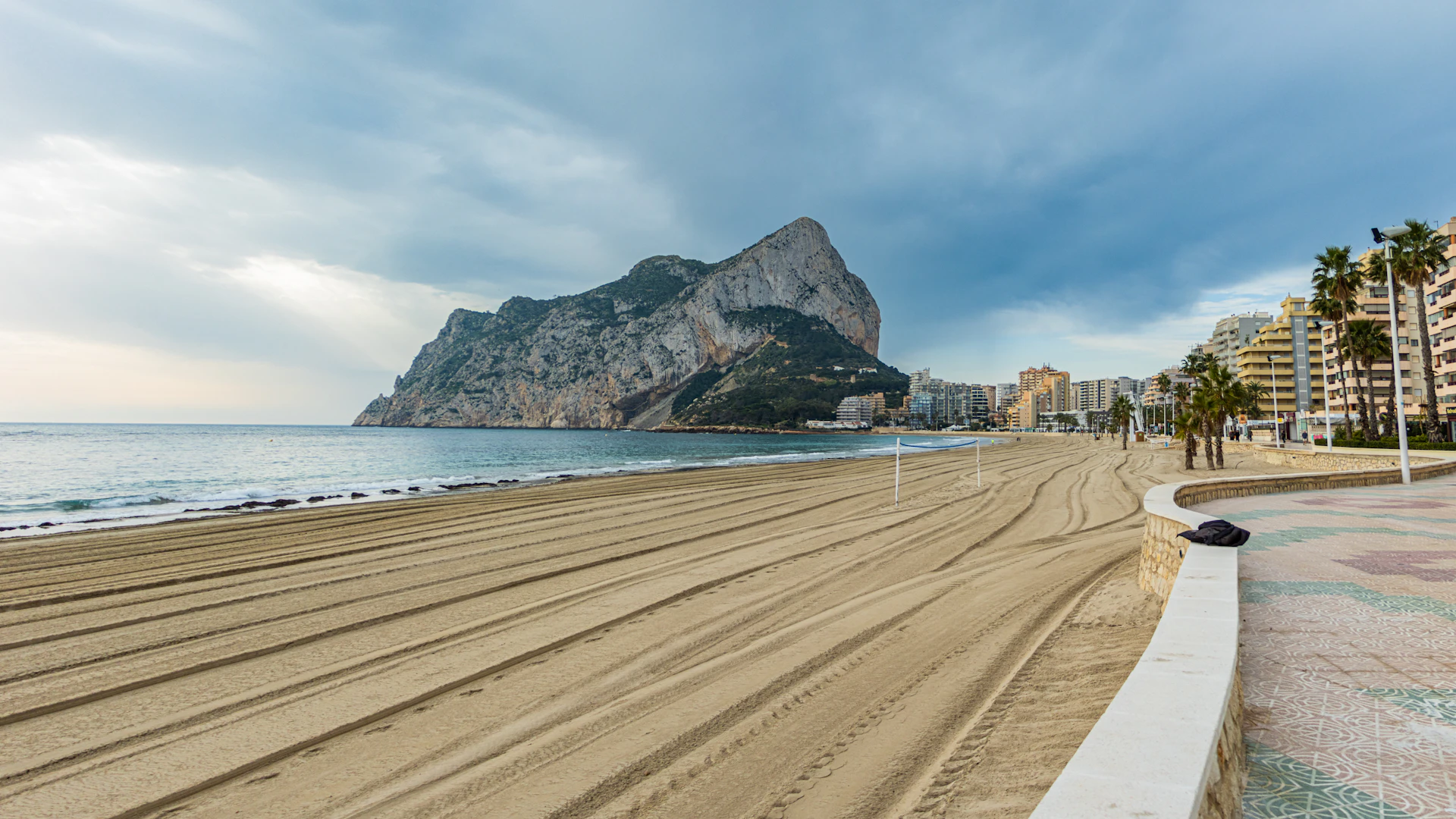
📍 Valencia and Alicante
A long, shallow beach with one of the cleanest thermal winds in Spain.
A sea breeze from the east/south-east that builds most summer afternoons under clear skies. It's clean, steady and very predictable, running 12 to 20 knots, with stronger gusts on the best days.
See destinations arrow_forward
A long, wide beach with a shallow sandy bottom across most of the sailing area. Few places in Spain suit both learning and progressing as well as this one.
Kitesurf guides arrow_forward
Respect the buoyed swimming zones in summer, check the current limits with your school, and check the forecast before heading out. In an emergency, call 112 or Salvamento Marítimo.
Kitesurf safety arrow_forwardThe wind, the water and the wetsuit you'll need, before you load the car.
One stretch of coast with several access points and atmospheres.
One of the longest beaches in the Valencian Community, with zones set aside for kite and windsurf in high season. The sandy bottom and the width of the beach give plenty of room to manoeuvre, both on the water and on land while rigging up.
View on Google Maps open_in_newNorth of Dénia, Les Deveses and Les Marines continue the same beach into the municipality of Oliva, under the same thermal-levante regime. Several of the area's kitesurf schools are based here, with direct access from the coastal car parks.
View on Google Maps open_in_newThe schools are part of the spot here: look for certified instructors and rescue-boat cover.
The area is home to several schools specialising in kitesurf, with private and group lessons. The established centres include Denisurf (based in Oliva and Dénia), Kite45º and Kite Riders Oliva. Always look for certified instructors (IKO or the relevant regional federation) and up-to-date safety equipment.
The thermal levante is a sea breeze: it's generated by the temperature difference between the land, which heats up quickly in summer, and the cooler sea. On clear days with little influence from passing weather systems, this mechanism repeats with great regularity, which makes Oliva and Dénia one of the most predictable spots on the Spanish Mediterranean in high season.
Beyond the wind, beaches, mountains and good food are close by.
Dénia and Oliva combine the beach with a charming old town, Dénia Castle, and hiking routes on the Montgó. It's easy to fill calm mornings before the thermal wind kicks in during the afternoon.
Further south, Santa Pola and El Pinet are a historic classic for windsurf and kite on flat-water salt flats, with schools active since the late 1980s. Guardamar del Segura, next to the Marina de las Dunas marina, and Torrevieja (Playa de La Mata, with levante or sea breeze) add two more zones of reliable wind in Alicante province.
Halfway between Valencia and Alicante, with two airports nearby.
Valencia Airport (VLC) is just over an hour away by car; Alicante-Elche Airport (ALC) is also a little over an hour. Both have good domestic and international connections.
The AP-7 motorway and the N-332 run the length of the coast and connect Oliva (La Safor) with Dénia and the rest of La Marina Alta. A car is the best way to get between the different beach access points and to carry your gear.
The thermal levante rules in summer; spring and autumn bring more unpredictable one-off days.
From June to September the thermal levante arrives almost every afternoon under clear skies, with calm mornings that are perfect for lessons. It's high season, with more people on the beach and at the schools.
May and October still bring good thermal-levante days, though less consistently than at the height of summer. Beaches are much quieter; a 3/2mm wetsuit is worth packing.
The thermal wind practically disappears in winter; what wind does blow depends more on easterly or westerly weather fronts passing through the area. Most schools scale back their activity out of season.
What riders ask most before coming to Oliva and Dénia.
May to September, when the thermal levante arrives almost every afternoon under clear skies. In spring and autumn the wind is more irregular, though good sessions still happen.
Yes. The beach is long and wide, and the water stays shallow for a good stretch, so you can stand while you learn the first manoeuvres and how to relaunch the kite.
The main wind is the thermal levante: an easterly sea breeze generated by the temperature difference between land and sea, which usually arrives in early afternoon. On less stable days it can swing towards the south-east (the xaloc). Both arrive cleanly and fairly steadily on clear-sky days.
Yes. In high season the beaches usually have buoyed zones for bathers and others reserved for sailing; the local schools know the current limits well each summer. Always check the beach signage and your school's guidance before heading out.
Further south, Santa Pola and El Pinet are a historic classic for windsurf and kite on flat-water salt flats. Guardamar del Segura and Torrevieja (Playa de La Mata) add two more zones of reliable wind in Alicante province. Discover more spots in our destination directory.