

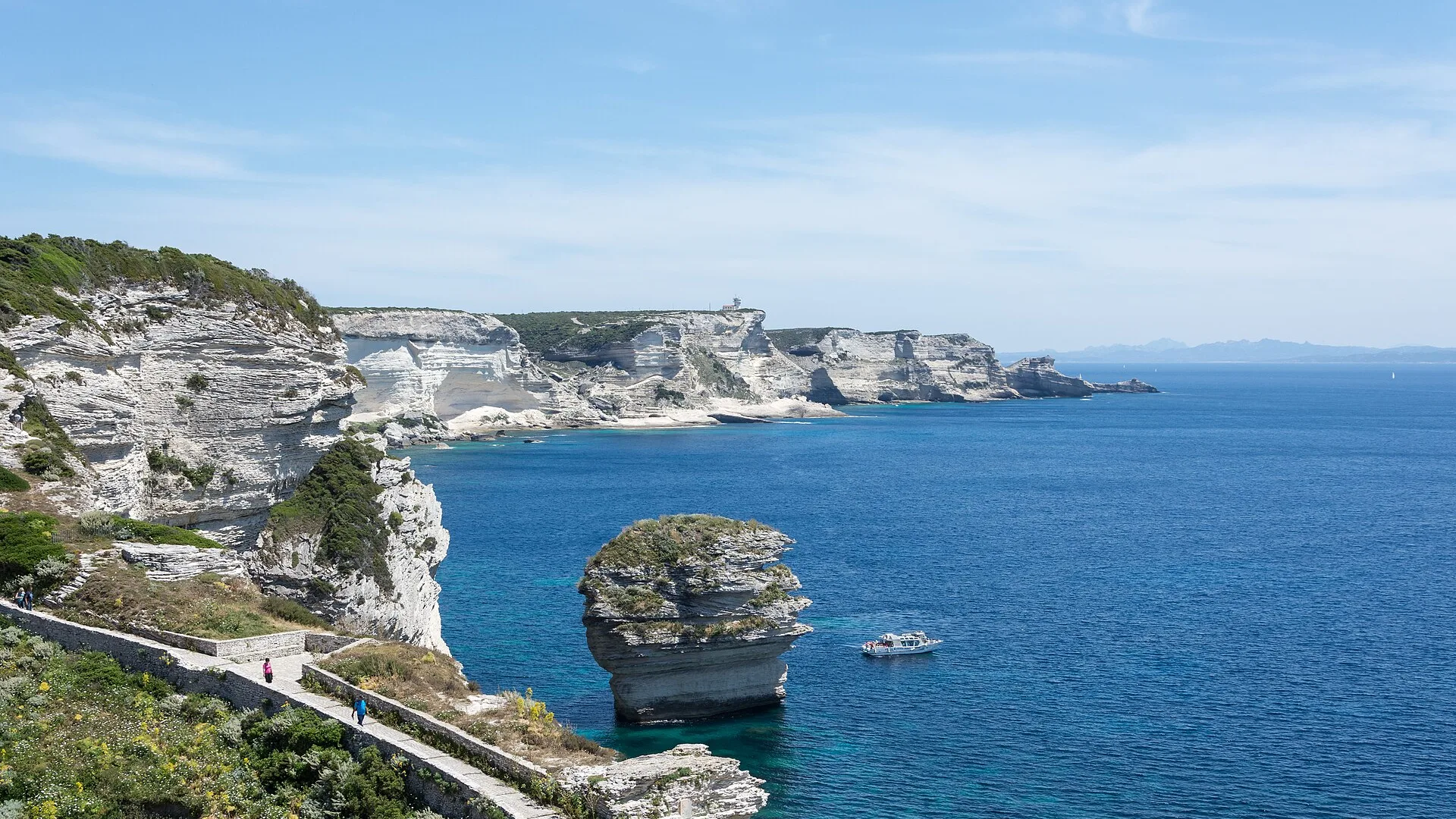
📍 Bonifacio, Corsica
Photo: Isiwal / Wikimedia Commons, CC BY-SA 3.0
Corsica's wind is almost entirely a southern story, where the strait acts as a natural accelerator — the rest of the island, more sporadic, fills out the picture.
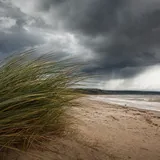
The strait separating Corsica from Sardinia funnels the wind like a natural accelerator. Piantarella, Ventilegna and Balistra split the load depending on the day's direction.
The southern spots arrow_forward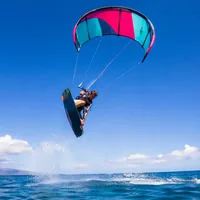
Golfo di Sogno, Pinarello, Santa Giulia: several beaches on the south-east coast, with schools matching the day's spot to the wind and skill level.
Porto-Vecchio in detail arrow_forward
The Strait of Bonifacio has been a nature reserve since 1999. Some zones regulate or limit riding — the exact detail couldn't be confirmed for this page.
The regulations arrow_forwardWhat to know before picking a sector.
A natural wind tunnel between two islands, and three spots that split by direction.
The Strait of Bonifacio, separating Corsica from Sardinia, acts as a genuine wind tunnel through the Venturi effect: air masses accelerate between the two islands, producing near-daily wind conditions according to the spot guides consulted. The Maestrale (north-west) is described as gusty near the cliffs but steady and powerful once in the channel, often above 30 knots. The Ponente (west) is more regular and less intense; the Libeccio (south-west) is warmer and less stable, generating a rolling chop. A summer afternoon thermal also develops, more approachable for progressing riders.
See on Google Maps open_in_newVentilegna works on a west or south wind and hosts lesson groups — it's the spot cited for starting out confidently in good conditions. Piantarella, at the far south facing the Lavezzi islands, works on an east or north-east wind over a sandbank and shallow, translucent water; a west wind there is described as technical and weak. This spot isn't rideable in July-August, for lack of space for kites and because of tourist crowding. Balistra, in the Golfo di Sant'Amanza, and La Tonnara round out the offer, reserved for advanced riders or open to all depending on the day's conditions.
A namesake not to be confused. Corsica also has its own beach called "Porto Pollo," in the Golfo di Sant'Amanza — entirely unrelated to the Sardinian Porto Pollo, already covered by our dedicated guide, over 300 km away in Sardinia. The identical name across two different islands is a genuine source of online confusion.
Several beaches, one principle: the school picks the day's spot to match the wind.
Around Porto-Vecchio, several south-east coast beaches share the riding depending on wind direction: Golfo di Sogno and Pinarello, north-east of town, and Santa Giulia, further south. The Sud Glisse school, based in Porto-Vecchio, states that the day's spot is set by phone the evening before to best match the weather and the rider's level — an organisation that reflects how the whole area works, rather than one fixed spot. Kite Voile de Pinarello offers wing-foil introduction sessions in particular, in Pinarello bay.
See on Google Maps open_in_newFurther north, the eastern plain between Ghisonaccia, Solenzara and Aléria lines up Corsica's longest sandy beaches, pine-lined, with shallow water suited to families. One spot guide consulted is clear on this: wind conditions there are described as rare in general, and mostly present in low season rather than midsummer. It's not a sector to prioritise for a dedicated wind trip; it can round out a Corsica trip rather than justify one on its own.
What's known about the Strait of Bonifacio nature reserve, and what's still worth confirming on the ground.
The Strait of Bonifacio has been a nature reserve since a decree dated 23 September 1999, covering roughly 79,460 hectares, almost entirely maritime. Public access remains free, in respect of the site's tranquillity. According to the sources consulted, some activities such as kitesurfing are regulated or limited in specific zones there, to protect fragile habitats and ensure the safety of navigation and swimmers — but no map or text detailing those zones could be found for this page.
Before you ride. Don't assume a zone is open or closed based on this page alone. Check directly with a local school (Corsica Kiteboarding, Nustrale Ride, Sud Glisse) or the maritime affairs authority before your first session, especially around Piantarella and Balistra, inside the reserve's perimeter.
In a sea emergency, contact CROSS on 196, or 112 from a mobile phone.
A dedicated airport for the island's far south.
Figari-Sud-Corse Airport (FSC) is the most direct gateway for this area, served seasonally from several French cities. Reported distances vary by source and route: roughly 15-22 km to Bonifacio, and 19-23 km to Porto-Vecchio, both around 30 minutes' drive. A car remains necessary to reach the various spots, none of which is directly walkable from the airport.
What riders ask most before heading to Corsica.
The Bonifacio area, thanks to the Venturi effect in the strait of the same name, is the island's most reliable. The right spot mostly depends on the day's wind direction: Ventilegna on a west or south wind, Piantarella on an east or north-east wind.
Not necessarily. The Strait of Bonifacio has been a nature reserve since 1999, and some zones regulate or limit riding to protect the environment and user safety. The exact detail of that zoning couldn't be confirmed for this page: check with a local school before riding.
Yes, a beach in the Golfo di Sant'Amanza carries this name — entirely unrelated to the Sardinian Porto Pollo, over 300 km away in Sardinia, already covered by our dedicated guide. Don't confuse the two before booking a trip.
Spring to autumn for the Bonifacio area: spring brings frequent wind with fewer crowds, summer develops a more approachable afternoon thermal, and autumn brings stronger Atlantic fronts. The eastern plain, on the other hand, is more of a low-season sector.