

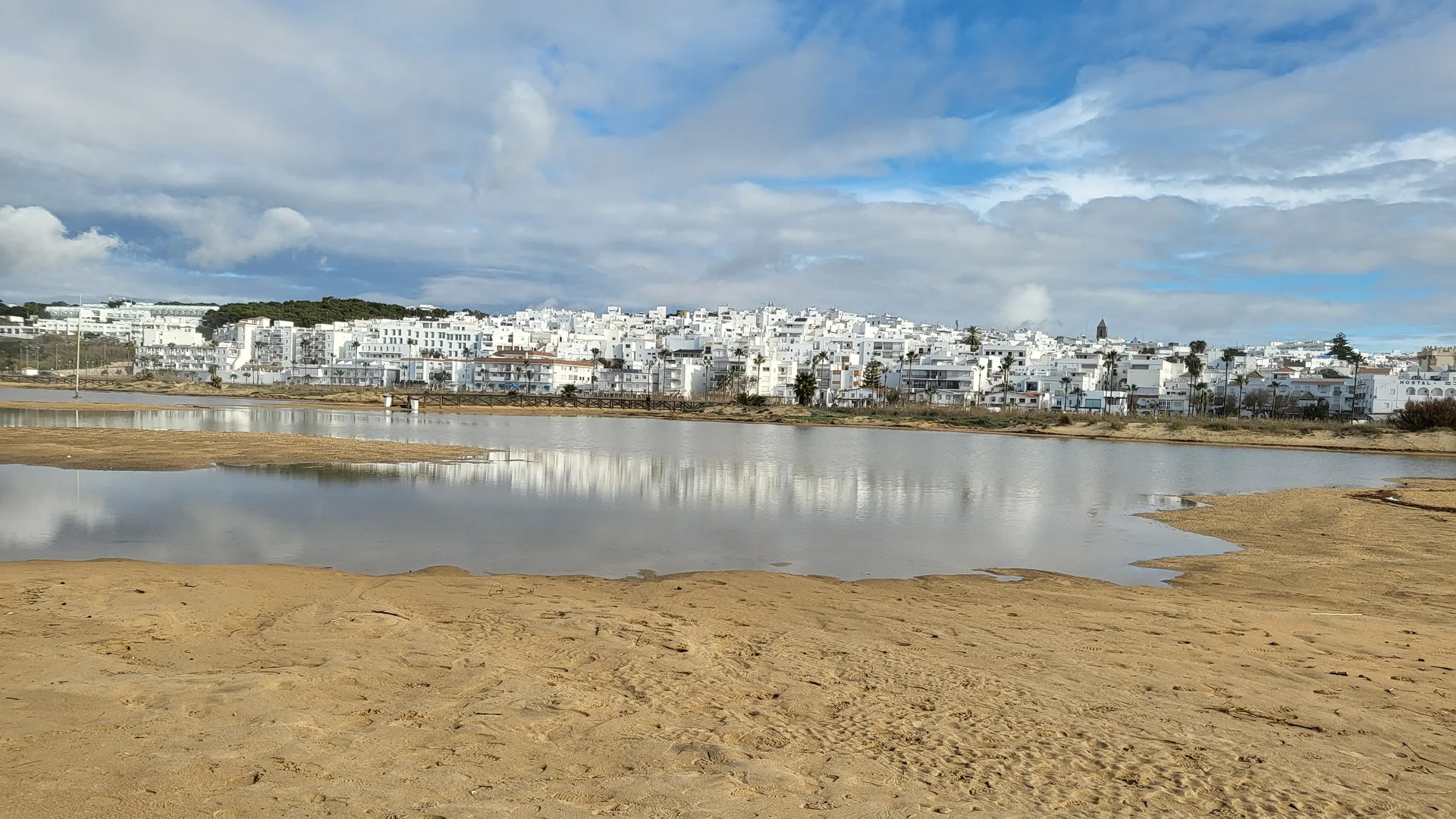
📍 Cadiz, Andalusia
Photo: Xemenendura / Wikimedia Commons, CC BY-SA 4.0
The same levante and poniente winds that made Tarifa famous, spread across a quieter run of Atlantic beaches to the north-west.
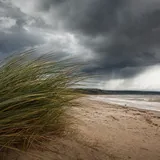
The same two winds that dominate Tarifa reach this stretch too, generally with less intensity: poniente a moderate 10 to 20 knots, levante a gustier 20 to 35 knots.
See destinations arrow_forward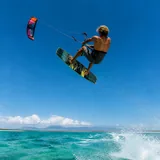
Conil de la Frontera, Los Caños de Meca, Zahara de los Atunes and the Chiclana/Sancti Petri sector are all documented kite and windsurf beaches, without Tarifa's crowds.
Kitesurf guides arrow_forward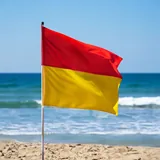
Conil bans kitesurf from most of its beaches in summer, and this Atlantic coast has produced real rip-current warnings. Read the rules and hazards sections before you rig up.
Local rules and hazards arrow_forwardThe wind and the water, before you check the rules further down.
Conil, Los Caños de Meca and Zahara de los Atunes, then Chiclana and Rota further north.
A long, wide sandy beach documented as picking up the same levante and poniente as Tarifa, generally with slightly less intensity. Playa de Los Bateles, by the mouth of the Rio Salado, is the central kite area outside the summer bathing season; Fuente del Gallo, more sheltered, is used on strong easterly days; Castilnovo, to the south, is the one beach where kitesurfing stays permitted all summer — see the rules section below.
View on Google Maps open_in_newBetween Barbate and Conil, near Cape Trafalgar, with a designated watersport zone near the lighthouse — the recommended entry point, since a reef sits in front of the nearby apartments and becomes a hazard at high tide (it's clearly visible at low tide). Suitable for experienced kiters and windsurfers rather than beginners. Reachable from Tarifa via the E-5 towards Cadiz, through Vejer de la Frontera; car access only, roughly an hour's drive.
View on Google Maps open_in_newA wide, long sandy beach documented as a real kite spot, working well in both levante and poniente, with west and east listed as the best directions. We couldn't confirm a kitesurf school based in the village itself — the nearest named schools operate out of Tarifa and cover this stretch on request.
View on Google Maps open_in_newFurther north, Sancti Petri and Punta del Boquerón, in Chiclana, are documented as a school's principal kitesurf spot, alongside La Barrosa/Novo Sancti Petri's wider surf-and-watersports scene. North again, Costa Ballena (Rota) and Valdelagrana (Puerto de Santa María) both host named kitesurf schools, and a dedicated Costa de la Luz kite/windsurf guide points to Punta Candor (Rota) and Cortadura (Cadiz city) for winter and spring wave sailing.
View on Google Maps open_in_newNamed schools at Conil, Chiclana, Rota and Puerto de Santa María.
At Conil, Total Kitesurf operates locally. Around Chiclana's Sancti Petri/La Barrosa sector, several schools run kitesurf and windsurf courses alongside surf lessons, including Why Not Fly Escuela de Kitesurf (based at Sancti Petri, also covering Conil and Cadiz depending on conditions), Kite Surf Chiclana, Waterman School and Surfkitehouse. Further north, Cadiz Kite is based on Valdelagrana beach in Puerto de Santa María and also kites at Rota and Sancti Petri, and a separate kitesurf school operates out of the marina at Costa Ballena, Rota. We couldn't source a named, locally based school at Los Caños de Meca, Zahara de los Atunes or Barbate specifically — always check that any school holds a valid IKO, VDWS or Real Federación Española de Vela qualification and carries rescue cover before booking.
Spain has no national 300 m rule — but Conil has its own local, seasonal restriction, and this Atlantic coast carries real rip-current risk.
Conil's own local rule is documented in detail: outside the bathing season (16 September to 14 June), kitesurfing is allowed on all the town's beaches without restriction beyond ordinary common sense and respect for other beach users. During the bathing season (15 June to 15 September), kitesurfing is banned inside the Rio Salado estuary and on the beaches of Los Bateles and La Fontanilla — the only beach where it stays permitted that season is Castilnovo, from the mouth of the Rio Salado southwards.
Los Caños de Meca is documented as having "special windsurf and kitesurf zones," with the area near the lighthouse recommended precisely because it keeps riders clear of the reef in front of the nearby apartments. We couldn't source the exact municipal ordinance text behind this zoning — treat it as a documented local practice rather than a precisely dated rule, and check on-site signage.
For Zahara de los Atunes, Barbate, the Chiclana/Sancti Petri sector, Rota and Puerto de Santa María, we couldn't find a documented, beach-specific kitesurf rule beyond the general Spanish and Andalusian framework below — ask locally and check posted signage before you rig up.
This is genuinely Atlantic, not Mediterranean, water: news coverage of storm swell reaching the Gulf of Cadiz has documented dangerous rip currents and red-flag closures along this exact stretch — from Puerto de Santa María and Cadiz city down through Chiclana, Conil, El Palmar, Barbate, Los Caños de Meca and Tarifa — including a drowning at La Fontanilla beach in Conil that led to red flags across every beach in the area. Winter and spring swell, in particular, can bring clean, mast-high waves to spots like Punta Candor and Cortadura, with the stronger shore break and longshore currents that come with it. Beyond this, we couldn't source detailed, beach-by-beach rip-current mapping for individual spots such as Zahara or Barbate — check local flags and conditions on the day, not just the forecast.
Outside these local zones and dates, the general Spanish framework holds: no French-style national 300 m rule, the Capitanía Marítima and DGMM as the maritime authority, and a lifejacket required once you're outside the designated bathing area. In an emergency, call 112 or reach Salvamento Marítimo on VHF channel 16.
Jerez airport is closest; Seville and Gibraltar are the backups.
Jerez Airport (XRY) is documented as the closest to Conil and this central stretch of the coast, at roughly 50 to 70 km depending on the source and route. Seville Airport (SVQ), about 165 km away, and Gibraltar Airport (GIB), around 90 km away, are the usual backups.
Conil is reached from Cadiz via the N-340 south. From Tarifa, Los Caños de Meca and Barbate are reached via the E-5 towards Cadiz, through Vejer de la Frontera, and are car-only destinations — roughly an hour's drive from Tarifa. A car is the practical way to move between spots on this stretch, since public transport between the smaller beach towns is limited.
Winter and spring for wind and waves; a more moderate poniente through summer.
A dedicated Costa de la Luz kite/windsurf guide points to winter and spring as prime time here, as Atlantic low-pressure systems cross the Gulf of Cadiz and bring clean, sometimes mast-high waves along with strong wind to spots such as Punta Candor and Cortadura.
Conil's own spot data lists usable wind roughly from January to October, and both levante and poniente are documented as blowing on this coast across the year rather than in one narrow season — poniente tends towards a moderate, thermally assisted westerly, while levante brings the stronger, gustier easterly days. Check a live forecast for the spot and dates you're planning, rather than relying on a single seasonal average.
What riders ask most before heading north-west of Tarifa.
It shares the same two winds — levante and poniente — but is documented as generally less intense, and far quieter than Tarifa. Conil, Los Caños de Meca, Zahara de los Atunes and the Chiclana/Sancti Petri sector are all real, separate spots worth their own trip rather than an overflow from Tarifa.
Only at Castilnovo beach. Between 15 June and 15 September, Conil bans kitesurfing from the Rio Salado estuary and the beaches of Los Bateles and La Fontanilla; Castilnovo, south of the river mouth, is the one beach that stays open to kiters that season. Outside those dates, all the town's beaches are open.
Documented at roughly 14 to 15°C at the winter low (January-February) and around 24 to 25°C at the summer high (August) — noticeably cooler than nearby Mediterranean spots, since this is open Atlantic water. See our wetsuit guide for what that means for your kit.
Jerez Airport (XRY), roughly 50 to 70 km away depending on the source. Seville (SVQ) and Gibraltar (GIB) are the usual backups. See the rest of our Spanish coast in our destination directory.