

A well-looked-after inflatable paddleboard can last 5 to 10 years. A few simple habits after each session, plus sensible off-season storage, are enough to protect the PVC and the seams over the long term.
Rinsing: the single most important step
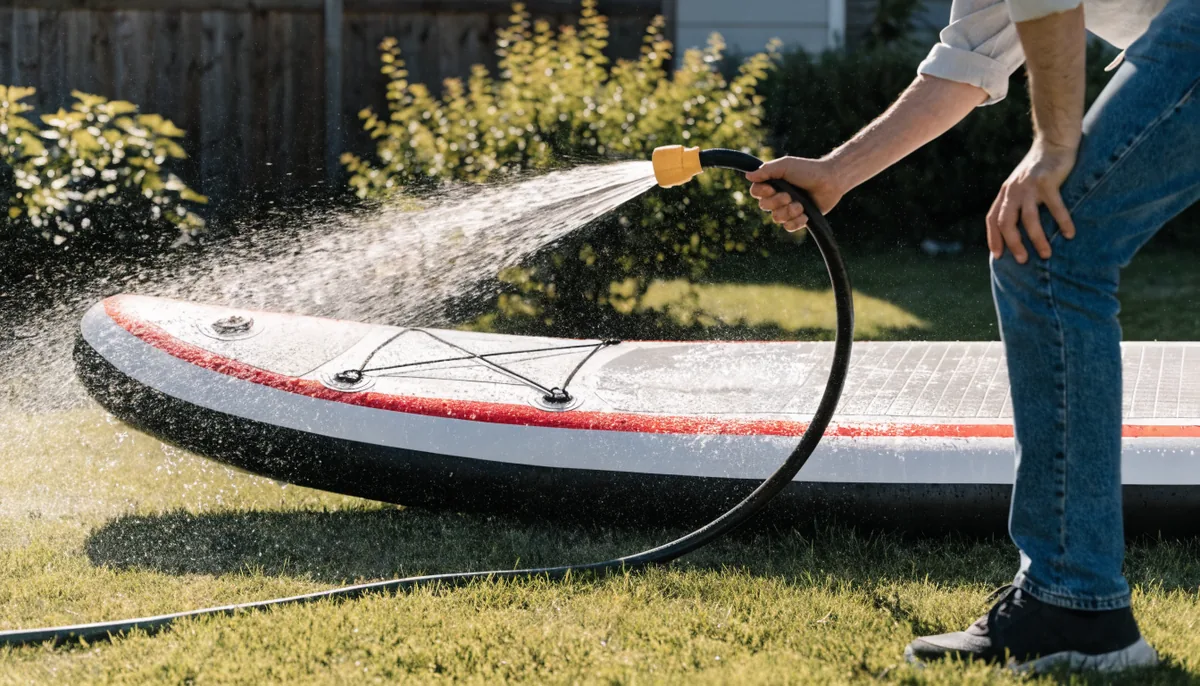
Always rinse your board with clean fresh water after every session at sea, to remove the salt and sand that are abrasive to the PVC and the valve. For stubborn marks, use soapy water and a soft sponge: steer clear of solvents, acetone and abrasive brushes, which attack the coating.
Drying before you fold
Drying the board fully in the shade before folding is essential to avoid mould and musty smells. To fold, start at the nose and work towards the valve at the tail so you push the air out properly, avoiding folds over the fixed fins.
Inflation pressure
The recommended pressure for an inflatable SUP is generally between 12 and 15 PSI. Over-inflating can damage the seams; too little pressure leaves the board soft and less efficient. If you use your board every day, leave it inflated in the shade with 2 to 3 PSI removed to avoid over-pressure from the heat.
Winter storage
Sun and excessive heat are the worst enemies of PVC: they soften the glue in the seams and fade the board. For winter, store it lightly inflated (around 5 PSI) or loosely rolled, somewhere dry and away from frost and strong heat – a temperate garage is perfect.
Fixing a leak
Finding the leak
Inflate the board to normal pressure, then spray soapy water over the surface: small bubbles form wherever the air is escaping.
Repairing a puncture
The repair needs a kit (often supplied with the board) containing a PVC patch and a polyurethane glue. Clean the area, sand it lightly, apply the glue and press for 24 hours.
Leaks along the seams
Leaks on the seams (drop-stitch) are trickier to fix than those on a flat surface and may need a professional's help.
The thing to watch: the valve
A faulty valve can cause the board to deflate mid-session. Check it before every session: if it's leaking slightly, it has often simply worked loose with the vibrations – tighten it a quarter-turn with the valve wrench, board deflated. To choose a durable board from the outset, see our paddleboarding gear guide.