
📍 Le Morne, Mauritius
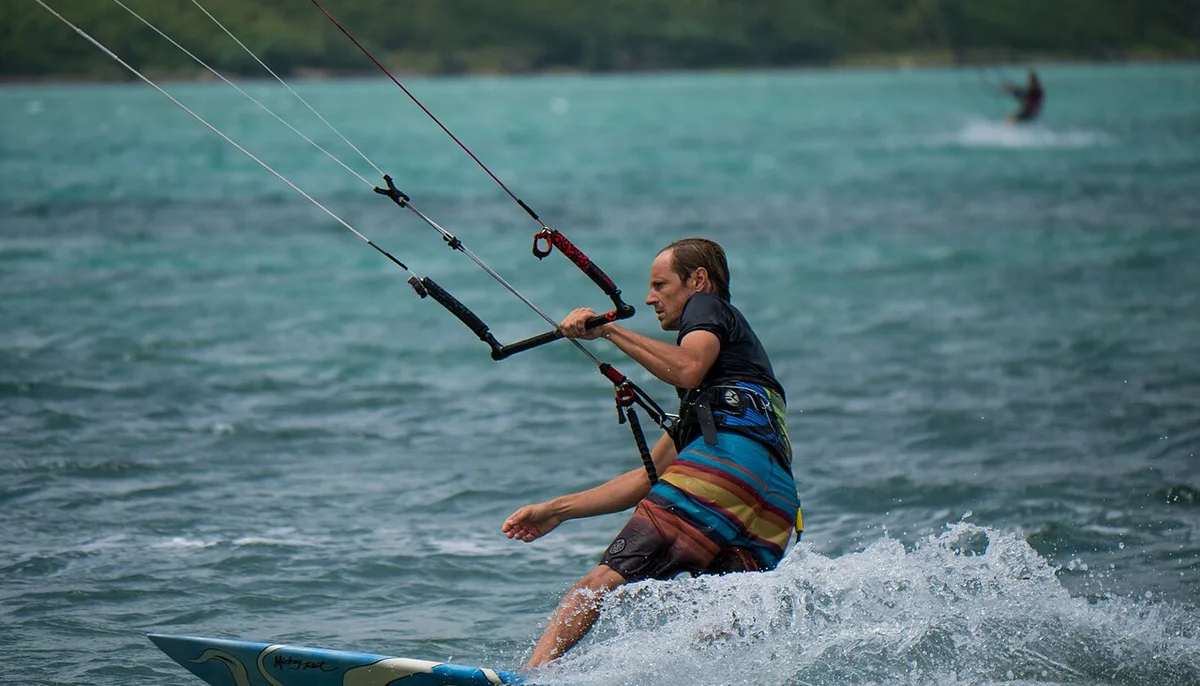
Photo: Ludovic Lubeigt / Wikimedia Commons, CC BY-SA 2.0
A sheltered lagoon to progress in, an expert-only reef wave, on Mauritius's south-west peninsula.
A sheltered lagoon for learning and freeriding, a demanding reef pass for experts.
Le Morne sits on Mauritius's south-west peninsula, at the foot of Le Morne Brabant, the basalt monolith and UNESCO World Heritage site that dominates the peninsula. The offshore reef creates two very different environments: inside it, a lagoon that's generally flat and sheltered from ocean swell, where most lessons and freeriding happen; outside it, at the reef passes, deeper water, stronger currents and ocean swell change the picture completely.
View on Google Maps open_in_new"Beginner-friendly" doesn't mean risk-free: the lagoon can still have coral sections, shallow patches, other riders sharing the water, and wind-shadow areas near the terrain. Going through a school is the norm here, not an over-cautious extra step.
One Eye, Le Morne's best-known wave, breaks over or near an exposed reef pass on the peninsula's south-west side. It's a fast, powerful wave with a real shallow-reef hazard — appropriate only for riders with strong wave, ocean and self-rescue skills, not a slightly harder extension of the beginner lagoon. This page deliberately avoids presenting One Eye as suitable for every level.
A long season, but with a real off-window worth planning around.
The dominant wind in season is the south-east trade wind, locally reinforced by the terrain of the peninsula and Le Morne Brabant itself. According to figures published by ION CLUB Le Morne itself, it averages around 12-20 knots from November to March and 15-26 knots from April to October.
The same source puts the most reliable period at June to November — a wider window than a simple "austral winter", and the most reliable figure this research could find for this spot rather than a narrower June-September range.
The official cyclone season across the south-west Indian Ocean runs from 1 November to 15 May and is worth treating as a genuine planning factor rather than simply a quieter stretch: a cyclone doesn't need to cross the island directly to bring heavy rain, storm-force gusts, dangerous swell and poor visibility.
ION CLUB Le Morne stands out as the clearest currently-confirmed option.
ION CLUB Le Morne offers kitesurfing, windsurfing and wing foiling, and describes itself on its own site as open year-round, with the best conditions generally running June to November by its own account. This is the school for which this research found the strongest evidence of current trading.
Two other names turn up in tourism directories: Le Morne Kite School and KiteMoris. Both have a genuine online presence, but this research could not independently confirm their current operating status, exact beach location or certifications — worth verifying directly before booking rather than taking as given.
No kitesurf-specific Mauritian rule could be verified — a genuine gap, not a box left unchecked.
The general maritime framework sits mainly with the Mauritius Ports Authority, with policing and sea-rescue functions carried out by the Mauritius Police Force, including the National Coast Guard. This research found no published rule specific to kitesurfing — no minimum distance from shore, no mandatory-equipment list for the sport. That's a genuine documented gap, not one filled with an invented rule: check with a local school or the Coast Guard directly if in doubt.
Commonly cited emergency numbers are 112 or 999 for police, a Coast Guard contact (212 2747) and a marine-weather line (171) — these come from a third-party boating reference rather than an official source checked directly, and are worth reconfirming locally rather than treating as settled.
About 55-60km / 1-1.5 hours' drive from the airport, with direct flights from Paris.
Sir Seewoosagur Ramgoolam International Airport (MRU), in the south-east of the island, sits about 55-60km from Le Morne, or 1 to 1.5 hours by road depending on traffic. Mauritius keeps real air links with France specifically: Air Mauritius and Air France serve Paris, and Corsair adds seasonal capacity on the same route. Schedules shift by season, so check what's actually flying when you book rather than assuming a fixed timetable.
UK and other European travellers should confirm current visa and entry requirements before booking — short-stay tourist visits are commonly admitted without a visa arranged in advance, subject to conditions in force at the time (a return ticket, proof of accommodation, and any required documentation). These rules can change, so check with the Mauritian immigration authorities or your airline before you travel.
What riders ask most before booking.
Broadly yes: it's generally flat and reef-protected. But "manageable for progression" doesn't mean risk-free — coral sections, shallow patches and other riders sharing the water mean going through a school, not navigating alone on a first session.
No. One Eye is a fast, powerful wave breaking over an exposed reef pass, appropriate only for riders with strong wave, ocean and self-rescue skills. It isn't a slightly harder version of the beginner lagoon.
June to November per ION CLUB Le Morne's own published figures, the most reliable window for the south-east trade wind. The official cyclone season (1 November to 15 May) is a genuine factor to watch, not just a quieter stretch.
ION CLUB Le Morne is the school with the strongest currently documented evidence of trading. Le Morne Kite School and KiteMoris are also named in tourism directories, but their current operating status could not be independently confirmed, so check directly before booking.