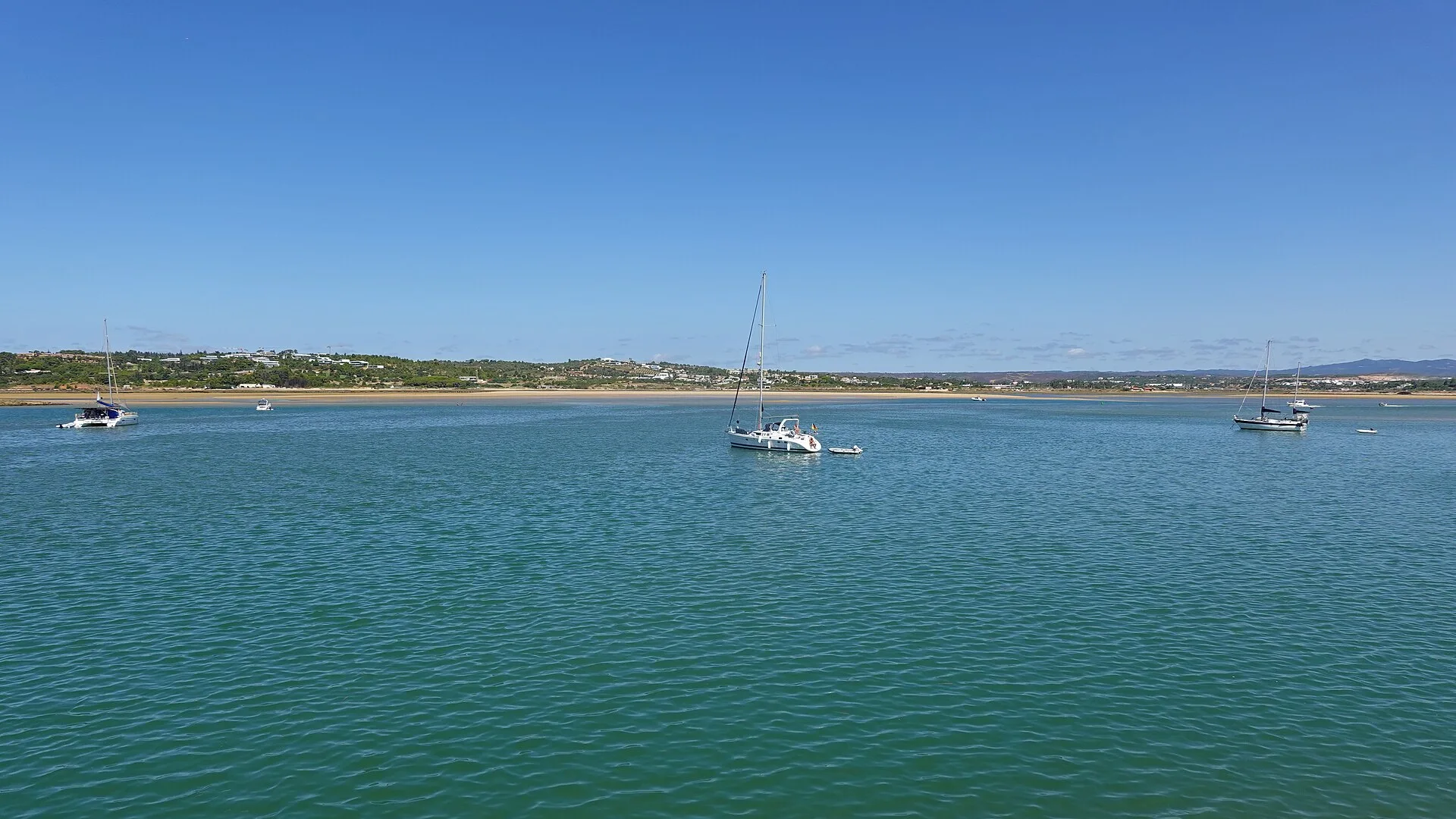
Photo: Joseolgon / Wikimedia Commons, CC BY 4.0
A sheltered lagoon several guides call easy, with a real currents warning worth knowing too — both versions are reported here.
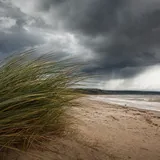
A thermal north-to-northwest wind, 15 to 30 knots depending on the source, that builds after lunch. Documented as gentler and less reliable than at Guincho or Tarifa.
See destinations arrow_forward
Meia Praia (Lagos) for Atlantic swell and wave kiting; the Ria de Alvor, a tidal lagoon, for flat water and learning.
Kitesurf guides arrow_forward
Presented as easy by several schools, but a 2026 report notes gusty offshore wind and strong currents at the inlet mouth. Plan your session around the tide.
Safety and zones arrow_forwardThe wind, the water and access, before you check the safety section further down.
Meia Praia for waves, the Ria de Alvor for flat water.
A long sandy bay running east from Lagos toward the Ria de Alvor. A recognised kite zone sits at the west end, toward Bar Quim, with flatter water; another sits to the east near the golf course, where the nortada arrives cross-offshore, documented as 3 to 5 knots stronger and reserved for advanced riders chasing speed and big air. Launching and landing is banned in the sections with beach installations.
View on Google Maps open_in_newA 1,700-hectare tidal lagoon and Natura 2000 nature reserve, about 15 minutes' drive from Lagos. Flat water and a shallow sandy floor make it a documented teaching spot for several schools — but plan your session around the tide tables, avoiding high tide and the hour either side of it, and note that gear rental is documented as harder to find right at the lagoon itself.
View on Google Maps open_in_newSix named schools across the two spots.
The sources consulted name Algarve Fun Sports, Algarve Kite Center, Algarve Watersport, Lagos Kite Club, Alvor KiteCenter and Algarve Kitesurf School. Algarve Watersport specifically teaches at the Ria de Alvor. Always check current certification and rescue cover before booking — one Lagos operator explicitly recommends boat support and advises against kiting alone in offshore summer wind.
No published official regulation for Lagos or Alvor — only school-enforced zones.
Unlike Guincho, where the Capitania do Porto de Cascais publishes precise edicts, no official document from a Capitania do Porto de Lagos turned up for Meia Praia or the Ria de Alvor in the sources consulted. What is documented is "kite zones" on Meia Praia (west toward Bar Quim, east toward the golf course), actively enforced by schools and lifeguards in peak summer — but with no ordinance number or legal text cited.
Several guides present the Ria de Alvor as an easy learning spot, thanks to its flat, shallow water. But a 2026 report cited by a spot database notes gusty offshore wind and strong currents, including at the lagoon's inlet mouth — directly at odds with the "easy for beginners" framing. We're reporting both rather than picking one: check current conditions with a local school before heading out alone, especially near the inlet.
Portugal has no codified national 300 m rule the way France does — it's the relevant Capitania do Porto for each area that sets the rules for its jurisdiction, where they exist. In a maritime emergency, contact the Autoridade Marítima Nacional or call 112.
Faro Airport, then a car — public transport is thin along this coast.
Faro Airport (FAO) is the regional gateway, 55 minutes to 1h15 by road from Alvor/Portimão, or 1h41-1h50 by train to Lagos with a change at Tunes. Lisbon (LIS), 2.5-3 hours by road, remains a distant backup. Public transport along this coast is documented as thin: a rental car is close to essential for reaching the spots day to day. The A22 motorway runs electronic-only tolls — make sure your rental has a transponder or is registered online.
May-June and September recommended; July-August at peak crowds.
The afternoon nortada dominates in summer, but it's documented as gentler and less reliable than at Guincho or Tarifa. May-June and September are recommended for the best wind-to-crowd balance; July-August remains peak crowds and prices. From November to March, the climate is mild but rainy, with some facilities closed — south/south-east wind replaces the nortada then, bringing more swell and current to Meia Praia.
What riders ask most before heading to Lagos or Alvor.
Sources disagree: several schools present it as an easy spot thanks to its flat, shallow water; a more recent report notes gusty offshore wind and strong currents, especially at the inlet mouth. Check current conditions with a local school before heading out alone.
Meia Praia is an open Atlantic beach with chop and small waves, in practice reserved for advanced riders in the offshore summer wind. The Ria de Alvor is a sheltered tidal lagoon with flat water — but sessions need planning around the tide tables.
The nortada, a thermal north-to-northwest wind that typically builds after lunch, documented at 15 to 30 knots depending on the source — gentler and less reliable than at Guincho or Tarifa. Winter brings south/south-east wind instead, with more swell and current.
Via Faro Airport (FAO), 55 minutes to 1h15 by road to Alvor, or by train to Lagos (1h41-1h50, change at Tunes). See the rest of our spots in our destination directory.