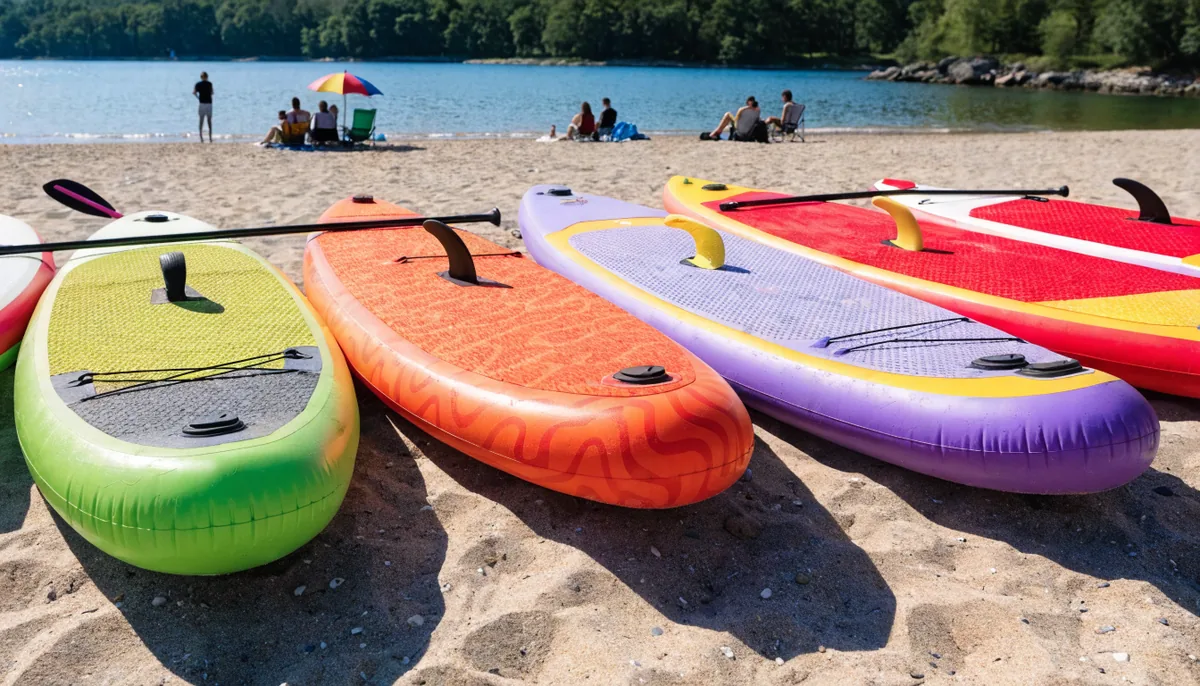
A budget inflatable SUP isn't necessarily a bad SUP: it's mostly a matter of pinning down what genuinely matters (double-layer PVC, rigidity, a complete package) and ruling out the boards that cut corners on the essentials to hit a low price. Here's how to tell them apart at the entry level.
What does 'budget' really mean for an inflatable SUP?
In the world of inflatable SUP, 'budget' doesn't mean 'poor quality': you can find reliable entry-level boards from brands such as Decathlon's Itiwit range, Two Bare Feet and Bluefin. The real danger comes from ultra-cheap boards that skimp on the PVC, the rigidity or the accessories included in order to advertise a headline price. The goal isn't to spend as little as possible, but to spend just enough for how you'll actually use it.
What to look at before you buy
Stability
A wide board (around 32 inches) with enough volume for your weight is the number-one criterion, especially when you're starting out. Trimming the width to save weight or bulk quickly translates into a lack of balance, whatever the price on the label.
Durability
Double-layer PVC makes all the difference to how long a board lasts: it stands up better to abrasion, to inflation pressure and to little knocks against a pontoon or rocks. Single-layer boards, which are more fragile, go soft or lose their shape sooner.
What's in the package
Board, pump, paddle and carry bag: a complete package avoids nasty surprises and the add-on purchases that soon push the total up. Always check what's genuinely included before comparing two boards — a board-only listing is never comparable to a complete package.
What level of kit to aim for without getting caught out
The very cheapest boards
At the rock-bottom end, there's very little room left for decent PVC quality and rigidity. These boards can do for the odd, occasional outing, but they tend to age badly and disappoint by the second season.
The genuine sweet spot
A little further up, reliable all-round boards deliver real value without compromising on stability or the kit supplied. Look for double-layer PVC, an all-round shape around 10'6" to 11'0", a width near 32 inches and a complete package. Names such as Bluefin, Two Bare Feet and the Itiwit range are safe places to start.
Two all-round complete packages that fit this sweet spot: the ZRAY X1 and the ZRAY X0 — see them at OutletSUP →.
When to step up a little
Higher up the range, what you mainly gain is rigidity and finish — useful if you plan to paddle regularly or carry more than one person. For occasional use, that extra outlay isn't always justified.
The pitfalls of low-cost boards
The most common trap is single-layer PVC, which stretches over time and loses rigidity, leaving the board soft and unpleasant to steer. Next comes the basic pump, slow and tiring to use, or a heavy, clumsy aluminium paddle. Finally, be wary of boards with volumes quoted too low to look compact: they sacrifice stability for marketing.
Whatever board you choose, budget for the safety basics too: a leash and a buoyancy aid on every session. Check the Met Office forecast, avoid offshore winds and, if you get into difficulty, call 999 and ask for the Coastguard.
Our recommendations by buyer profile
Beginner
Go for a stable all-round shape with double-layer PVC and a complete package. A board around 10'6" and 32 inches wide ticks the boxes for a first purchase: forgiving, easy to stand on and undemanding to store.
Family
To share a board across different sizes, a longer, higher-volume all-rounder (around 11'0" to 13'0") gives the most buoyancy and the most room on the deck — a real plus with children or for a two-up outing.
Occasional holiday use
The most compact board in a range packs down and stores away easily, ideal for the odd outing on holiday. To compare the options side by side, our paddleboarding gear guide sets out length, volume and target use for each type of board.
FAQ
What makes an entry-level SUP reliable rather than cheap?
A reliable budget board uses double-layer PVC, comes as a complete package and has enough width and volume for your weight. Below that, PVC quality and rigidity become a gamble.
Are budget paddleboards durable?
It depends mainly on the PVC. A double-layer board, even an affordable one, stays solid for several seasons. Single-layer boards age quickly and lose rigidity.
Do you have to buy a complete package?
It's strongly recommended: a pump, paddle and bag bought separately often cost more than a complete package, and they make comparing boards harder.
What should a beginner look for in a budget board?
A stable all-round shape around 32 inches wide, double-layer PVC, and a complete package with pump, paddle, leash and bag. Add a buoyancy aid to your kit.
When is it worth spending a little more?
If you plan to paddle regularly, go out with more than one person or head out at sea, a step up brings more rigidity and buoyancy, and noticeably more comfort.